

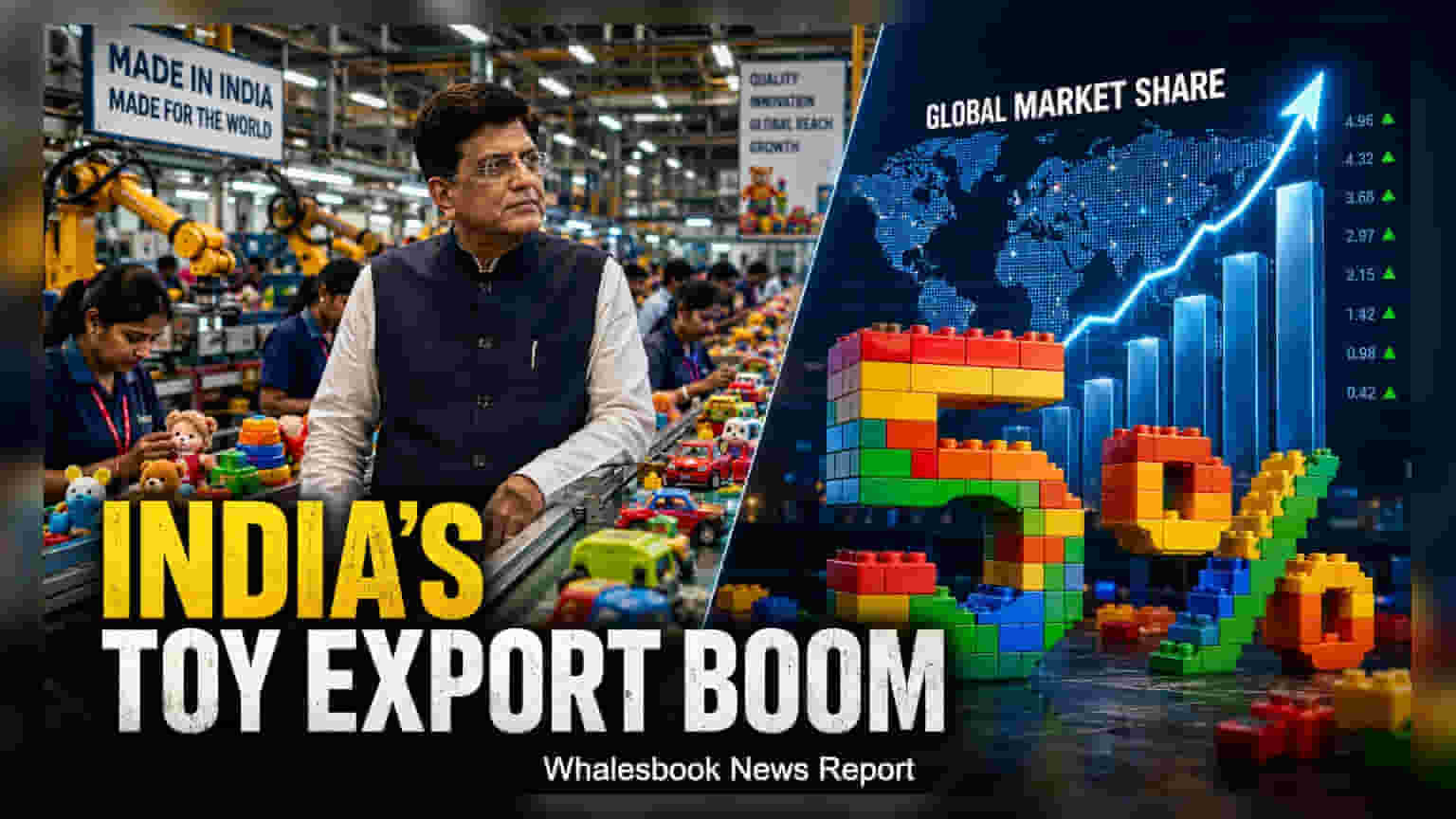
India has launched a new task force and sector playbook to scale its toy manufacturing. The government targets a 5% global market share by 2032, building on a recent surge in exports and a shift from a trade deficit to a $152 million surplus.
Detailed Coverage
The Indian government is intensifying its focus on the toy industry by forming a dedicated task force to secure a 5% share of the global market by 2032. Announced by Commerce and Industry Minister Piyush Goyal, this strategy aims to transition domestic manufacturers from local players to active participants in global supply chains. The initiative will prioritize removing production bottlenecks, training a specialized workforce, and simplifying business regulations to foster long-term growth.
Strategic Shift in Trade Dynamics
The industry has seen a notable transformation in trade performance over the last eight years. According to official data, India recorded a trade surplus of $152 million in toy categories during fiscal year 2026, marking a complete turnaround from a $213 million trade deficit in fiscal year 2018. This change is largely attributed to a 66% decline in toy imports and a significant rise in domestic production capacity. The growth is supported by an infrastructure that currently includes over 21,000 micro, small, and medium enterprises (MSMEs), nearly 50 specialized toy clusters, and more than 1,800 Bureau of Indian Standards (BIS) license holders.
Export Performance and Future Monitorables
Export data highlights a strong upward trend, with shipments rising by 152% between fiscal year 2018 and fiscal year 2026, reaching $384.7 million. A key driver of this performance has been the United States market, where Indian toy exports increased more than fourfold to $111.9 million in FY26. Both electronic and non-electronic toy segments have contributed to this expansion, alongside growth in specialized areas like video game consoles and festive articles.
While the government's push provides a roadmap, the success of these ambitious targets will depend on several factors that investors should track. Key areas include the sustained ability of MSMEs to scale production while maintaining quality standards, the effectiveness of the new task force in resolving supply chain issues, and the industry's ability to maintain export competitiveness against established global manufacturing hubs. Furthermore, investors may monitor how effectively the newly launched Toy Sector Playbook helps companies navigate intellectual property rights and international quality compliance, which are essential for increasing footprint in advanced markets.