

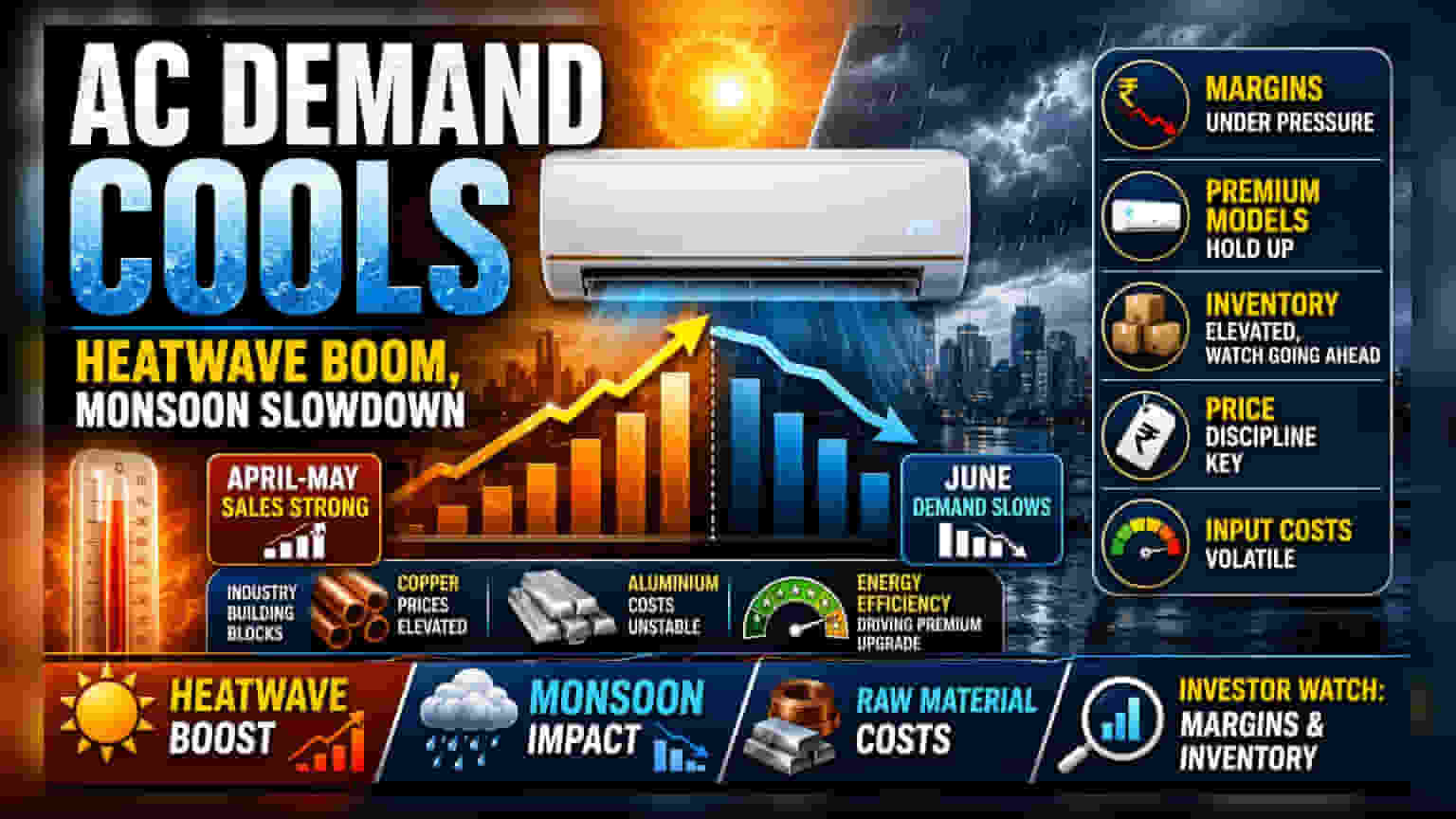
Indian air conditioner makers recorded robust volume growth in April and May, but demand moderated in June with the onset of monsoons. While the extreme heat drove significant consumption, manufacturers are now balancing revenue growth with pressure on profit margins due to rising input costs and price sensitivity.
What Happened
The Indian air conditioner industry experienced a sharp contrast in demand over the current quarter. Following a period of robust sales in April and May, driven by intense heatwaves across large parts of the country, demand momentum cooled significantly in June. This shift coincided with the onset of the monsoon season in several regions, which naturally reduced the immediate urgency for cooling appliances.
Industry leaders and channel checks indicate that while April and May saw strong double-digit volume growth compared to the previous year, the pace of sales slowed notably as weather patterns shifted. For manufacturers, the challenge remains to maintain the value growth achieved during the peak season while navigating a more cautious consumer environment as the quarter concludes.
The Margin And Input Cost Puzzle
While volumes in the first two months of the quarter were encouraging, profitability has become the primary concern for investors. Air conditioner manufacturing is heavily dependent on commodities like copper, aluminum, and plastics. Prices for these materials have remained volatile due to global supply chain pressures.
Manufacturers have attempted to pass on some of these costs to consumers through price hikes, estimated to range between 5% and 20% across various models. However, companies have been selective with these increases. Excessive price hikes carry the risk of hurting demand, particularly in the mass-market segment, where consumers are increasingly sensitive to price changes. Consequently, profit margins have faced pressure, as companies choose to absorb a portion of the rising costs to keep their products competitive.
Regional Variations In Demand
Performance during the quarter was not uniform across India. The northern and central regions, which are highly sensitive to the intensity and duration of the summer heat, witnessed a sharp surge in demand followed by a quicker decline as the monsoon arrived. Conversely, markets in southern and western India displayed greater stability throughout the season.
Retailers and dealers have also reported that consumer behavior is shifting. There is a clear trend toward premiumization, where buyers are prioritizing energy efficiency and smart features despite the higher price points. However, this has created a divide in the market, with entry-level categories facing more intense competition and price-based decision-making, while premium models see more resilient demand.
Business And Sector Outlook
The air conditioner industry in India is currently transitioning from being a purely seasonal business to one that is seeing structural demand growth. Factors such as low household penetration—estimated at less than 10% in India compared to much higher levels in developed markets—rising disposable incomes, and the increasing frequency of heatwaves are creating a long-term runway for the sector.
However, in the near term, investors should keep a close eye on the inventory levels held by dealers. Excessive inventory build-up ahead of a season that ends earlier than expected can lead to discounting, which further hurts margins. Management commentary on the ability to pass on costs without losing market share will remain a critical monitorable in the upcoming quarterly results.
What Investors Should Track
Moving forward, the focus will shift from peak summer volumes to the ability of companies to manage their working capital and inventory cycles. Key areas to watch include the sustainability of margin improvements, whether companies can maintain their current product pricing power, and how the industry manages potential further volatility in raw material prices. Additionally, updates on new energy efficiency standards and their impact on production costs will be important for assessing the financial performance of major players in the cooling appliances segment.