 Whalesbook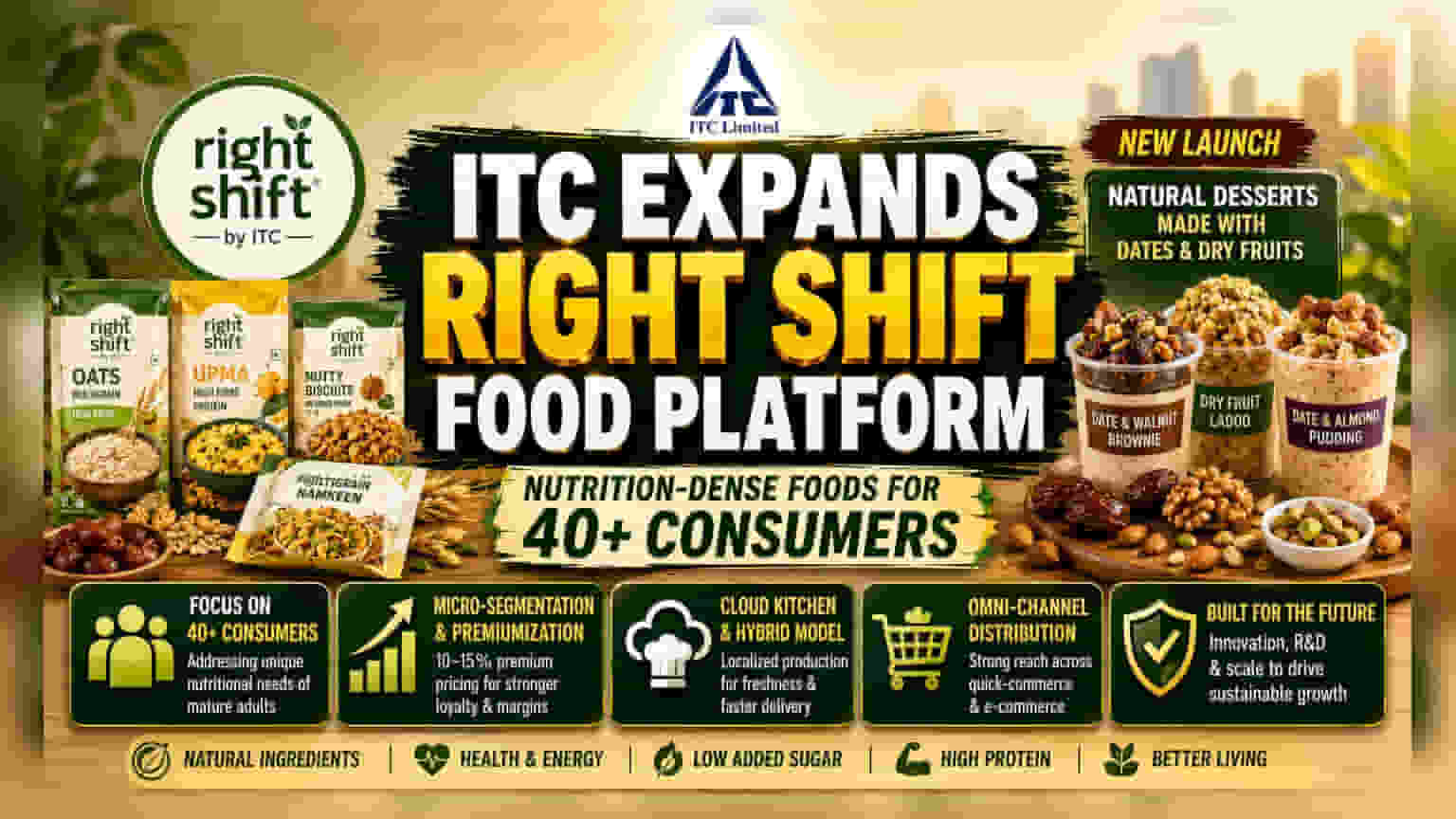


ITC is expanding its 'Right Shift' food platform with a new range of healthier, nutrition-dense desserts tailored for consumers over 40. This launch underscores the company's broader strategy of micro-segmentation and premiumization, aiming to capture spending in the growing health-conscious segment through e-commerce and quick-commerce channels.
What Happened
ITC Limited is expanding its ‘Right Shift’ food platform, a brand specifically designed for consumers aged 40 and above. The company is introducing a new line of desserts crafted from natural ingredients like dates and dry fruits. This initiative is part of ITC's ongoing effort to address the evolving nutritional needs of mature adults, moving beyond traditional mass-market snacks to offer products that are considered nutrition-dense, with a focus on controlling added sugar and unhealthy fats. The brand, which already includes products like oats, upma, biscuits, and namkeens, uses proprietary formulations aimed at supporting health and energy for this specific demographic.
Strategic Shift Toward Micro-Segmentation
For investors, the core development here is ITC’s clear shift toward micro-segmentation. Rather than relying solely on mass-market penetration, the company is curating portfolios for specific consumer cohorts. The ‘Right Shift’ brand is a primary example of this, targeting the 40-plus population—a demographic that ITC executives have identified as significant yet often underserved by traditional FMCG offerings. By tailoring products to the unique physiological and dietary requirements of this group, ITC aims to secure stronger brand loyalty and command premium pricing. This move aligns with the company’s ‘ITC Next’ strategy, which emphasizes building a future-ready portfolio through innovation and the creation of new categories.
The Premiumization and Operational Strategy
This strategy is closely linked to ITC’s broader focus on premiumization. Products under the ‘Right Shift’ and similar niche brands are typically priced 10% to 15% higher than the company's standard offerings. ITC is leveraging its deep institutional strengths—including R&D expertise and a massive, robust distribution network—to push these premium items through quick-commerce and e-commerce platforms.
Operational flexibility is also key. ITC is utilizing its cloud kitchen infrastructure, such as ‘ITC Aashirvaad Soul Creations,’ to manage products with shorter shelf lives. This allows for localized manufacturing and faster delivery, which is essential for newer, fresher product categories like the ‘Baked Creations’ range. This hybrid model, combining large-scale production for staples with agile, localized manufacturing for niche categories, is designed to enhance profitability and market relevance.
Competitive Landscape and Risks
The FMCG sector in India is experiencing a strong pivot toward health, wellness, and transparency. While this presents an opportunity, it also brings risks. ITC faces intense competition from both large, entrenched incumbents and agile, new-age direct-to-consumer (D2C) brands that are rapidly capturing market share in niche segments. Executing a strategy based on many micro-segments requires excellent supply chain management, particularly for products with shorter shelf lives. Any delay or inefficiency in distribution, or a failure to meet shifting consumer preferences, could weigh on the profitability of these new initiatives. Additionally, as the company scales these brands, maintaining the delicate balance between premium positioning and mass adoption will remain a challenge.
What Investors Should Monitor
Moving forward, the success of this strategy will likely depend on the company's ability to achieve scale in these new categories. Investors may track the penetration of these premium brands in major urban markets and their contribution to the overall FMCG revenue mix. The efficiency of the cloud kitchen model and the ability to maintain consistent profit margins while navigating higher operational costs associated with fresh, niche products will be key metrics. Management’s ability to defend its market share against both regional players and new-age health brands remains a central point of interest for the company's long-term FMCG growth trajectory.