 Whalesbook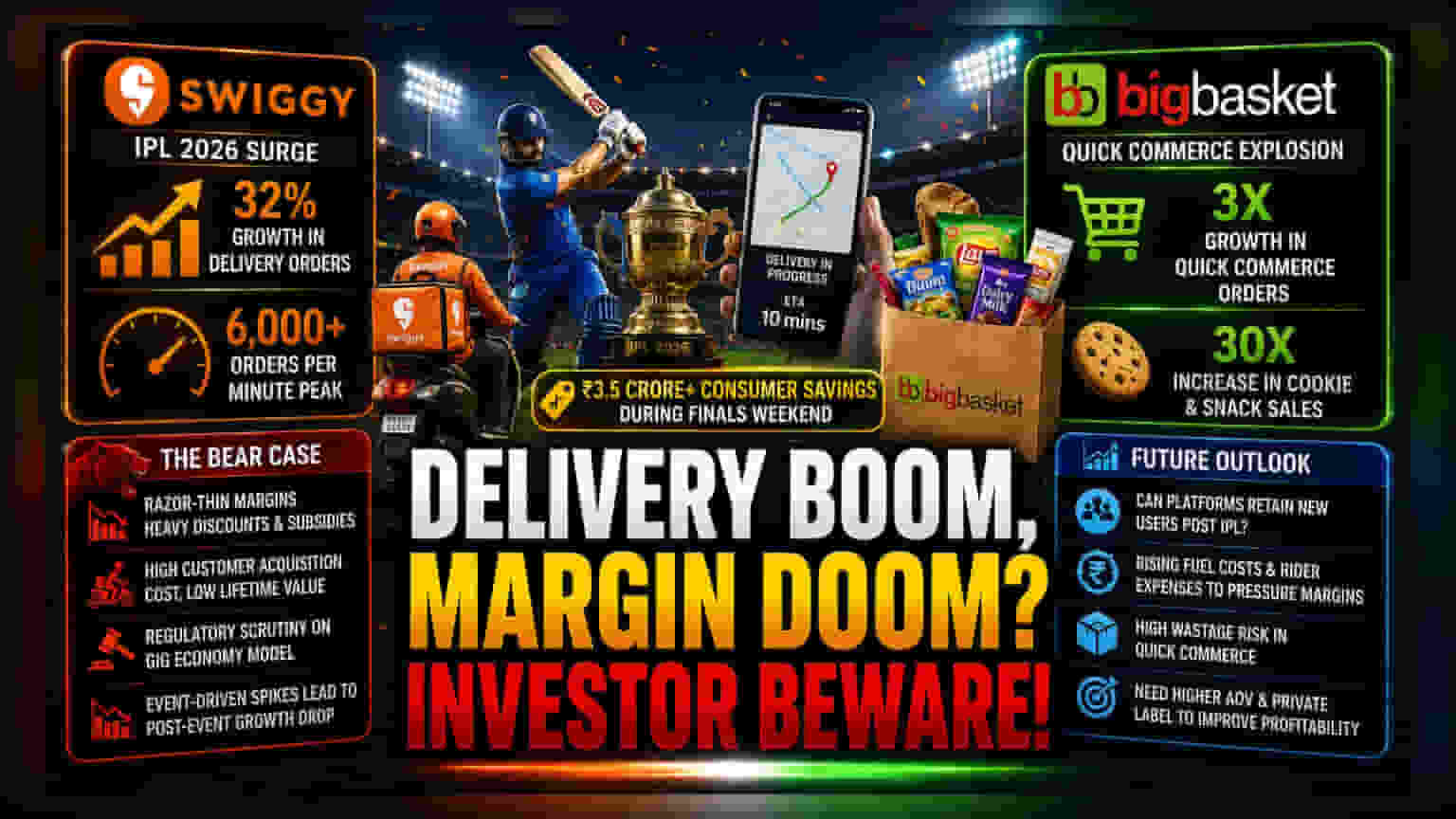


The Valuation Gap
The massive uptick in transaction volume across platforms like Swiggy and BigBasket during the IPL 2026 season acts as a double-edged sword for investors. While the 32% growth in delivery orders and the triple-digit expansion in quick commerce snacking categories demonstrate an unmatched ability to capture seasonal demand, these figures obscure a deeper concern regarding unit economics. The surge in order velocity—peaking at over 6,000 orders per minute—strains existing logistical infrastructure, forcing companies to increase variable costs to maintain delivery guarantees. When growth is tethered to a specific sporting event, the subsequent quarter often faces a sharp revenue deceleration, creating a 'lumpy' growth profile that rarely satisfies institutional expectations for consistent quarterly performance.
The Operational Friction
Market data confirms that while top-line transaction numbers are soaring, the competitive intensity between quick commerce entrants and legacy delivery apps has forced heavy reliance on promotional 'savings' and flash discounts. Investors must note that the ₹3.5 crore in consumer savings reported during the finals weekend represents a direct compression of gross margins. Unlike retail segments with higher inventory turnover of non-perishable goods, the quick commerce model requires a high-cost cold chain that faces massive wastage risks when demand patterns normalize post-tournament. The shift in consumer preference toward instant gratification snacking—led by a 30-fold increase in cookie and snack sales—indicates a reliance on impulse purchases that may be highly sensitive to future price hikes necessitated by rising fuel costs and delivery rider retention expenses.
The Forensic Bear Case
From a risk-averse perspective, the primary concern lies in the sustainability of these consumption spikes. Quick commerce platforms operate on razor-thin margins where the cost of customer acquisition remains significantly higher than the lifetime value of users who only activate accounts during major sporting events. Furthermore, regulatory scrutiny regarding the 'gig economy' model—specifically concerning rider welfare and insurance—remains a looming overhead that could fundamentally alter the cost structure for platforms currently benefiting from the low-cost delivery status quo. Investors should also be wary of the 'event-driven' reporting cycle; platforms that emphasize volume growth during peak periods often fail to disclose the underlying decline in average order value when marketing subsidies are retracted.
The Future Outlook
As the tournament cycle concludes, the focus will shift toward whether these platforms can retain the new user base acquired during the IPL. Analysts remain divided on whether this uptick represents a permanent shift in urban consumption habits or merely a temporary expansion of 'leisure-based' spending. Without a structural reduction in logistics costs or a shift toward higher-margin private label penetration, the current growth trajectory in delivery platforms appears increasingly vulnerable to sector-wide contraction in discretionary spending.