

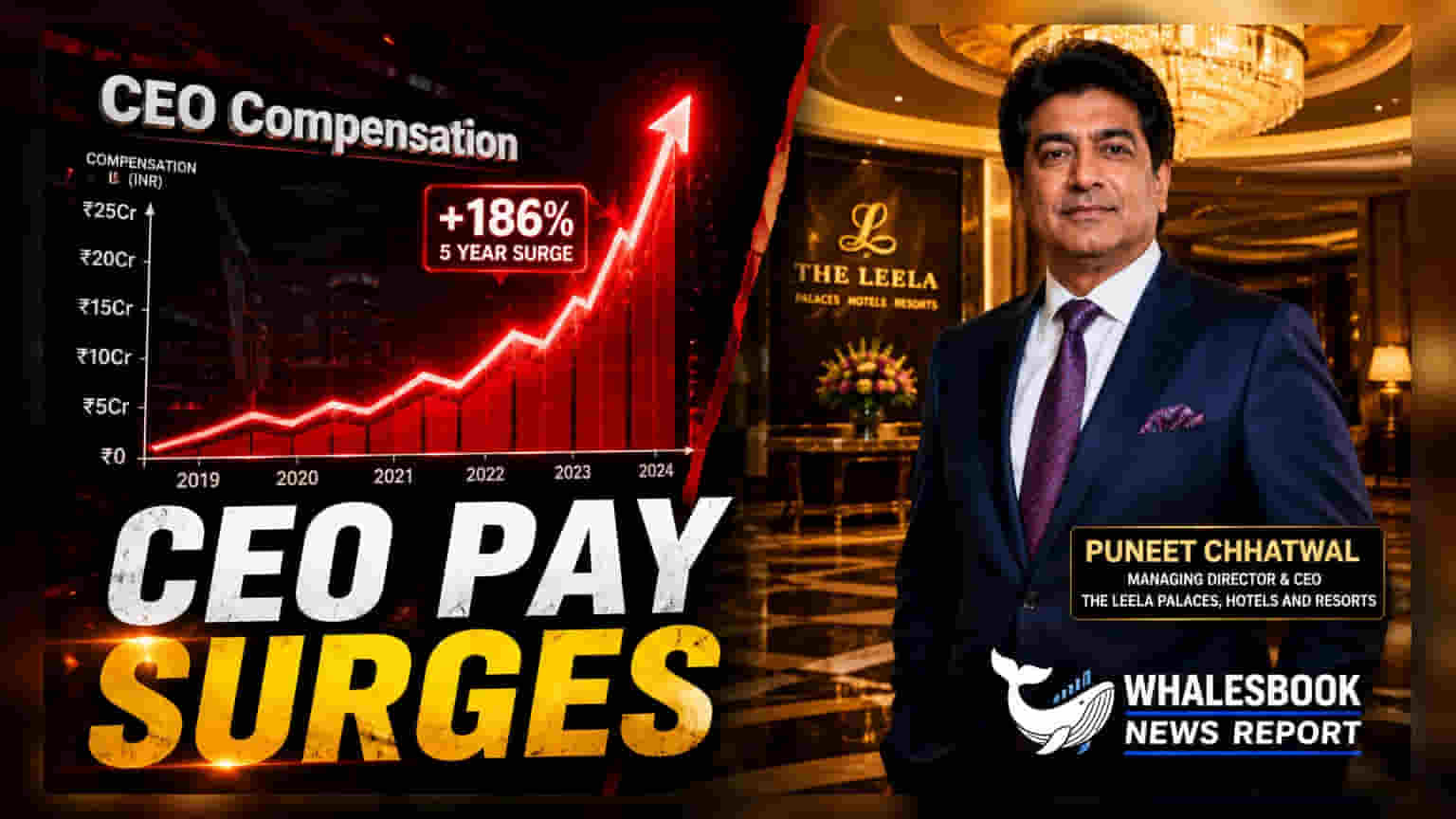
Indian Hotels Company Ltd (IHCL) CEO Puneet Chhatwal's total remuneration increased 9% to ₹25 crore in FY26, according to the latest annual report. The compensation reflects performance-linked components and salary adjustments approved by shareholders. The ratio of the CEO's pay to the median employee's salary has reached 521.7.
What Happened
Indian Hotels Company Ltd (IHCL), a Tata Group firm, has reported that its Managing Director and CEO, Puneet Chhatwal, earned ₹25 crore in total remuneration for the fiscal year 2026. This marks a 9% increase over the ₹23 crore compensation recorded in the previous fiscal year, FY25. The remuneration package is composed of salary, performance-linked bonuses, perquisites, and commissions. The company's latest annual report outlines these payments, excluding certain provisions such as gratuity and insurance.
Salary Structure and Shareholder Approval
The increase in compensation follows a formal revision to Chhatwal’s pay structure. On June 30, 2026, shareholders approved a proposal to raise the CEO's maximum monthly basic salary from ₹22 lakh to ₹30 lakh. This change, which the Board of Directors initially decided upon on May 11, 2026, became effective on April 1, 2026. The revised salary structure remains in place for the remainder of Chhatwal’s current tenure, which is scheduled to conclude on November 5, 2027.
The Pay Ratio Context
The annual report also highlights the widening gap between the CEO's compensation and the earnings of the average employee at IHCL. The ratio of Chhatwal’s pay to the median employee remuneration moved from 506.1 in FY25 to 521.7 in FY26. While the CEO's pay saw a 9% growth, the median employee salary at the hotel chain grew by 5.5% during the same period, an improvement over the 4.7% growth recorded in the prior year.
Business Context and Performance Link
Executive compensation at large listed companies is often tied to performance-linked bonuses and commissions, which fluctuate based on the company's financial results and profit growth. For investors, executive pay packages are monitorable as they reflect management’s alignment with shareholder value and the company’s internal cost structure. In the hospitality sector, where human capital is the primary driver of service quality and revenue, analysts often watch these trends to gauge how effectively the company balances employee welfare with the retention of top management.
What Investors Should Track
Investors typically look at the broader compensation trend in relation to the company's revenue growth, profit margins, and overall return on capital employed (ROCE). Since this increase follows shareholder approval, the primary monitorables for future disclosures include how the management’s performance incentives align with the company’s expansion plans, profit targets, and its ability to maintain competitive margins amidst rising operational costs in the hospitality industry.