 Whalesbook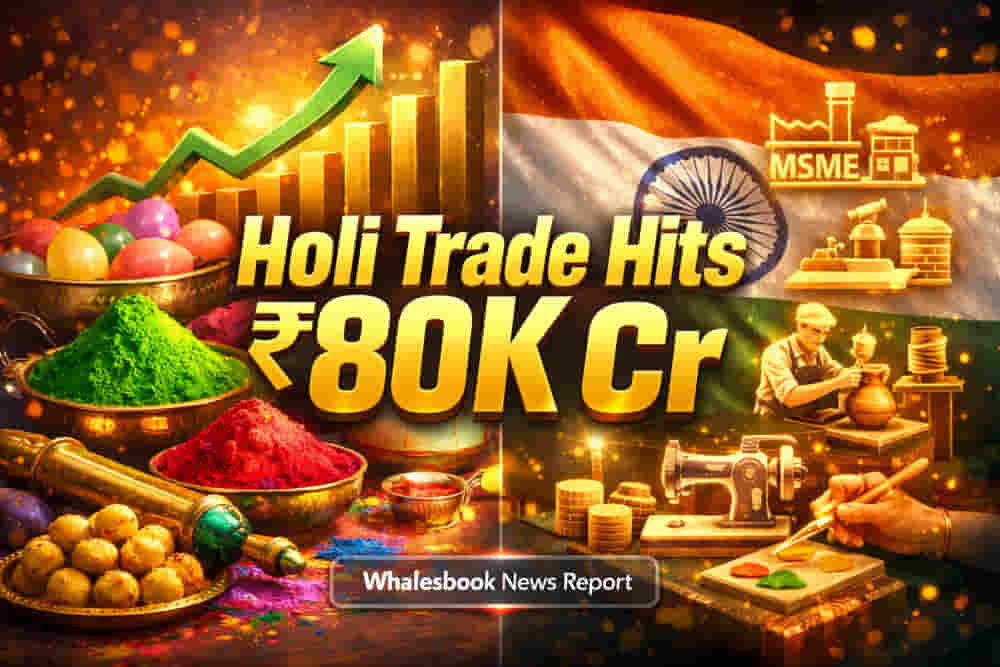
### The Domestic Tide
The festive spirit of Holi is poised to drive an economic surge, with the Confederation of All India Traders (CAIT) forecasting nationwide business exceeding ₹80,000 crore. This projection marks a substantial 25% year-on-year growth from an estimated ₹60,000 crore in the prior year. A key driver of this expansion is the strong adoption of Prime Minister Narendra Modi's "Vocal for Local" initiative. This movement is demonstrably curtailing the market presence of Chinese imports, a trend observed since 2021 [cite:Source A]. Instead, Indian-manufactured goods such as herbal gulal, natural colours, pichkaris, apparel, and pooja materials are experiencing heightened demand. This shift represents a strategic redirection of consumer spending towards domestic production, directly impacting import dynamics and reinforcing self-reliance objectives.
### MSME Lifeline
This festive boom offers a significant economic injection to India's micro, small, and medium enterprises (MSMEs), which form the backbone of the country's industrial economy. MSMEs contribute approximately 31.1% to India's GDP and nearly half of its exports, while employing millions. The "Vocal for Local" campaign explicitly aims to support these smaller businesses, fostering local manufacturing and reducing dependence on foreign goods. The projected ₹80,000 crore turnover from Holi is expected to benefit traders, retailers, and cottage industries, providing a critical revenue stream and strengthening the domestic value chain. The rise in festive spending has historically shown robust growth, with Holi-related sales surging approximately 200% between 2022 and 2025, reaching an estimated ₹60,000 crore in 2025. The current forecast signals continued momentum.
### Consumer Confidence Buoyancy
Underpinning this optimistic economic outlook is a strengthening consumer sentiment. India ranked second globally in consumer confidence in January 2026, with an index score of 60.7, reflecting optimism about economic growth and job prospects. This confidence is translating into increased household spending intent, with nearly 60% of consumers expecting to increase their expenditure over the next six months, particularly on discretionary items like automobiles and electronics. The retail sector itself is poised for accelerated growth in 2026, with expectations of double-digit expansion driven by demand from Tier-2 and Tier-3 cities, alongside continued digital integration. The broader festive season spending in 2025 was projected to reach ₹2.19 lakh crore, indicating a strong propensity for discretionary purchases during key periods.
### The Bear Case: Structural Dependencies and Competitive Pressures
Despite the robust domestic demand and "Vocal for Local" push, structural dependencies and competitive pressures pose challenges. While imports of Chinese consumer goods for festivals are declining, India still relies on foreign sources for certain raw materials and components, particularly in sectors like electronics and textiles. Aggressive pricing from Chinese manufacturers continues to undermine Indian competitiveness in broader industrial goods, potentially impacting long-term export potential if not managed strategically. Furthermore, while consumer sentiment is strong, persistent inflation in select categories like gold jewellery and certain food items, alongside global economic uncertainties, could temper discretionary spending if these pressures intensify. The retail sector faces intense competition from new formats and brands, requiring operational discipline and cost control for sustained company-level performance, even amidst overall industry growth.
### Future Outlook
The projected ₹80,000 crore for Holi represents more than just seasonal sales; it signifies a deeper economic shift driven by domestic consumption and strategic import substitution. As India's retail market is anticipated to reach ₹200 trillion over the next decade, sustained growth will depend on fostering the MSME sector and ensuring quality and price competitiveness against global alternatives. The momentum generated by initiatives like "Vocal for Local" is critical for positioning India as a robust manufacturing hub, though challenges related to infrastructure and global economic headwinds remain factors to monitor.