

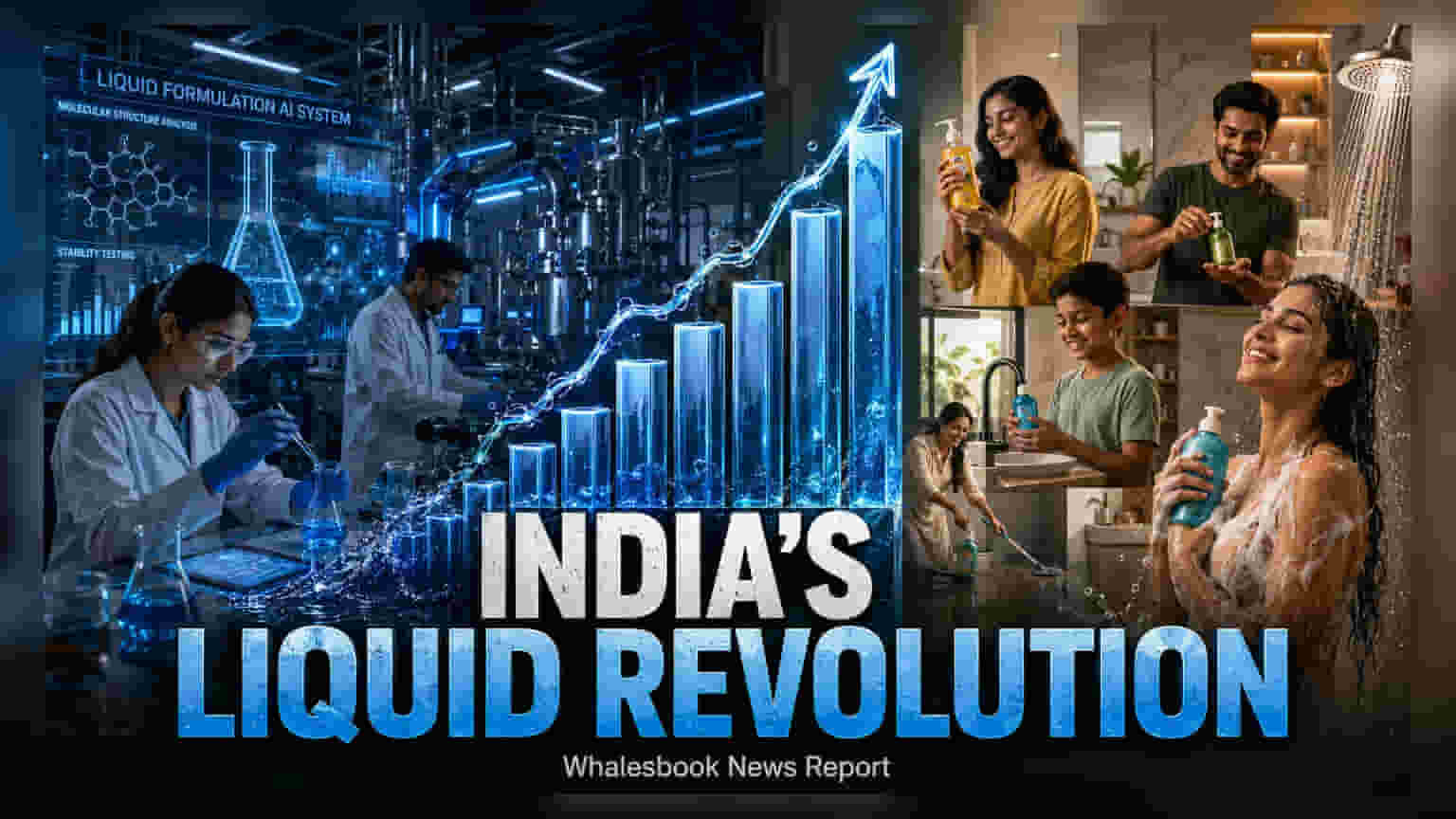
Hindustan Unilever is investing ₹2,000 crore over two years to expand its liquid product manufacturing capacity. The move targets the shifting consumer preference from traditional soap bars and powders to liquid formats, a category currently seeing 42% volume growth. For investors, this highlights the company's push into higher-value segments as liquid products still hold significant room for market penetration.
Indian consumer habits are undergoing a distinct change, with a clear migration from traditional soap bars and detergents toward liquid-based personal and home care products. To capitalize on this trend, Hindustan Unilever (HUL) has committed ₹2,000 crore in capital spending over the next two years. This capital is focused on scaling up manufacturing capacity for products such as shower gels, liquid hand washes, and specialized cleaning agents.
Strategic Focus on Liquid Formats
Beyond physical expansion, HUL has launched a dedicated Liquids Lab of the Future in Mumbai. By using AI-driven technology, the company aims to speed up its product development cycle by six times, allowing for faster response to changing consumer preferences. This move is part of a broader industry effort to increase the market share of liquid products, which currently account for only 5-10% of total sales in most relevant categories. By focusing on low-penetration segments, the company intends to drive long-term volume growth.
Market data underscores why this transition matters. In the year ending June 2026, liquid format volume grew by 42%, while traditional products saw growth of only 3%. Furthermore, household penetration for liquid formats reached 58%, up from 52% in the previous year. While urban markets have led the change, rural demand is growing at an even faster pace of 48%, suggesting that the appeal of liquid products—often tied to convenience and ease of use—is becoming widespread across different demographic profiles.
Sector-Wide Competition and Adoption
Other major consumer goods players are also recalibrating their portfolios to align with this shift. Wipro Consumer Care & Lighting is utilizing sachets to increase reach in rural areas while simultaneously expanding its Santoor brand's presence in the shower gel market. Similarly, Colgate-Palmolive India is leveraging a digital-first strategy to grow its Palmolive body wash and premium hand wash business. Meanwhile, L'Oréal India is using its online-focused acquisitions to capture demand in categories like body washes and men's grooming.
Investor Monitorables
The shift toward liquid products is supported by rising premiumization, evolving urban lifestyles, and the quick commerce ecosystem, which simplifies the delivery of bulkier liquid products. However, investors may want to monitor how this transition impacts the company’s profit margins in the near term. The heavy capital spending required for capacity expansion and the cost of aggressive marketing initiatives to convert soap bar users to liquid formats will be key areas to track. Additionally, the ability of these companies to maintain their pricing power in a competitive landscape, while scaling these new formats, will determine the long-term success of these investments.