 Whalesbook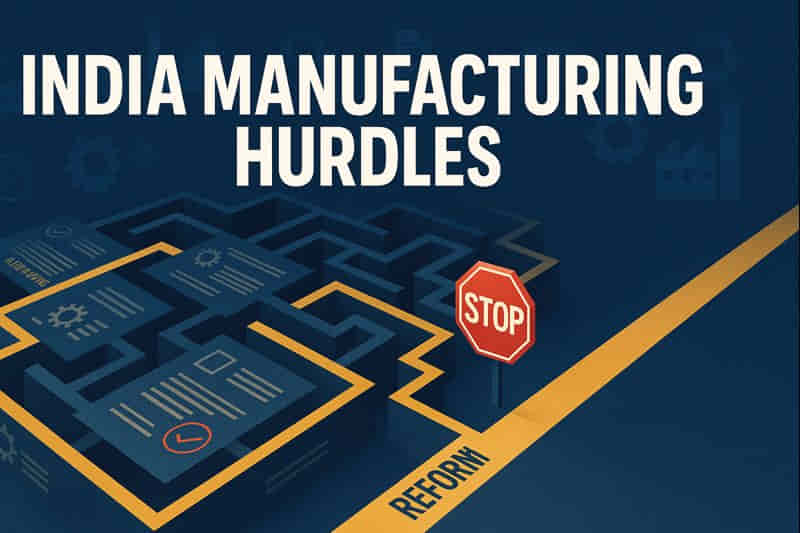
Make in India Vision Undermined by Bureaucratic NOC Culture
India's ambition to become a global manufacturing powerhouse, central to Prime Minister Narendra Modi's 'Make in India' and 'Atmanirbharta' initiatives, is being significantly challenged by a pervasive culture of redundant No Objection Certificates (NOCs). This bureaucratic hurdle, particularly detrimental to sunrise sectors like medical devices, risks derailing the progress envisioned by the National Medical Device Policy 2023 and the broader goal of 'Viksit Bharat 2047'. Despite improvements in the country's Ease of Doing Business rankings, the reality on the ground for many entrepreneurs is a persistent struggle against unnecessary regulatory roadblocks.
The Core Issue of Redundant NOCs
The 'NOC culture' stems from a bureaucratic mindset that often prioritizes control over efficiency. Many NOC requirements are not anchored in law but are rather administrative demands that create friction. This system stifles entrepreneurial energy, leads to prolonged operational delays, and weakens the competitiveness of Indian businesses on the global stage. It directly contradicts the spirit of 'Minimum Government, Maximum Governance' by imposing non-statutory compliance burdens.
Regulatory Maze Hindering Medical Devices
The medical device sector, poised for significant growth, is a prime example of the challenges posed by this system. Manufacturers often find themselves navigating a complex maze of clearances that vary by jurisdiction and individual officer. For instance, essential permits like those for power or pollution control are sought even when compliance under the Air and Water Acts is already established. Obtaining permission for minor installations, like a diesel tank, can trigger demands for NOCs from multiple district departments. Fire safety NOCs are requested despite adherence to national building codes and municipal approvals.
Delays and Increased Costs for Manufacturers
These duplicative requirements add no genuine value but consume precious time and financial resources. Exporters, especially in sensitive sectors like medical devices, frequently face disruptions. Consignments can be stranded at ports for days due to unnecessary NOC demands from customs authorities, despite clear provisions in the Customs Act stating such requirements do not exist. This erodes India's credibility as a reliable global supplier. Manufacturers also report knocking on the doors of Port Offices and State Drug Controllers for permissions already covered under the Medical Device Rules, 2017, only to be directed to seek NOCs from higher authorities or other departments. This overlap contradicts the intent of a distinct regulatory pathway.
Financial Implications for SMEs
The cascading impact of these non-statutory NOCs is severe. Manufacturers invest heavily in consultants and informal facilitation services to navigate the bureaucracy. For Small and Medium Enterprises (SMEs), which form the backbone of India's manufacturing economy, this diverts critical resources away from innovation, process quality enhancement, and export market development.
The Path to Streamlined Governance
To truly realize the potential of 'Make in India' and the National Medical Device Policy, arbitrary NOCs must be eliminated. A robust online approval system, featuring transparent checklists, defined timelines, and effective grievance redressal mechanisms, is essential for ensuring accountability. Ministries need to proactively revisit existing NOC requirements and scrap those that are redundant or duplicative. For sectors like medical devices, which Parliament's Standing Committee has identified as deserving a dedicated regulatory framework, establishing a regulator comprising domain experts would further streamline approvals and prevent arbitrary overlaps.
Strategic Imperative for Growth
Doing away with arbitrary NOCs is more than an administrative reform; it is a strategic imperative for economic growth. By removing these hurdles, India can unlock innovation, attract substantial investment, and cement its position as a global leader not only in medical devices but across its manufacturing landscape.
Impact Rating: 8/10
Difficult Terms Explained
- NOC (No Objection Certificate): A document issued by an authority indicating no objection to a proposed action.
- Make in India: A government initiative to boost domestic manufacturing.
- Atmanirbharta: Self-reliance, particularly in economic terms.
- National Medical Device Policy 2023: A policy designed to promote the Indian medical device sector.
- Viksit Bharat 2047: The vision of a developed India by the year 2047.
- Minimum Government, Maximum Governance: A principle aimed at reducing government intervention while improving governance effectiveness.
- SMEs (Small and Medium Enterprises): Businesses that fall below certain thresholds in terms of investment and turnover, vital for employment.
- CDSCO: Central Drugs Standard Control Organisation, the main regulatory body for drugs and medical devices in India.