

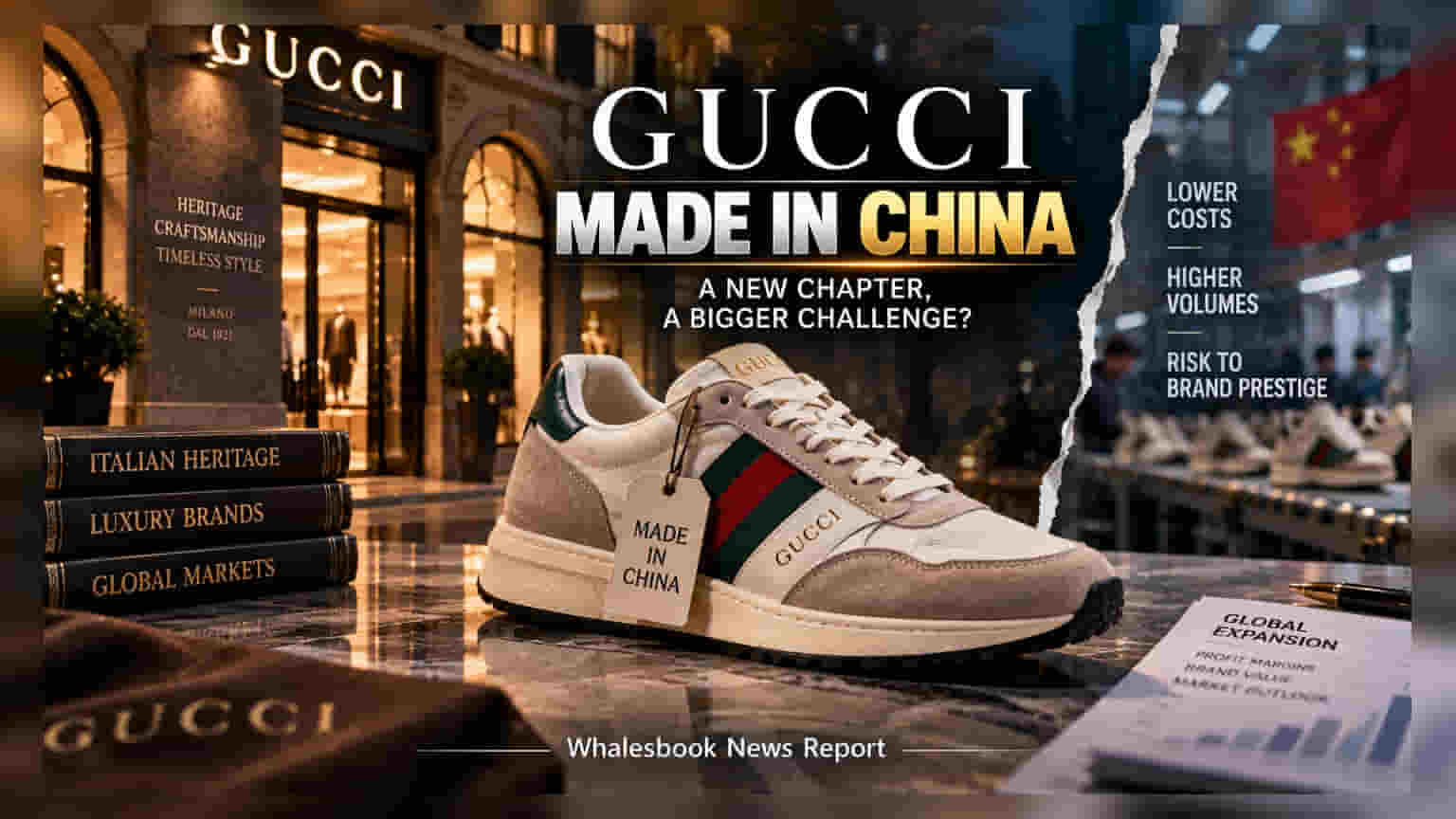
Luxury brand Gucci has started producing some sneaker models in China, departing from its traditional Italian manufacturing. This move aims to lower costs as parent company Kering battles a three-year sales decline. Investors are now concerned that this shift could weaken the brand's premium image and long-term pricing power in the luxury market.
Gucci has begun producing select sneaker models in China, a notable shift for a brand built on the prestige of Italian craftsmanship. The new sneaker line, currently priced around €800 in Europe and $1,000 in the United States, represents a move toward more flexible manufacturing. While this decision aims to reduce production costs, it introduces a significant challenge for parent company Kering as it attempts to manage its financial performance.
Balancing Margins and Brand Prestige
For luxury brands, the manufacturing location is often tied to the product's value and price. By shifting production to China, Kering is looking to optimize its supply chain and potentially improve profit margins. This comes as the company deals with a persistent sales decline that has lasted over three years, forcing the group to close stores and reconsider its market strategy. Analysts, including those at Barclays, have raised concerns that this move, combined with recent price cuts for items in the Chinese market, could signal a shift toward protecting short-term volume at the risk of long-term brand equity.
The Investor Dilemma
Investors are closely evaluating whether this strategy will help stabilize the company or erode its position as a high-end luxury leader. The luxury sector relies heavily on the 'Made in Italy' or 'Made in France' label to justify premium pricing. If customers perceive the new production strategy as a reduction in quality or exclusivity, the brand could face pressure on its pricing power. Unlike some peers in the luxury sector that have maintained strict European manufacturing standards to preserve brand value, Kering is navigating a difficult path by balancing efficiency with the perception of luxury.
What Investors Should Monitor
Moving forward, the primary concern for shareholders is whether Gucci can successfully execute this cost-saving strategy without damaging the brand's cachet. Investors will be tracking quarterly sales data and profitability margins to see if the reduction in production costs translates into better earnings. Additionally, the market will look for evidence of whether the brand can maintain its premium pricing in a competitive global market or if it will be forced to compete on volume, which would be a departure from its historical business model.