 Whalesbook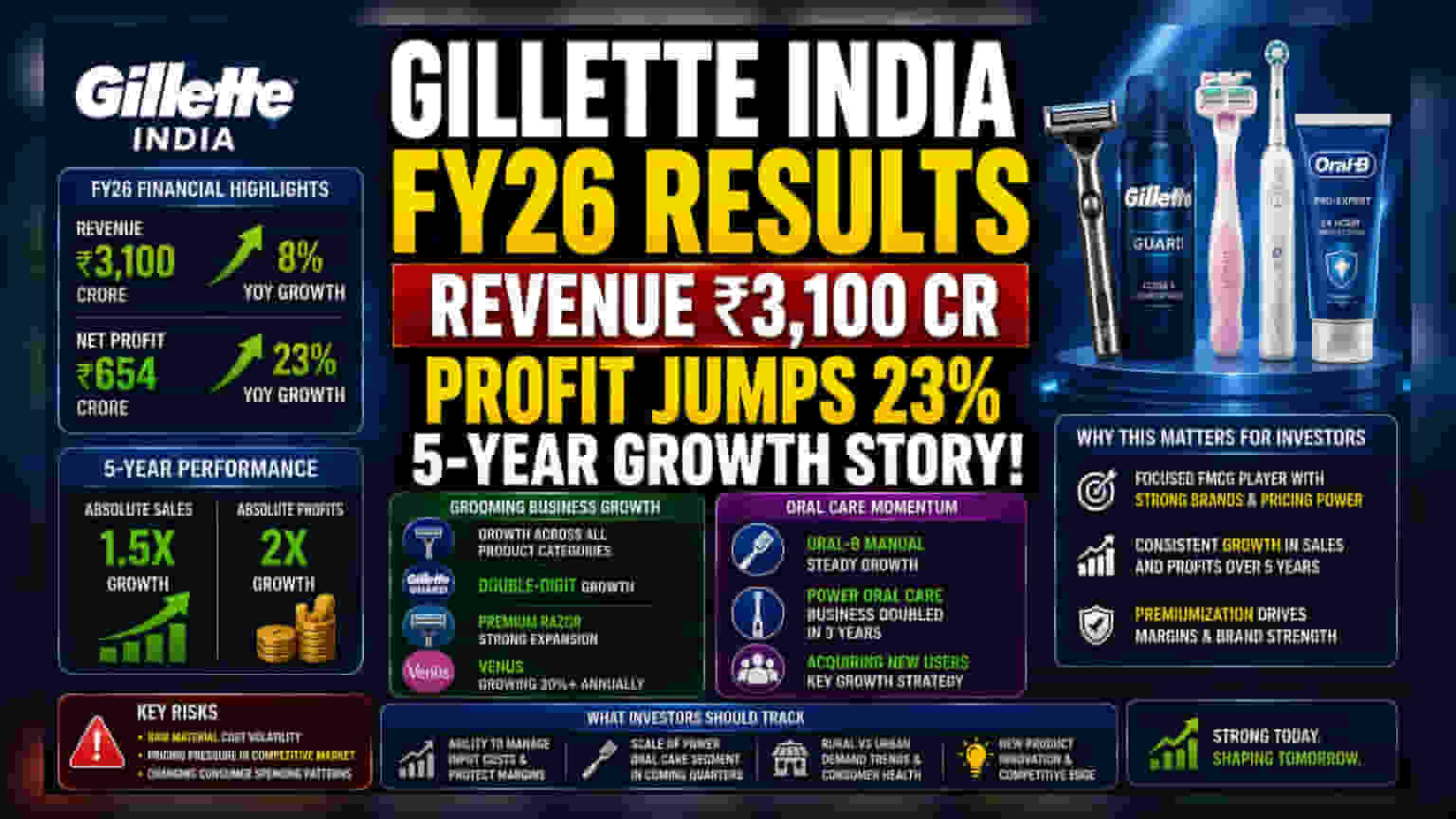


Gillette India reported strong FY26 results with an 8% increase in sales to ₹3,100 crore and a 23% rise in profit to ₹654 crore. The company highlights a five-year trend of consistent growth, driven by its grooming and oral care segments. Investors are evaluating the impact of this expansion on the company's long-term financial health.
What Happened
Gillette India recently announced its financial results for the fiscal year ending 2026, reporting revenue of ₹3,100 crore. This represents an 8% growth compared to the previous year. The company's net profit saw a stronger increase, rising 23% to ₹654 crore. Management also shared data regarding the company's five-year performance, noting that absolute sales have grown 1.5 times during this period, while absolute profits have doubled.
The Business Growth Drivers
The company’s growth is anchored by its two core businesses: Grooming and Oral Care. In the grooming segment, the company reported growth across all product categories. Notably, the Gillette Guard brand continues to see double-digit growth, while the premium razor segment has also experienced strong expansion. The company’s female grooming brand, Venus, is currently growing at an annual rate of over 20%.
In the oral care space, the company’s Oral-B brand remains a key focus. While the manual toothbrush business is seeing steady growth, the Power Oral Care segment has doubled its business over the last three years. The management indicated that acquiring new users remains the primary growth strategy for these categories.
Why This Matters For Investors
Gillette India operates in a niche segment of the Fast-Moving Consumer Goods (FMCG) market. Unlike companies that sell a vast basket of daily essential goods, Gillette focuses heavily on personal care and grooming. This concentrated business model allows the company to focus on specific product quality and premiumization—the move toward higher-value products. The consistent growth reported over five years suggests that the company has been able to maintain market share and pricing power despite fluctuating economic conditions.
Risks and Sector Context
While the financial performance appears stable, investors typically monitor specific risks associated with this business model. As a manufacturer of blades, razors, and plastic-based oral care products, Gillette India is sensitive to the cost of raw materials. Changes in the prices of steel, specialty metals, and polymers can directly impact profit margins. If raw material costs rise significantly, the company must decide whether to absorb the costs or pass them on to consumers through price hikes. Passing on costs could potentially affect demand in a price-sensitive market.
Additionally, the broader FMCG sector in India often faces pressure from changing consumer spending habits. While urban demand for premium grooming products has been strong, sustained growth depends on the company's ability to keep attracting new customers and maintaining brand loyalty in an increasingly competitive market with both established players and newer, direct-to-consumer brands.
How Investors May Read This
The financial results show that the company has maintained a trend of growing its top line (sales) and bottom line (profit). For shareholders, the key is the consistency of this growth. Because the company is part of a large multinational group, it typically maintains a disciplined approach to capital allocation. Investors generally track whether the company can continue to deliver these margins without needing to rely heavily on debt.
What Investors Should Track
Moving forward, the primary areas to monitor include the company's ability to manage its input costs and protect its profit margins. Shareholders will likely look for updates on how the Power Oral Care segment scales in the coming quarters, as this is a key growth lever. Additionally, management commentary regarding rural versus urban demand trends will be important, as this provides insight into the health of the broader consumer sector. The company's strategy for new product launches and its ability to maintain its competitive position against other personal care giants remain central to the long-term outlook.