 Whalesbook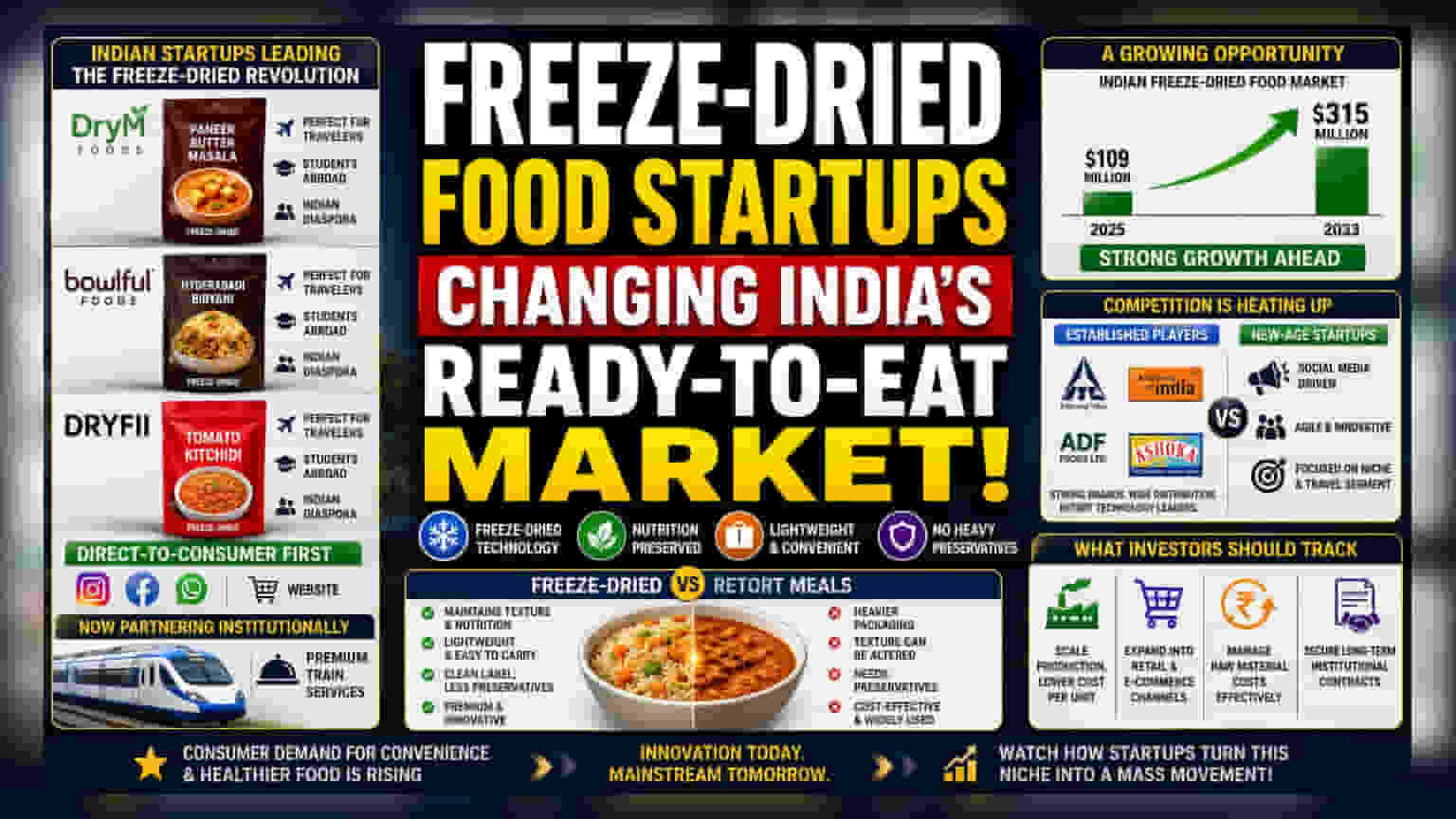


Indian startups like DryM Foods and Bowlful Foods are gaining traction by using freeze-drying technology to offer lightweight, shelf-stable meals. This emerging trend challenges traditional ready-to-eat brands that rely on retort-processing. As the niche market projects growth toward $315 million by 2033, investors are watching whether these players can scale their direct-to-consumer models and effectively compete with established FMCG giants in the food processing sector.
What Happened
A growing number of Indian startups, including DryM Foods, Bowlful Foods, and Dryfii, are entering the ready-to-eat food market by utilizing freeze-drying technology. Unlike conventional methods, freeze-drying removes water from food while it is frozen, which helps in maintaining texture and nutrition without the need for heavy preservatives. These companies are targeting travelers, students studying abroad, and the Indian diaspora who seek convenient, familiar meals. The startups are bypassing traditional retail chains, instead focusing on direct-to-consumer sales through social media and digital platforms. Some are even moving into institutional partnerships, such as supplying to premium train services.
The Shift in Food Technology
For years, the Indian ready-to-eat sector has been dominated by retort-processed meals—a method where food is cooked and sterilized in a pouch. While this method is cost-effective and widely used by major FMCG companies, it often makes the meals heavier and can sometimes alter the texture of the food. Startups using freeze-drying are positioning their products as a premium alternative. Because freeze-dried food is lightweight, it is easier to carry, which is a major advantage for travelers. However, the production process for freeze-drying is generally more expensive than retort processing, which means these companies face a challenge in keeping prices competitive for the mass market.
Competitive Landscape
The entry of these startups creates an interesting dynamic for the ready-to-eat industry. Large established players like ITC, which owns brands such as Kitchens of India, and ADF Foods, known for its Ashoka brand, have built massive supply chains and retail distribution networks over decades. These incumbents typically use traditional packaging methods. The new startup entrants are using a different playbook, relying on word-of-mouth marketing and social media communities to build brand loyalty. While the startups currently operate in a niche segment, their focus on institutional supplies and specific consumer groups suggests they are looking to carve out a permanent place in the mobility and travel food category.
Market Potential and Constraints
The Indian freeze-dried food market is projected to grow from approximately $109 million in 2025 to $315 million by 2033. While this projected growth is positive, it is small compared to the vast, multi-billion dollar Indian processed food industry. Investors should note that scalability remains the primary hurdle. Moving from a niche product to a mass-market offering requires significant investment in manufacturing capacity. Furthermore, these companies must prove that they can maintain profitability while competing with the distribution power and pricing advantages of major food corporations.
How Investors May Read This
The rise of freeze-dried food brands highlights a shift in consumer preference toward convenience and healthier, preservative-free options. While this does not immediately threaten the market share of large FMCG companies, it is a trend that incumbents may monitor closely. If demand for these products sustains, large food companies could either launch their own premium freeze-dried lines or look to acquire successful startups in the space. The key for investors is to observe whether these startups can move beyond the initial phase of social-media-led growth and establish sustainable unit economics and wider availability.
What Investors Should Track
The most important monitorable is whether these startups can scale production to lower the cost per unit. Investors should also track if the companies can successfully expand their distribution beyond direct-to-consumer channels into mainstream retail and e-commerce platforms. Finally, management commentary regarding their ability to manage raw material costs—which can be volatile—and their success in long-term institutional contracts will be critical in determining the viability of these business models.