 Whalesbook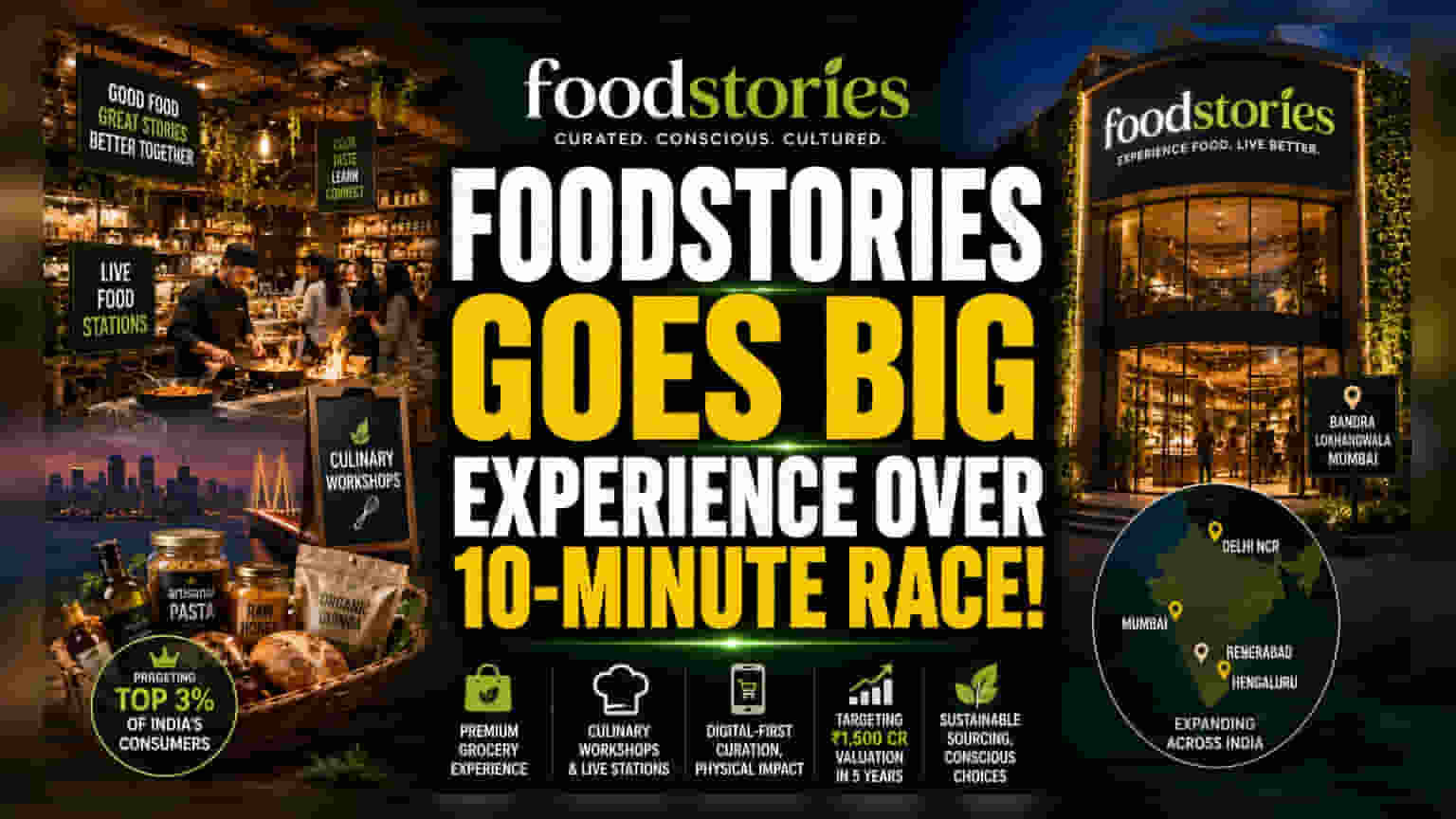


The Experiential Pivot
As India’s grocery sector becomes increasingly dominated by 10-minute delivery promises, Foodstories is executing a deliberate move in the opposite direction. The company is opening flagship destinations in Mumbai’s Bandra and Lokhandwala neighborhoods, creating spaces that blur the lines between retail, hospitality, and cultural gathering. Rather than focusing on the transactional efficiency seen in the quick-commerce sector, the brand is banking on a high-touch model that includes culinary workshops, live food stations, and curated lifestyle zones. This strategy explicitly targets the top 3% of the Indian consumer base, a segment that researchers suggest is shifting its spending from mere utility to identity-driven, experiential consumption.
Scaling Against the Current
The company’s growth plan, which targets a ₹1,500 crore valuation within five years, relies on a digital-first approach to customer acquisition while maintaining premium physical storefronts. Unlike competitors that operate on thin-margin, volume-driven models—where success is tied to delivery speed and cart-filling algorithms—Foodstories utilizes a curation-heavy strategy. By focusing on ingredient provenance and storytelling, the brand attempts to insulate itself from the intense price competition that characterizes the wider retail market. Recent reports indicate the firm is already seeing significant growth, though it remains in a resource-intensive expansion phase as it establishes its footprint in major metropolitan hubs including Delhi NCR, Bengaluru, and Hyderabad.
Structural Risks and the Bear Case
While the Biyani sisters bring a legacy of retail expertise to this venture, the model faces inherent challenges. The high cost of maintaining large, experiential real estate in Tier-1 cities like Mumbai represents a significant fixed-cost burden compared to the decentralized, dark-store-based models of competitors. Furthermore, the company must contend with the volatility of the premium food segment, where customer loyalty is often fleeting and heavily reliant on consistent, high-quality execution. The reliance on imported and artisanal ingredients also leaves the company vulnerable to supply chain disruptions and import-related cost fluctuations. Given the historical insolvency issues that previously impacted the family’s retail operations, market observers remain cautious about the long-term sustainability of capital-intensive retail ventures during periods of macroeconomic uncertainty.
Forward Trajectory
Looking ahead, the success of Foodstories will depend on its ability to transition from a novelty-driven boutique concept to a scalable platform. Plans for further expansion into cities like Pune and Ahmedabad remain contingent on the brand’s ability to cultivate local supply ecosystems and sustain the interest of an increasingly discerning, well-traveled urban audience. Brokerage and industry analysts expect the battle for the premium grocery segment to intensify as quick-commerce players also attempt to push into the gourmet category with higher-margin, private-label offerings.