 Whalesbook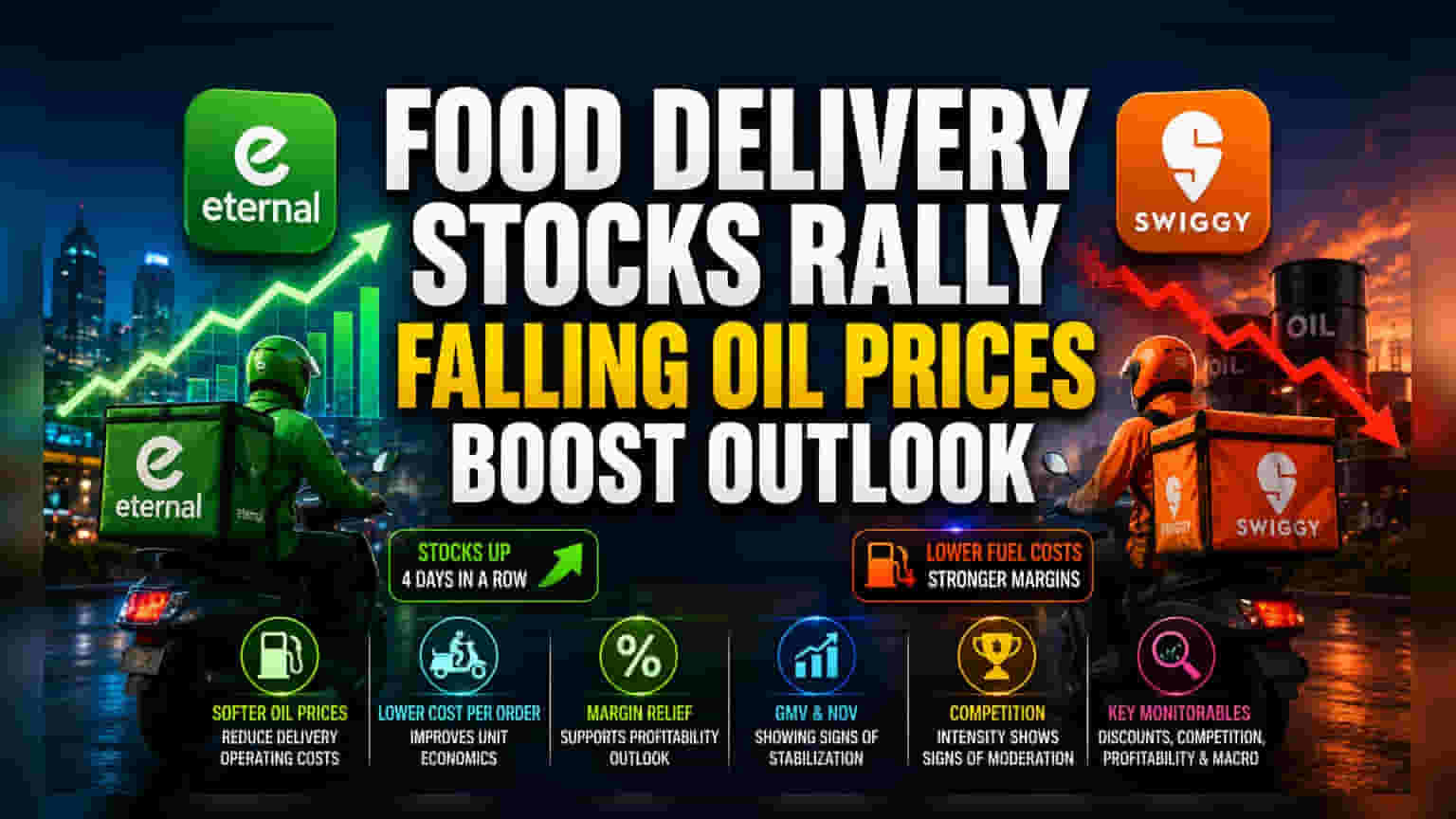


Shares of food delivery firms Eternal and Swiggy have risen for four consecutive days, helped by falling crude oil prices which can lower delivery logistics costs. Investors are watching for signs of stability in the competitive quick commerce sector after a volatile year for internet stocks.
What Happened
Shares of food delivery firms Eternal and Swiggy have seen sustained gains over the last four trading sessions. This positive movement comes as global crude oil prices have softened, a shift that is being welcomed by the logistics-heavy delivery sector. The market has reacted to the prospect of reduced operating costs for these platforms, which rely heavily on fuel for their delivery fleets.
Why Falling Oil Prices Matter
For food delivery and quick commerce companies, fuel is a major variable cost. Delivery partners rely on two-wheelers and other vehicles to complete thousands of daily orders. When crude oil prices drop, it can eventually lead to lower fuel costs, or at least stabilize the cost of running these delivery networks. This can provide some relief to profit margins. If the cost of delivering each order drops, the company may see an improvement in its operating profit per order, assuming they do not pass all these savings to consumers through deep discounts.
The Sector Context
This stock movement happens against the backdrop of a difficult 2026 for many Indian internet-based companies. Earlier this year, this sector faced pressure from macro-economic concerns, worries about how artificial intelligence might change business models, and very intense competition in the quick commerce space. Many stocks in this category had seen declines ranging between 10% and 30%. However, recent market updates have pointed toward a stabilization in important growth indicators, such as Gross Merchandise Value (GMV), which is the total value of goods sold, and Net Order Value (NOV).
How Investors May Read This
Investors are likely interpreting the recent stock gains as a sign that the worst of the cost and competitive pressures may be easing. Analysts have noted that the intensity of competition in quick commerce—a segment known for high marketing and customer acquisition costs—has shown signs of moderation. This is crucial because, in the past, companies have had to spend heavily on discounts to retain market share. If competition stabilizes, it allows these companies to focus more on profitability rather than just growth at any cost.
What Investors Should Track
While the drop in oil prices is a positive signal for short-term operating costs, investors should keep a close watch on several factors. First, track whether the company can actually hold onto these savings or if it must spend more on discounts to keep customers. Second, monitor the competitive landscape in quick commerce, as aggressive discounting by peers could return quickly. Third, look for updates on GMV and profitability metrics in the next quarterly results to see if the stabilization is sustainable. Finally, keep an eye on broader economic trends, as internet stocks remain sensitive to interest rates and general consumer spending levels.