

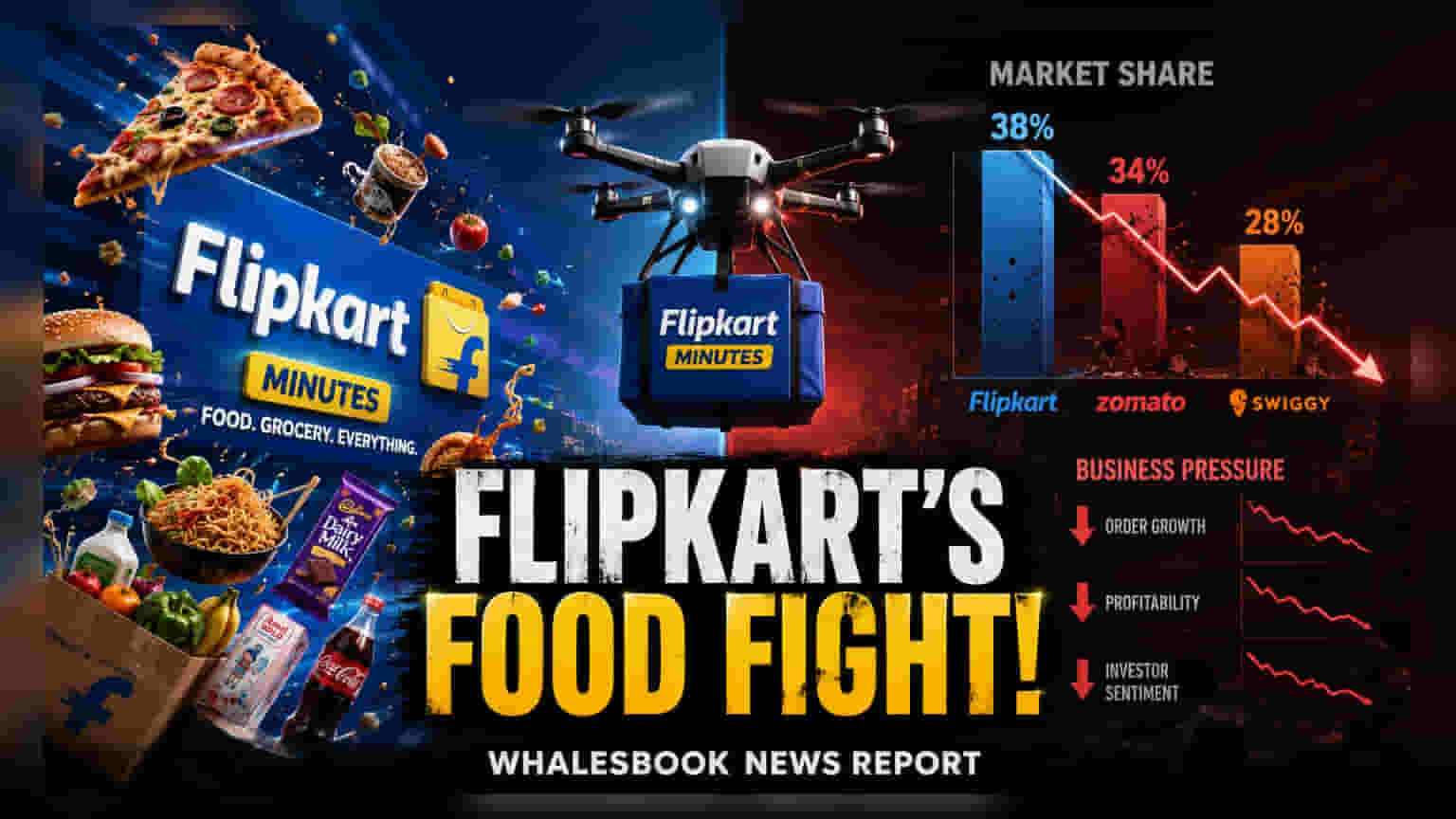
Flipkart plans to begin a food delivery pilot in Bangalore within the next month, potentially utilizing its own app and the Open Network for Digital Commerce (ONDC). This entry targets a market currently dominated by Swiggy and Zomato, as the e-commerce firm seeks to expand its reach into daily consumer services.
Detailed Coverage
Flipkart Group CEO Kalyan Krishnamurthy has confirmed the company’s plans to enter the food delivery market, with an initial pilot program set to launch in Bangalore within the next 30 days. This expansion marks a significant step for the Walmart-owned retailer, which has progressively moved from selling books and electronics to travel services and groceries over the past decade.
Strategic Market Entry and Infrastructure
The company is evaluating two primary methods for this rollout: launching a standalone application or integrating directly with the government-backed Open Network for Digital Commerce (ONDC). By using ONDC, Flipkart could potentially leverage a wider network of restaurants and delivery partners without needing to build an entirely new logistics chain from scratch. The company previously conducted internal experiments in this category, which management indicated provided foundational insights for this new attempt.
Competitive Landscape and Market Share
Flipkart is entering a segment defined by a concentrated duopoly. Industry data from the December quarter indicates that Zomato holds approximately 57% of the market share, while Swiggy accounts for nearly 43%. While these two players maintain a strong hold on urban consumers, Flipkart aims to differentiate itself by appealing to Generation Z consumers. This demographic already shows high engagement with Flipkart’s fashion, beauty, and home categories, as well as their travel bookings via the subsidiary Cleartrip.
Operational Challenges and Risks
Investors may note that the food delivery sector is capital-intensive and requires high-frequency logistics management. Unlike selling durable goods, food delivery relies on rapid, time-sensitive logistics that operate under thin margins. Previous market entries in this space have often faced challenges related to driver retention, restaurant acquisition costs, and intense pricing competition.
Furthermore, the company’s focus on providing a genuine value proposition rather than just deep discounting will be tested against established players who are currently focused on reaching consistent profitability. The success of this pilot will likely depend on the company's ability to maintain service quality while managing the high operational costs associated with quick-commerce or on-demand food delivery models.
Future Monitorables
The most important updates for investors and market followers will include the official launch date, the finalized technology framework—whether it is a dedicated app or ONDC integration—and the scale of the pilot program in Bangalore. Additionally, management commentary regarding the potential capital spending required for this venture and its impact on the group's overall profit margins will be essential to track as the pilot expands beyond its initial testing phase.