

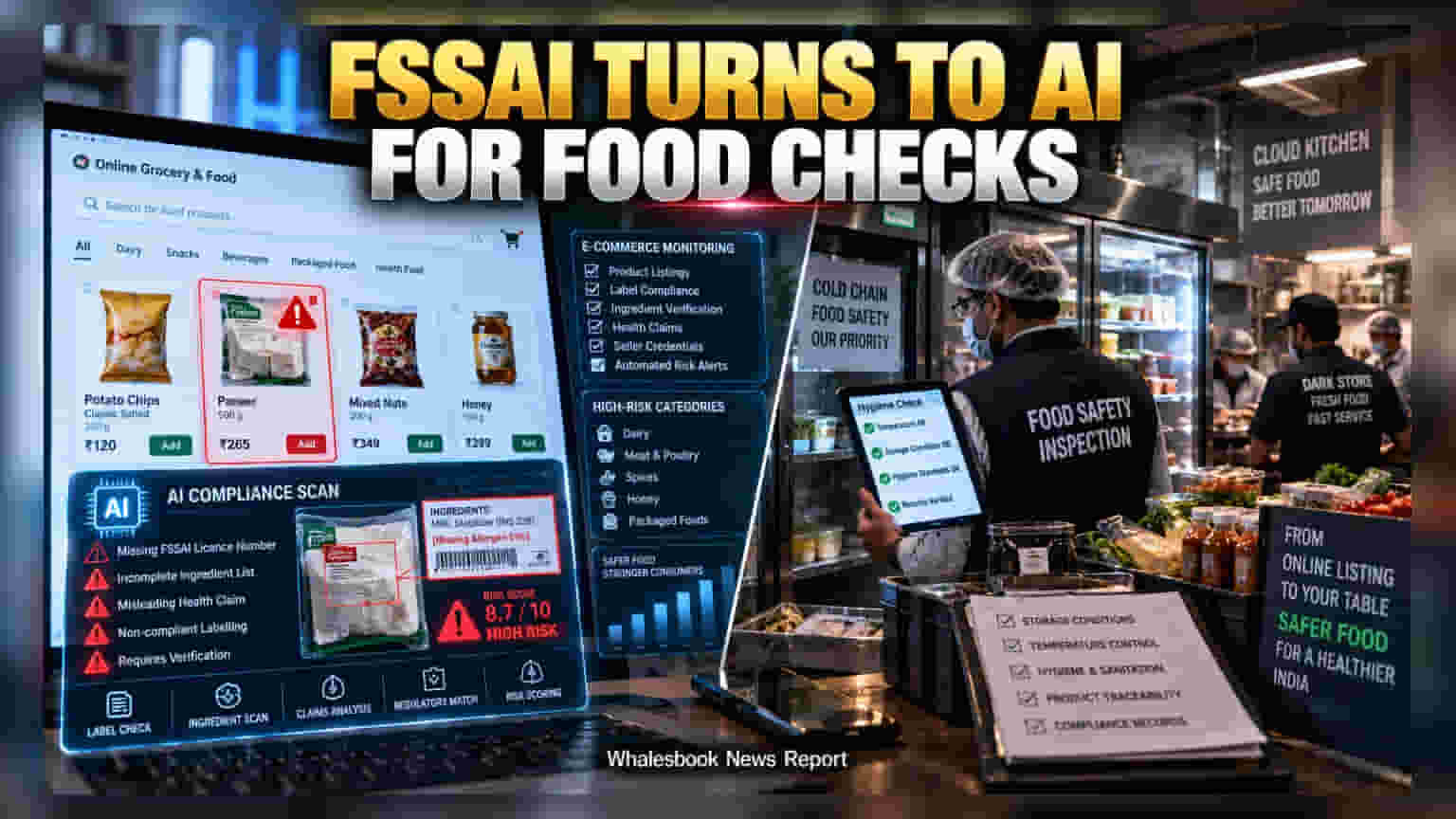
The Food Safety and Standards Authority of India is testing an AI-based system to monitor online platforms for safety violations. This move increases oversight on dark stores and cloud kitchens, potentially raising compliance costs for quick-commerce and food delivery companies.
The Food Safety and Standards Authority of India (FSSAI) is taking a technology-driven approach to monitor compliance across online food marketplaces. The regulator is currently testing an artificial intelligence-based system, developed in collaboration with the Ministry of Electronics and Information Technology (MeitY), to automatically flag safety violations on e-commerce platforms, quick-commerce apps, and delivery services.
This initiative marks a shift in how the regulator enforces rules. Instead of relying solely on physical inspections, the FSSAI is moving toward automated, data-led monitoring. Digital listings make it easier for authorities to track data such as product labels, ingredients, and claims, allowing the AI to identify potential non-compliance before a physical inspection is even triggered. This development is relevant for investors monitoring the operational expenses of major food delivery and quick-commerce players, as tighter automated scrutiny often leads to higher spending on compliance teams, catalog auditing, and seller verification.
FSSAI has maintained a firm stance that e-commerce platforms hold direct responsibility for the products listed on their sites. Platforms cannot pass full liability to the manufacturers or third-party sellers. This means that if a product lacks a mandatory label or contains incorrect information, the marketplace itself may face regulatory action. As the number of dark stores and cloud kitchens continues to grow rapidly in India, this increased oversight could impact how these companies manage their inventory and third-party partnerships.
Regulators are also focusing on high-risk categories such as dairy, meat, poultry, spices, and honey. Dark stores are being assessed for cold-chain standards, while cloud kitchens are under scrutiny for hygiene and sanitation protocols. The FSSAI already uses software to classify businesses into risk categories, and those with a history of notices or licence issues face more frequent inspections. The introduction of this AI tool is expected to refine this risk-based approach further.
The key monitorable for the industry will be the speed and accuracy of the AI deployment. Companies that have invested in robust automated quality control systems may be better positioned to handle these regulatory changes. Investors may track future updates on compliance costs and whether the FSSAI’s automated findings lead to a rise in stop-work orders or penalties for major delivery and quick-commerce platforms.