

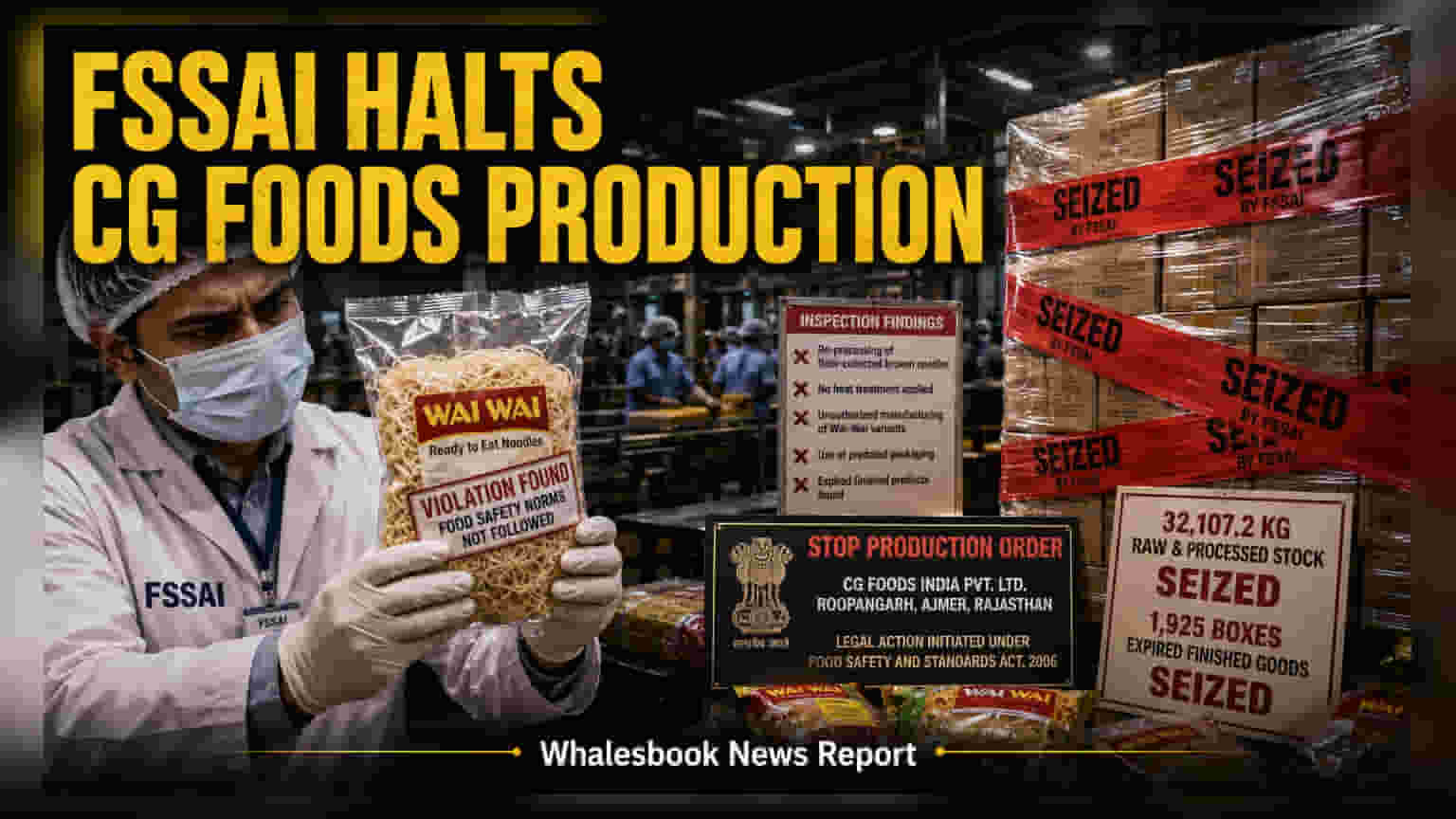
The Food Safety and Standards Authority of India (FSSAI) has ordered CG Foods India to halt production at its Rajasthan facility following severe hygiene violations. Authorities seized over 32,000 kilograms of stock after discovering floor-collected noodles were being processed into snacks. This action, part of a wider regulatory crackdown, poses significant legal and reputational risks for the company.
The Food Safety and Standards Authority of India (FSSAI) issued a stop-production order on September 3, 2026, for the CG Foods India facility located in Roopangarh, Ajmer, Rajasthan. This enforcement action follows an inspection that uncovered major failures in food safety and manufacturing standards at the unit.
Findings of Hygiene Violations
During the surprise check, inspectors reportedly found the company re-processing floor-collected, broken noodles into its commercial snack lines without the required heat treatment. The inspection also identified unauthorized manufacturing of several 'Wai-Wai' product variants and the use of predated packaging. These practices directly violate food safety regulations designed to protect consumer health.
Authorities have taken decisive action by seizing 32,107.2 kilograms of raw and processed stock found at the facility. Furthermore, inspectors confiscated 1,925 boxes of finished goods that were found to be expired. The regulator has now initiated formal legal proceedings against the company under the Food Safety and Standards Act, 2006, and further laboratory testing is underway to assess the full extent of the contamination.
Regulatory and Historical Context
While CG Foods India is a private limited company and not listed on stock exchanges, the brand is widely recognized in the Indian snack market. This regulatory intervention creates significant reputational risk for the company’s flagship 'Wai-Wai' brand and its associated snack products. This is not the company’s first run-in with regulatory bodies; the firm was previously flagged in February 2026 regarding a GSTAT order related to GST profiteering, indicating a history of compliance challenges.
The current action is part of a broader, intensified effort by federal and state regulators to audit food manufacturing plants across the country. Agencies are increasingly targeting hygiene lapses, labeling irregularities, and unauthorized manufacturing processes. This zero-tolerance approach has recently affected both large multinational brands and regional manufacturers, signaling a tightening environment for the entire fast-moving consumer goods (FMCG) sector.
What to Monitor Next
The immediate impact of this order is the suspension of production for the affected snack lines. For stakeholders and consumers, the next important developments will include the outcome of the formal legal proceedings and the laboratory results of the seized samples. Investors and industry observers will likely watch to see if the regulator extends its scrutiny to other manufacturing units owned by the company or if the firm can provide evidence of systemic corrective measures to resume operations.