

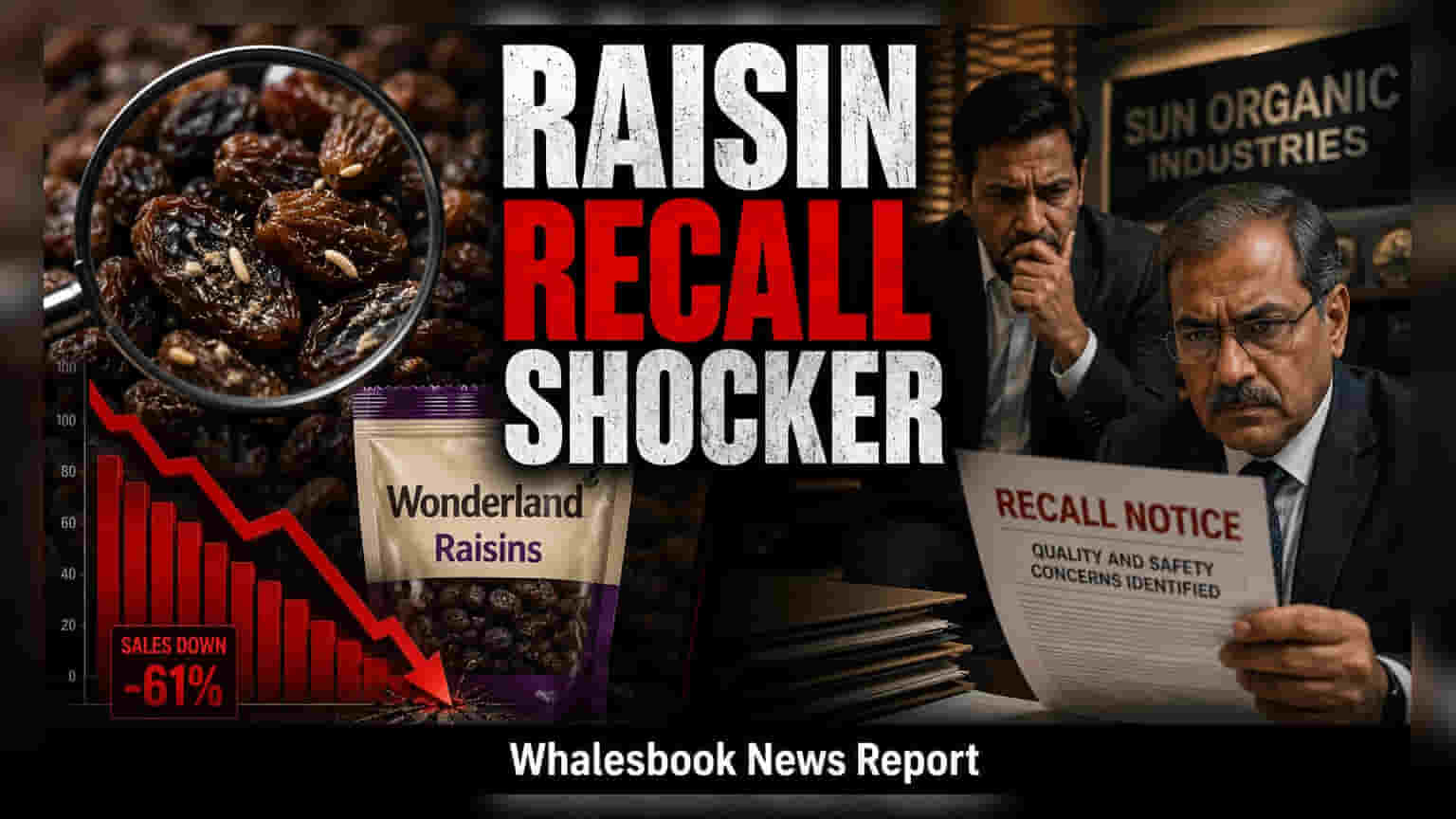
The food regulator FSSAI has ordered Sun Organic Industries to recall its Wonderland Raisins due to pesticide levels exceeding safety limits. This mandatory recall follows laboratory confirmation that the products failed to meet national food safety standards.
The Food Safety and Standards Authority of India (FSSAI) has directed Sun Organic Industries Pvt Ltd to immediately recall its Wonderland Raisins from the market. This regulatory intervention follows findings that samples of the product contained pesticide residues well above the maximum limits allowed under the Food Safety and Standards Regulations, 2011.
Lab Tests Confirm Safety Breach
The regulatory action was initiated after samples collected by the Chief Food Safety Officer of the FSSAI Northern Region were analyzed. Two separate facilities, the National Food Laboratory in Ghaziabad and the Referral Laboratory at NIFTEM-K, tested the samples. Both laboratories confirmed that the pesticide residues were at levels deemed unsafe for human consumption, leading the regulator to classify the specific batch as non-conforming to established safety norms.
Recall Process and Next Steps
Under the FSS (Food Recall Procedure) Regulations, Sun Organic Industries is now legally required to withdraw the affected batch from all supply chain points immediately. The regulator has instructed the company to halt sales of these products and provide a detailed report on the progress of the recall. This includes maintaining records of all items successfully recovered from the market to ensure they do not reach consumers.
Beyond the immediate recall, the company is also obligated to perform a root cause analysis and implement corrective actions to prevent such safety violations from recurring. For consumers and distributors, this means checking specific batch details against the company's official recall notice to confirm if any held inventory is affected.
The most important monitorable for stakeholders now will be how the company manages the logistics of this recall and whether it can satisfy regulators that it has fixed the quality control processes in its manufacturing facility. The company's future compliance status with FSSAI will be critical, as repeat violations can lead to more severe penalties or restrictions on its product distribution licenses.