

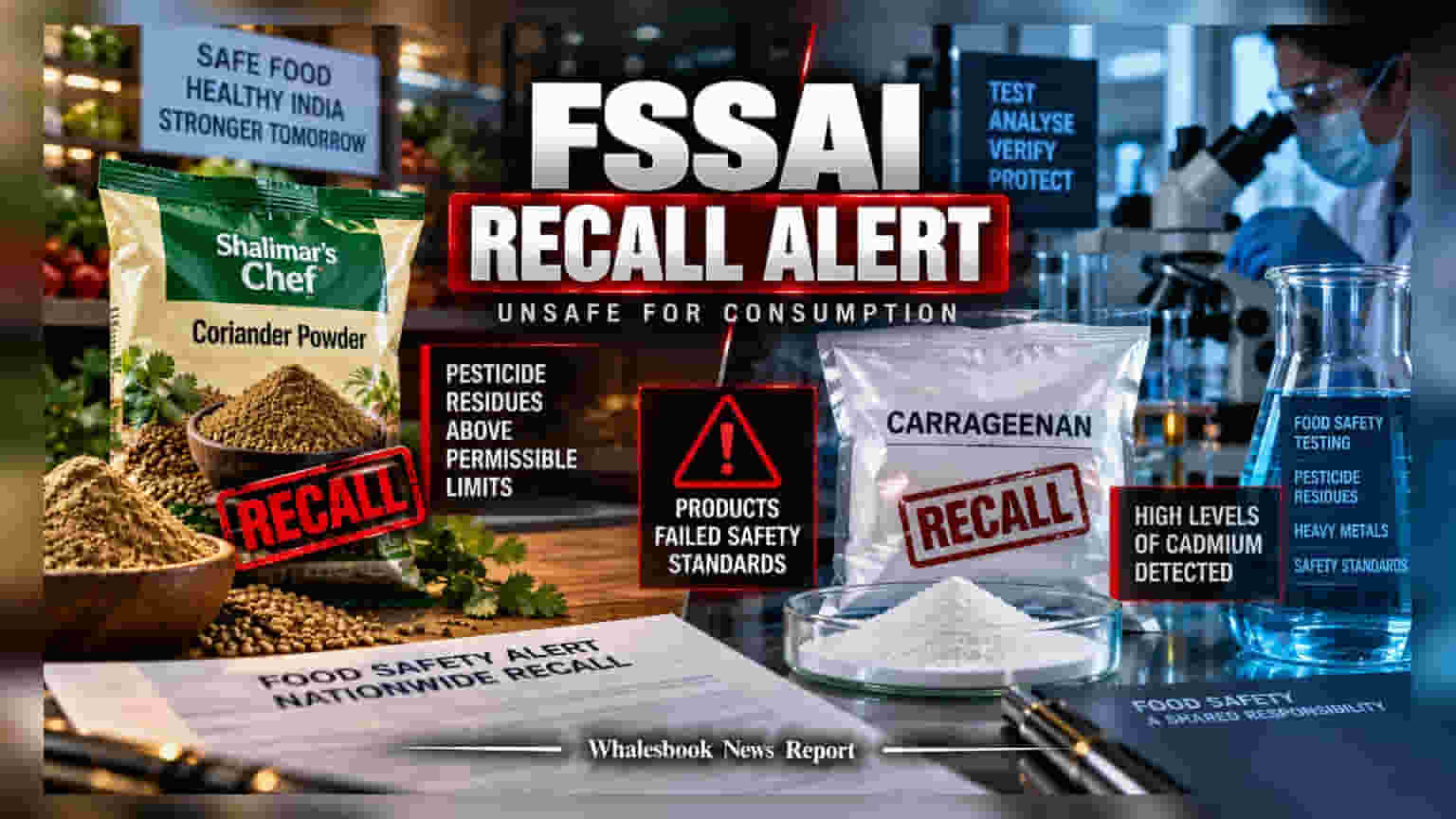
The FSSAI has issued a nationwide recall for 'Shalimar's Chef - Coriander Powder' and 'Carrageenan' due to pesticide and heavy metal contamination. Laboratory testing confirmed safety violations, forcing an immediate market withdrawal. While the manufacturers, Nilgiri Oil & Allied Industries and Aquagri Processing, are private firms, the order highlights rising regulatory scrutiny on quality compliance within the packaged food sector.
The Food Safety and Standards Authority of India (FSSAI) has issued a directive for the immediate nationwide recall of two food products after mandatory testing declared them unsafe for public consumption. The recall includes 'Shalimar's Chef - Coriander Powder', manufactured by Nilgiri Oil & Allied Industries, and 'Carrageenan', produced by Aquagri Processing Pvt Ltd. This action follows official findings that the products failed to meet national safety benchmarks.
Laboratory analysis confirmed that the coriander powder contained pesticide residues exceeding the permissible limits defined under the Food Safety and Standards Act, 2006. Similarly, the carrageenan product was found to contain non-compliant levels of cadmium, a toxic heavy metal. Both manufacturers were provided the opportunity to challenge the initial test results through independent retesting, but the findings remained consistent, leading to the mandatory market withdrawal order.
Regulatory Compliance in Food Processing
This enforcement action is part of an intensified campaign led by FSSAI officials, including Commissioner Tukaram Mundhe, who has been spearheading a rigorous drive against food quality violations. The primary objective is to ensure that processed food ingredients sold in retail markets meet strict chemical and safety standards. For the food processing industry, this event underscores the growing necessity for robust quality management systems and thorough supply chain testing to mitigate product safety risks.
Because both Nilgiri Oil & Allied Industries and Aquagri Processing Pvt Ltd are private firms, this development does not directly impact the stock market. However, the event remains relevant for the broader packaged food sector. Increased regulatory pressure often results in higher compliance costs and necessitates greater transparency in raw material sourcing. Market participants may monitor whether this environment leads to more frequent inspections, stricter product testing, and tightened oversight regarding contaminants across the industry.
The affected companies are now required to execute the recall by removing contaminated stock from distribution channels and retail shelves to avoid further punitive actions under the Food Safety and Standards (Food Recall Procedure) Regulations, 2017. The next important monitorable for the industry will be the impact of these heightened safety standards on operational workflows and the ability of food processors to maintain consistent quality compliance.