

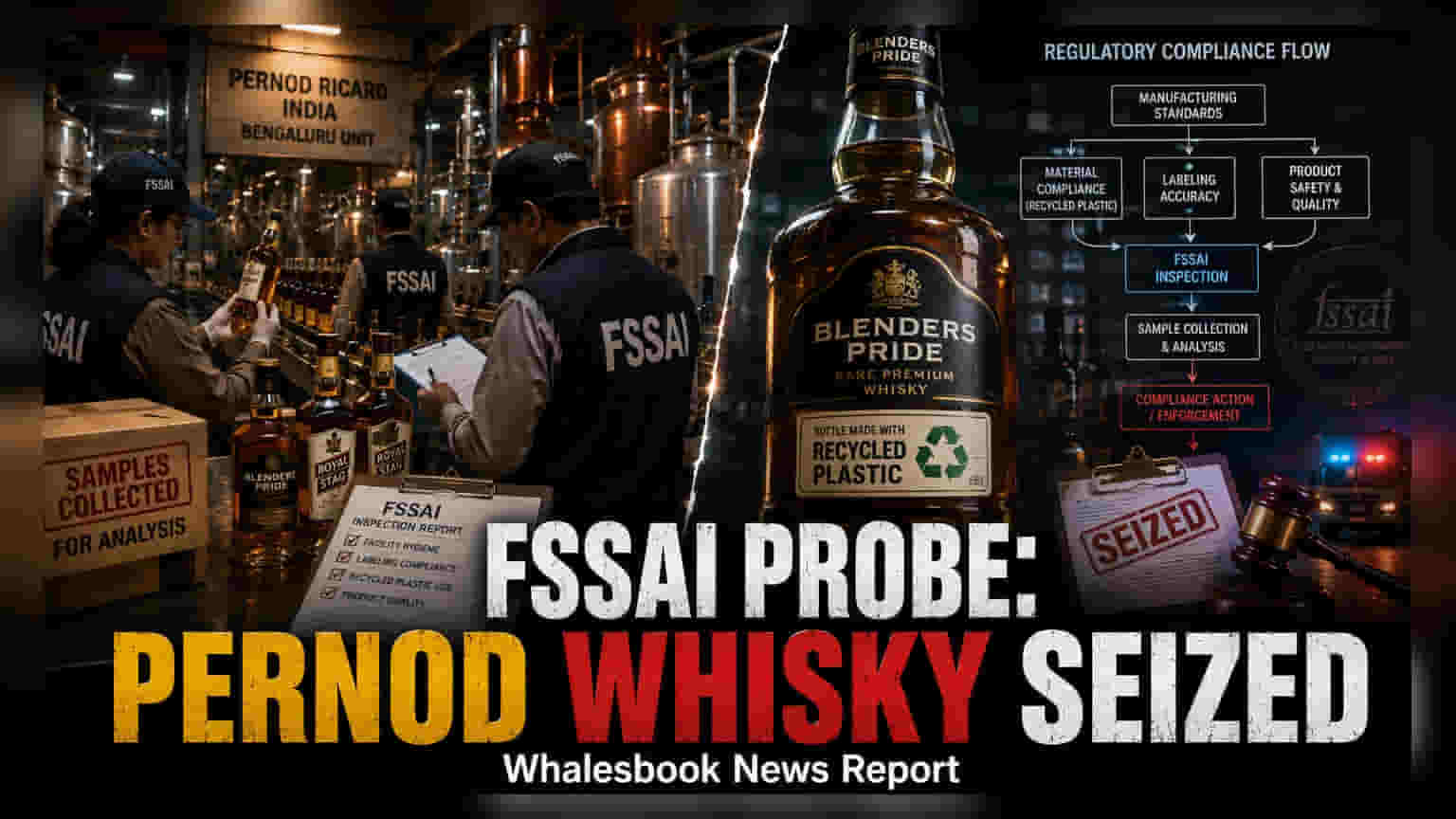
The Food Safety and Standards Authority of India has inspected a Pernod Ricard bottling facility in Bengaluru to check for hygiene and labeling standards. This regulatory action follows similar checks on other major alcohol producers. Investors are tracking how these increased safety and compliance audits across the industry may impact operational costs and future production for key spirits brands.
The Food Safety and Standards Authority of India (FSSAI) recently conducted a two-day inspection at a Pernod Ricard bottling unit in Bengaluru. During this visit, regulators collected samples of popular spirit brands, including Blenders Pride and Royal Stag, for quality assessment. The inspection focused on facility hygiene and the accurate labeling of materials, specifically regarding the use of recycled plastic in bottle manufacturing.
Pernod Ricard has acknowledged the regulatory visit, stating that it remains committed to maintaining quality and safety standards. The company noted that it is working constructively with the authorities. To date, the regulator has not issued any formal adverse findings against the company, and the inspection is viewed by the business as part of standard regulatory oversight.
This event takes place amid a broader wave of regulatory scrutiny affecting India's alcohol sector. The FSSAI has been increasing its focus on major players in the industry, with competitors such as Diageo also facing similar checks and product seizures related to labeling and formulation concerns. The industry is currently facing a tighter regulatory environment where authorities are strictly enforcing rules regarding product composition, advertising, and packaging materials.
Beyond this food safety inspection, Pernod Ricard is also navigating a separate antitrust investigation by the Competition Commission of India (CCI). This ongoing probe examines the company’s retail and distribution practices. The combination of these regulatory pressures represents a complex period for the spirits industry in India, which is a major growth market for global alcohol brands.
For investors, the key area of concern is compliance risk. Increased regulatory requirements often lead to higher operational costs, potential temporary disruptions in supply chains, or the need to re-label and reformulate products to meet strict government guidelines. While these measures are intended to ensure consumer safety and fair market practices, they can affect the short-term profit margins of companies if they require significant spending on production adjustments or if they face any form of temporary sales restrictions.
Going forward, the market will monitor whether the FSSAI issues any specific mandates for the Bengaluru plant or if the company needs to make changes to its packaging labels. Additionally, any updates regarding the ongoing CCI antitrust probe will remain a significant factor for those following the company’s regulatory risks in India.