

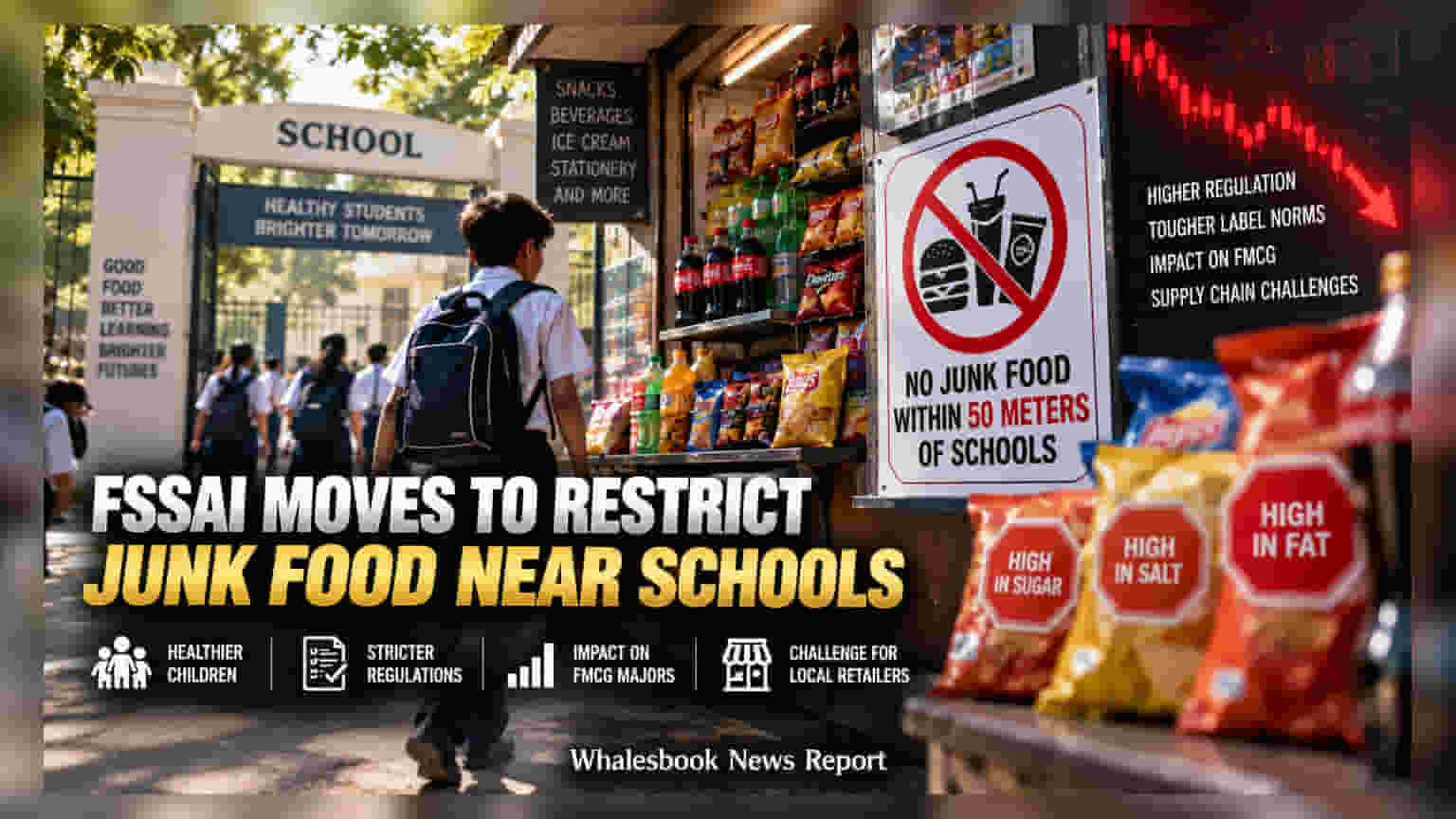
The FSSAI is moving to ban high-fat, salt, and sugar (HFSS) products within 50 meters of Indian schools to curb childhood obesity. This regulatory shift targets major FMCG firms like Nestlé, Coca-Cola, and PepsiCo. Investors should monitor how potential reformulation mandates and new distribution restrictions impact product portfolios, operational margins, and future volume growth for these companies.
The Food Safety and Standards Authority of India (FSSAI) is advancing a regulatory proposal to restrict the sale of products classified as high in fat, salt, or sugar (HFSS) within a 50-meter radius of the nation's 1.5 million schools. This move aims to address rising childhood obesity and improve nutritional standards. By targeting the sale of processed snacks and beverages in the immediate vicinity of educational institutions, the regulator is looking to reshape consumption patterns among students.
Impact on FMCG Operations
For major food and beverage companies, including PepsiCo, Coca-Cola, Mondelez, and Nestlé, this initiative represents more than just a distribution challenge. These companies rely heavily on impulse purchases near schools, a vital segment of their volume growth. Beyond the physical sales restriction, the broader risk for these firms lies in potential federal requirements for red warning labels on unhealthy products. Such regulations would force companies to choose between two difficult paths: either accept a loss in market access near schools or undergo significant product reformulation to fit within the regulator's 'healthy' thresholds.
Reformulation is a costly process. It often involves finding alternative ingredients that maintain the taste, texture, and shelf life of popular snacks while lowering fat, salt, or sugar content. If companies cannot successfully reformulate their products without raising prices, they may face pressure on profit margins. Conversely, if they choose not to reformulate, they risk losing a significant volume of sales in a market where student-driven consumption is a steady driver of revenue.
Economic Friction and Local Retail
While the goal is public health, the policy creates friction for small-scale retailers and independent vendors, who operate the vast majority of shops near schools. Many of these micro-entrepreneurs depend on the high volume of daily sales from students to remain viable. Regulatory bodies, particularly in states like Maharashtra which have already moved to restrict the stocking of such items, are balancing these health goals against the impact on local livelihoods. For investors, the implementation speed and the strictness of the 'HFSS' definition will be the key indicators of how much this policy will hurt small-scale distribution networks.
Global Benchmarks and Investor Monitorables
India is not the first country to experiment with such health-driven legislative frameworks. Chile, for instance, implemented strict labeling and sales restrictions on HFSS foods, which forced a industry-wide shift in product composition. This suggests that the Indian market could see similar long-term structural changes if the FSSAI moves forward with its plan.
Investors may watch the following monitorables: the final, legal definition of what constitutes an HFSS product, the specific timeline for implementation, and the degree of cooperation or pushback from industry associations. Furthermore, any company-specific announcements regarding research and development spending for healthier product alternatives will be important to track, as this could impact short-term profitability. The final impact on the bottom line for FMCG majors will ultimately depend on whether they can maintain product appeal while complying with these tightening health standards.