

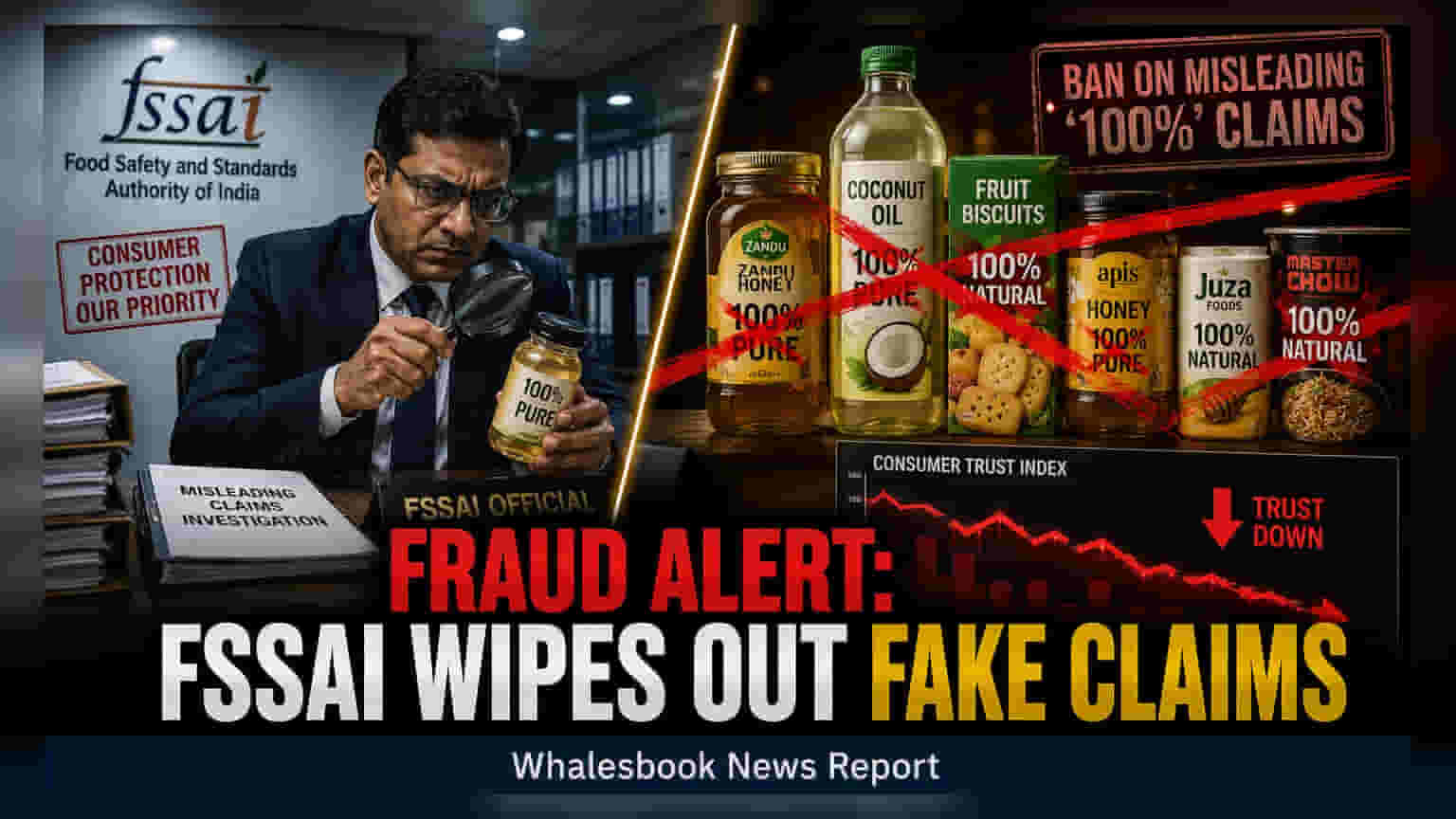
The Food Safety and Standards Authority of India has compelled several major brands, including Emami and Amway, to remove absolute '100%' claims from product labels and advertisements. This regulatory move to improve transparency requires companies to update packaging and marketing materials. Investors should track how this stricter enforcement affects the marketing strategies and brand differentiation of FMCG companies.
The Food Safety and Standards Authority of India (FSSAI) has taken decisive action to curb deceptive marketing practices in the food and consumer goods industry. As of August 19, 2026, several prominent companies, including Amway India, Emami Ltd, Bonn Biscuits, Apis India, Juza Foods, and Masterchow Foods, have begun removing absolute claims such as '100% Pure' or '100% Natural' from their product packaging, websites, and promotional materials. The regulator views these claims as ambiguous and difficult to verify, and this intervention is part of a broader, ongoing effort to ensure consumers receive accurate information about the products they purchase.
The corrective measures taken by these companies involve updating product labels and discontinuing the sale of older stock that still features the non-compliant '100%' claims. For instance, Emami has adjusted marketing for its Zhandu Honey, while Amway India has removed the '100% Pure' reference from its coconut oil packaging. Similarly, Bonn Biscuits, Apis India, Juza Foods, and Masterchow Foods have adjusted their labels and advertisements to comply with the regulator's directives.
From a business perspective, such claims have long been used in the FMCG sector as a tool for brand differentiation and to establish trust with consumers. These marketing messages often support a premium positioning in the market. The forced removal of these labels creates a new compliance environment where companies must ensure their marketing communications are strictly evidence-based and clearly articulated to avoid regulatory friction.
For investors, the primary monitorable in this context is the company's ability to navigate these changing regulatory standards without impacting brand equity or market share. While the current actions are described as voluntary compliance, any failure to adhere to FSSAI guidelines can lead to further scrutiny, including notices, penalties, or, in more severe cases, legal disputes. As the regulator intensifies its nationwide crackdown on misleading advertisements, FMCG firms may face increased pressure to review their product portfolios and marketing literature to align with these stricter norms. The key monitorable for the industry will be whether these labeling changes affect consumer perception and whether other companies in the sector face similar regulatory pressure in the coming months.