 Whalesbook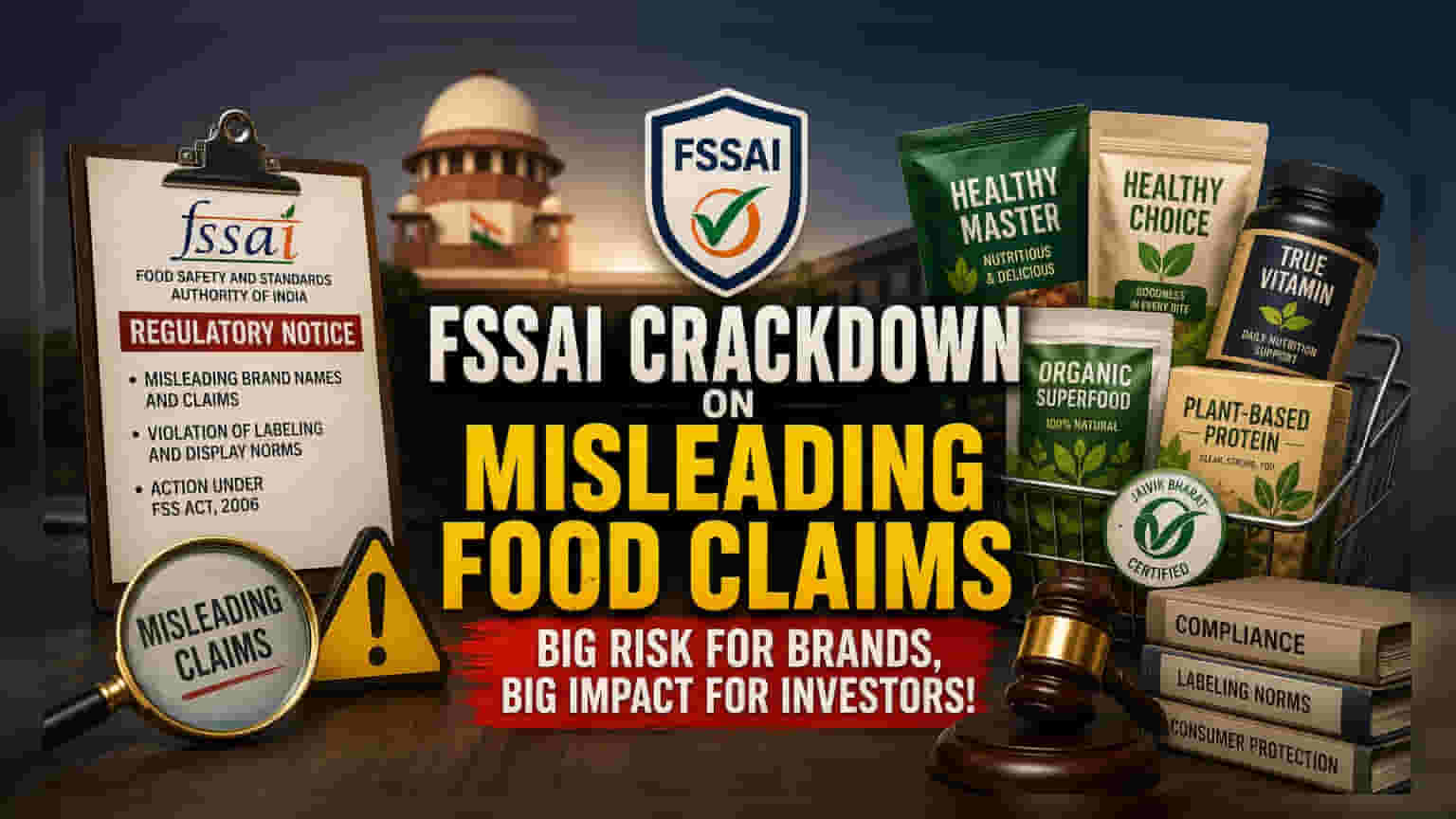


The food regulator has issued notices to various brands for using potentially misleading terms like 'Healthy' or 'Organic' without substantiation. This crackdown highlights rising regulatory pressure on marketing claims in the FMCG sector. Investors should monitor potential rebranding costs, impacts on premium pricing, and compliance requirements that could affect future profit margins for companies relying on health-focused branding.
What Happened
The Food Safety and Standards Authority of India (FSSAI) has launched a regulatory action against several food companies over the use of brand names and product claims that could mislead consumers. The regulator has issued formal notices to a range of brands, including some established names like Emami, as well as several D2C (Direct-to-Consumer) players. The core issue involves brand names and labels such as 'Healthy Master,' 'Healthy Choice,' 'True Vitamin,' and 'Organic,' which the FSSAI argues may misguide consumers regarding the product’s true composition or health benefits without adequate proof or certification.
The regulator has highlighted that terms like 'Healthy,' 'Organic,' or 'Plant-based' must align with the Food Safety and Standards Act, 2006. For instance, branding products as 'Organic' without holding the necessary 'Jaivik Bharat' certification, or using health claims that lack scientific validation, is being treated as a violation of labeling and display norms.
Why This Matters for Investors
For investors, the primary concern is not just the immediate compliance notice but the potential threat to 'brand equity.' Many FMCG (Fast-Moving Consumer Goods) companies trade at higher valuations because they successfully market themselves as premium, health-conscious, or organic brands. If regulators force these companies to change their packaging, remove popular product names, or pull advertising campaigns, it directly impacts the brand's ability to command a price premium. If the branding is deemed deceptive, the company may lose the customer trust that justifies its profit margins.
The Risk to Premium Pricing
Companies often use 'clean label' and health-focused branding to differentiate their products from cheaper mass-market competitors. This allows them to charge higher prices. If the FSSAI mandates that labels be changed to reflect more accurate, less 'flashy' descriptions, it could make these products look more like standard offerings. If consumers can no longer distinguish these products as 'healthier' through the packaging, the companies may find it difficult to maintain their current pricing power, which could lead to lower sales volumes or the need to cut prices to stay competitive.
Compliance and Operational Costs
Regulatory action of this nature usually leads to increased costs. When a regulator flags a brand name or claim, the company must often redesign packaging, dispose of existing inventory with the 'wrong' labels, and launch new marketing campaigns to inform customers of the changes. These are one-time expenses that can hurt quarterly profit margins. Furthermore, companies may need to invest more in legal and compliance teams to vet all marketing materials before they hit the market, adding to operational expenses.
What Investors Should Monitor
Investors should keep an eye on management commentary in the coming quarters. Look for any mention of 'rebranding costs' or 'marketing shifts' in the company’s investor presentations or earnings calls. It is important to see if management provides guidance on whether they need to modify their product lineup or change the claims used in their advertising. Additionally, check for any news on product recalls or mandatory relabeling orders, which are the most visible signs that a regulatory issue has turned into a financial one. Investors should assess whether a company’s valuation is heavily dependent on specific 'healthy' or 'organic' product lines, as these are now clearly in the regulatory spotlight.