

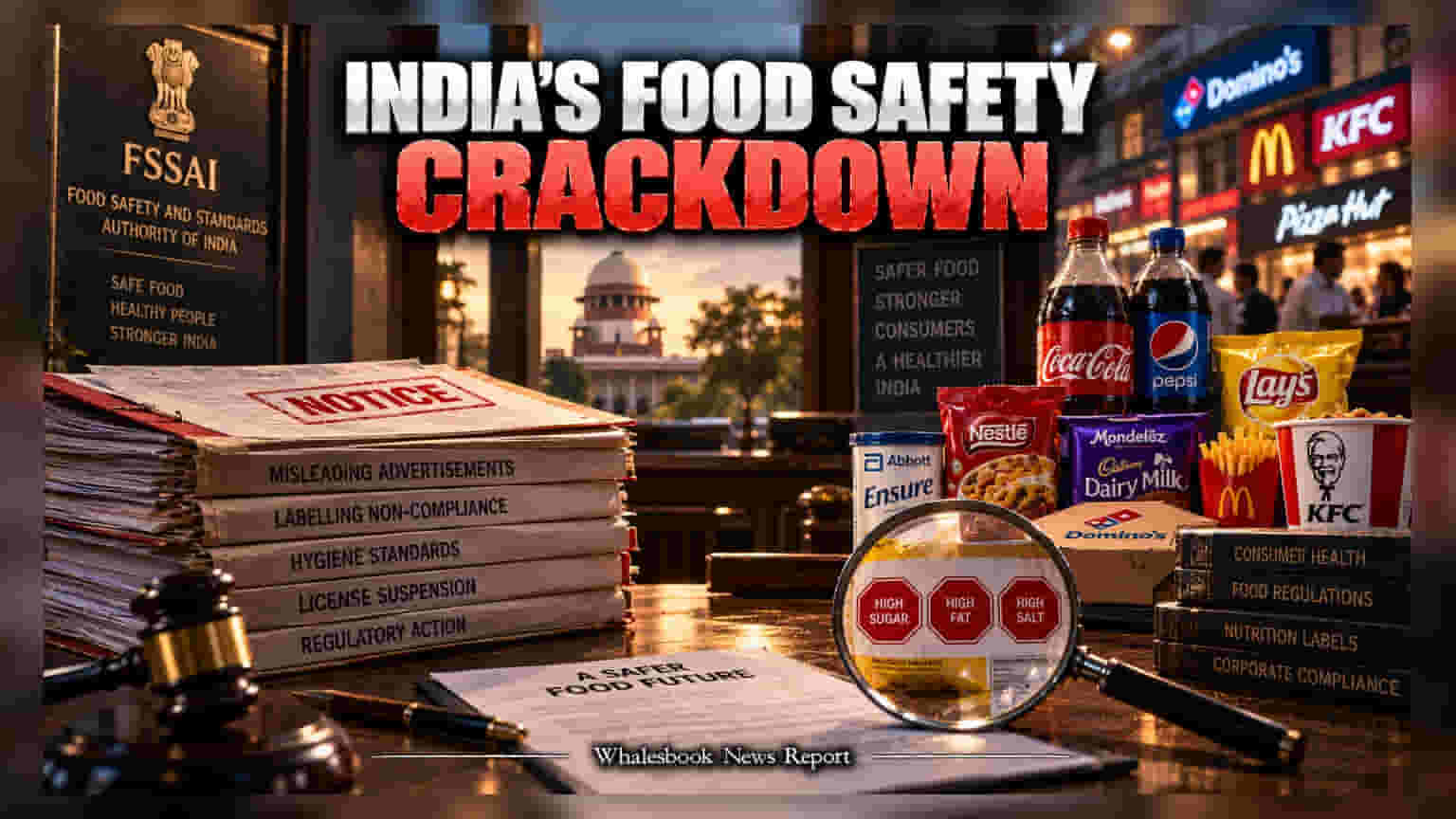
The Food Safety and Standards Authority of India (FSSAI) has launched a widespread enforcement drive targeting major global food and beverage companies over hygiene and labeling irregularities. Investors are monitoring the situation as mandatory front-of-pack warning labels and ongoing audits could increase compliance costs and pressure profit margins for the packaged food sector.
The Food Safety and Standards Authority of India (FSSAI) has significantly intensified its regulatory oversight across the country. In an ongoing enforcement drive, the regulator has issued over 150 notices to major domestic and global food and beverage companies. These actions focus on concerns related to misleading advertisements, hygiene standards, and labeling non-compliance.
The list of companies currently facing scrutiny includes industry leaders such as Nestlé India, PepsiCo, Coca-Cola India, Mondelez, and Abbott India, alongside major restaurant chains like Domino's, McDonald's, KFC, Pizza Hut, and Costa Coffee. In specific instances, the regulator has gone beyond issuing notices, with reports confirming license suspensions at certain locations, including some Domino's outlets and warehouse facilities.
The Impact of Mandatory Warning Labels
Beyond routine inspections, a major point of tension between the regulator and the industry is the proposal for mandatory red hexagonal front-of-pack warning labels. These labels would be required on products that exceed specific thresholds for sugar, fat, or salt.
While health advocates support the move as a way to address lifestyle diseases, the industry has expressed concern regarding the potential impact on consumer demand. Many companies argue that if these labels are applied to a wide range of popular products, it could negatively affect sales and brand perception. The validity and scope of these labeling requirements are currently under review by the Supreme Court of India. The final ruling is expected to set a critical precedent for how food companies label their products and communicate nutritional information to consumers.
Operational and Financial Risks
For investors, this regulatory environment introduces several layers of uncertainty. Firstly, there are direct financial costs associated with compliance. Companies may be required to divert capital from marketing and expansion toward audits, package redesigns, and product reformulation to meet stricter regulatory thresholds.
Secondly, there is the risk of operational disruption. License suspensions and product seizures can lead to temporary sales losses and damage brand reputation, which is a significant asset for global FMCG players. If the mandatory warning labels are implemented in their strictest form, companies might face margin pressure as they navigate the cost of reformulating high-sugar or high-fat product lines to avoid warning tags.
The industry is currently in a phase of reactive adjustment. Many firms have already begun withdrawing claims such as '100% natural' or 'pure' from their marketing materials in an effort to align with FSSAI standards and avoid further penalties. Investors should closely monitor upcoming quarterly earnings reports for any mention of increased legal or compliance-related expenses, as well as the progress of the case in the Supreme Court, as these will likely influence the sector's growth trajectory and operating margins in the coming quarters.