

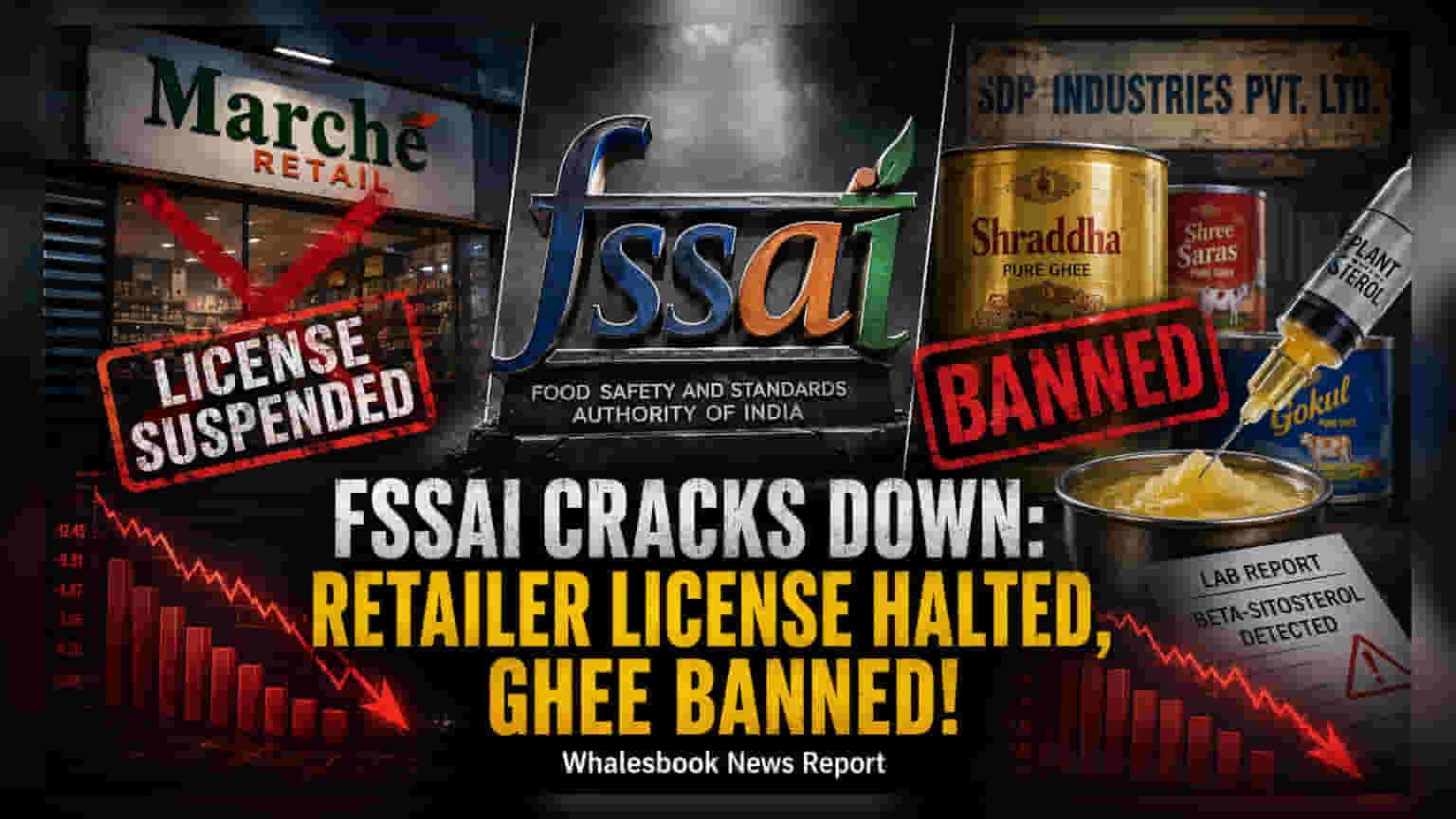
The food safety regulator has banned all ghee variants from SDP Industries due to adulteration and suspended Marche Retail's license for 30 days over hygiene violations. These actions are part of a broader, intensified enforcement drive targeting major FMCG companies and e-commerce platforms. Investors should watch for the potential impact of heightened compliance requirements on operational costs across the sector.
The Food Safety and Standards Authority of India (FSSAI) has taken strict regulatory action against two food businesses, underscoring the regulator's intensifying focus on product safety and hygiene standards. Marche Retail Pvt Ltd, operating out of New Delhi, has been handed a 30-day license suspension. This decision follows an inspection that revealed critical deficiencies in sanitation, food-handler training, and mandatory record-keeping protocols.
In a separate enforcement move, the regulator has issued a prohibition order against Daman-based SDP Industries Pvt Ltd, banning the sale of all its ghee products. Laboratory analysis of samples from the company, which sells under brands such as "Shraddha," "Shree Saras," and "Gokul," reportedly detected the presence of beta-sitosterol and an abnormal fatty-acid composition. These results, according to the regulator, suggest the presence of foreign vegetable fats, which violate safety standards for pure ghee. The order requires an immediate halt to the sale and distribution of these products from the company's premises.
These individual actions are part of a broader, more rigorous enforcement drive by the FSSAI. The authority has reportedly issued over 150 notices to major industry players, including giants like Nestle India, PepsiCo, and Coca-Cola India. The notices focus on issues ranging from misleading advertisements and false claims to labeling non-compliance. Additionally, e-commerce platforms such as Amazon and Flipkart have faced scrutiny, with 12 notices issued and at least one Amazon warehouse license reportedly cancelled.
For investors, these developments highlight an increased regulatory risk in the consumer goods and retail sectors. While individual cases involving smaller entities like SDP Industries impact specific product lines, the wider trend of FSSAI notices to large-cap companies indicates a shift toward stricter compliance monitoring. Increased regulatory scrutiny often leads to higher operational costs for companies as they overhaul supply chains, update labeling, and implement more rigorous testing to meet safety standards. While many companies have initiated corrective actions, market participants may monitor future quarterly results for any potential impact on profit margins due to these heightened compliance-related expenses. The key update for investors to follow will be the timeline for these companies to resolve the compliance gaps and whether this heightened vigilance leads to prolonged operational disruptions across the broader food industry.