

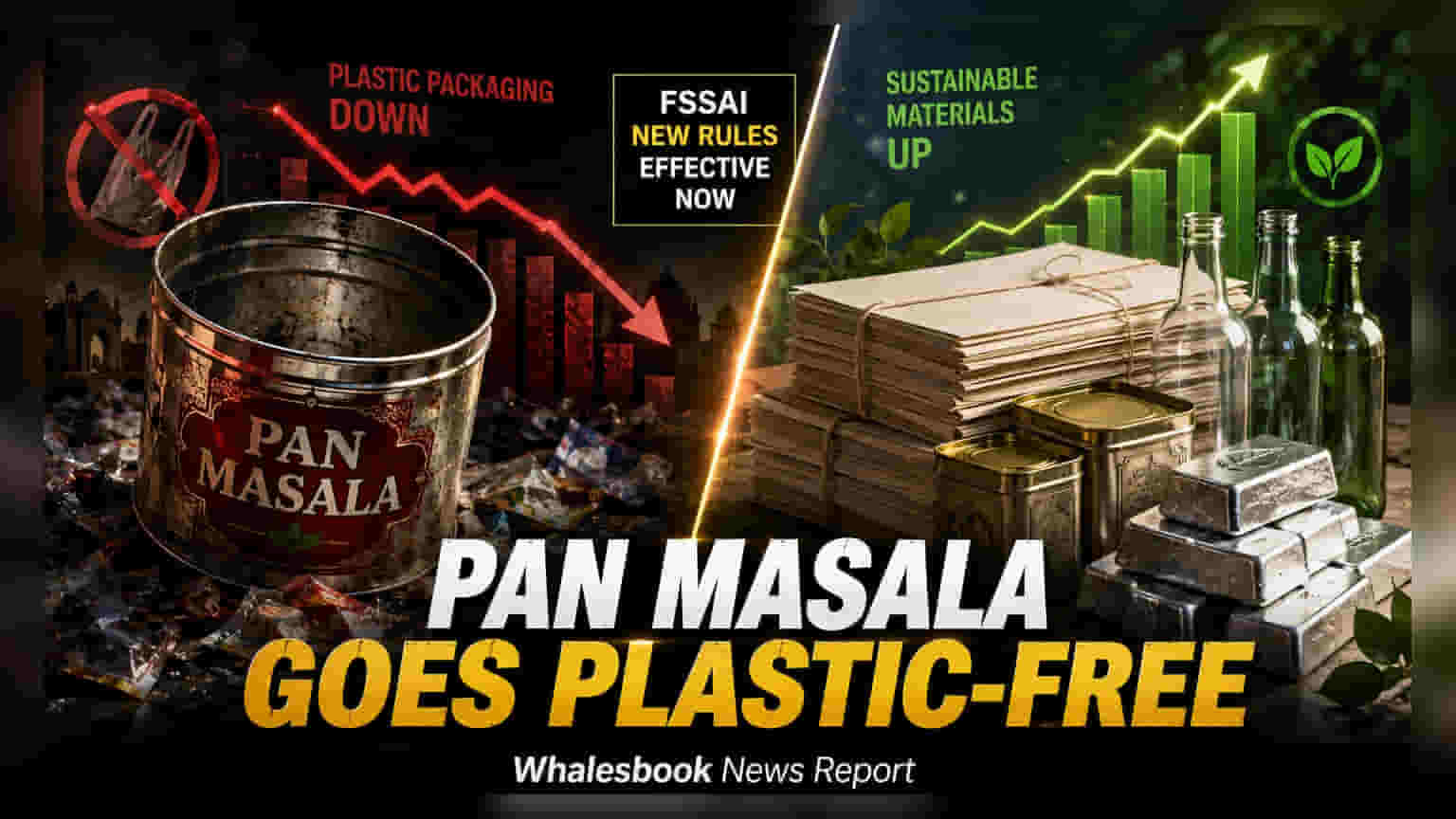
The FSSAI has banned plastic, aluminium foil, and metallised layers in pan masala packaging, effective immediately. Manufacturers must now switch to paper, tin, or glass containers. This regulatory shift is expected to increase operational costs and pressure profit margins for industry players, making manufacturing compliance and supply chain adjustments critical for investors to track.
The Food Safety and Standards Authority of India (FSSAI) has implemented a major change in packaging rules for the pan masala industry. According to the Food Safety and Standards (Packaging) Amendment Regulations, 2026, notified in the Gazette of India on August 10, the regulator has prohibited the use of plastic, aluminium foil, and metallised layers in pan masala packaging. This regulation came into force immediately upon its publication.
The new mandate requires manufacturers to move away from synthetic polymers, including polyethylene, polyester, and polyvinyl chloride (PVC), which have traditionally been used to create the sachets common in this sector. Instead, companies must now transition to naturally derived, plastic-free materials such as paper, paperboard, or cellulose. Alternatively, manufacturers may use tin or glass containers for their products.
For investors, the immediate impact centers on operational and financial adjustments. The pan masala industry relies heavily on low-cost, multi-layered plastic sachets to maintain affordable price points and shelf life for mass-market products. Transitioning to paper-based alternatives or rigid containers like tin and glass involves higher unit costs. This shift is likely to pressure profit margins unless companies can effectively pass these increased expenses on to consumers without hurting demand.
Beyond cost, there is a technical challenge involved in the transition. Pan masala products generally require high barrier properties to prevent moisture from compromising the product’s quality. Multi-layered plastic laminates are traditionally used because they provide this protection efficiently and cheaply. Moving to paper-based materials requires significant investment in research and packaging technology to ensure the same level of shelf-life and moisture resistance. Failure to achieve this could lead to inventory spoilage or quality issues, which would negatively impact company performance.
Compliance remains a critical monitorable for the coming quarters. Manufacturers must quickly retool their production lines to accommodate the new packaging norms. Investors should watch for company management commentary regarding the capital spending required for this transition and the potential impact on gross margins. Any delays in sourcing approved packaging materials or technical difficulties in maintaining product quality could result in supply chain disruptions, which is a risk to track for companies heavily dependent on single-sachet product formats.