 Whalesbook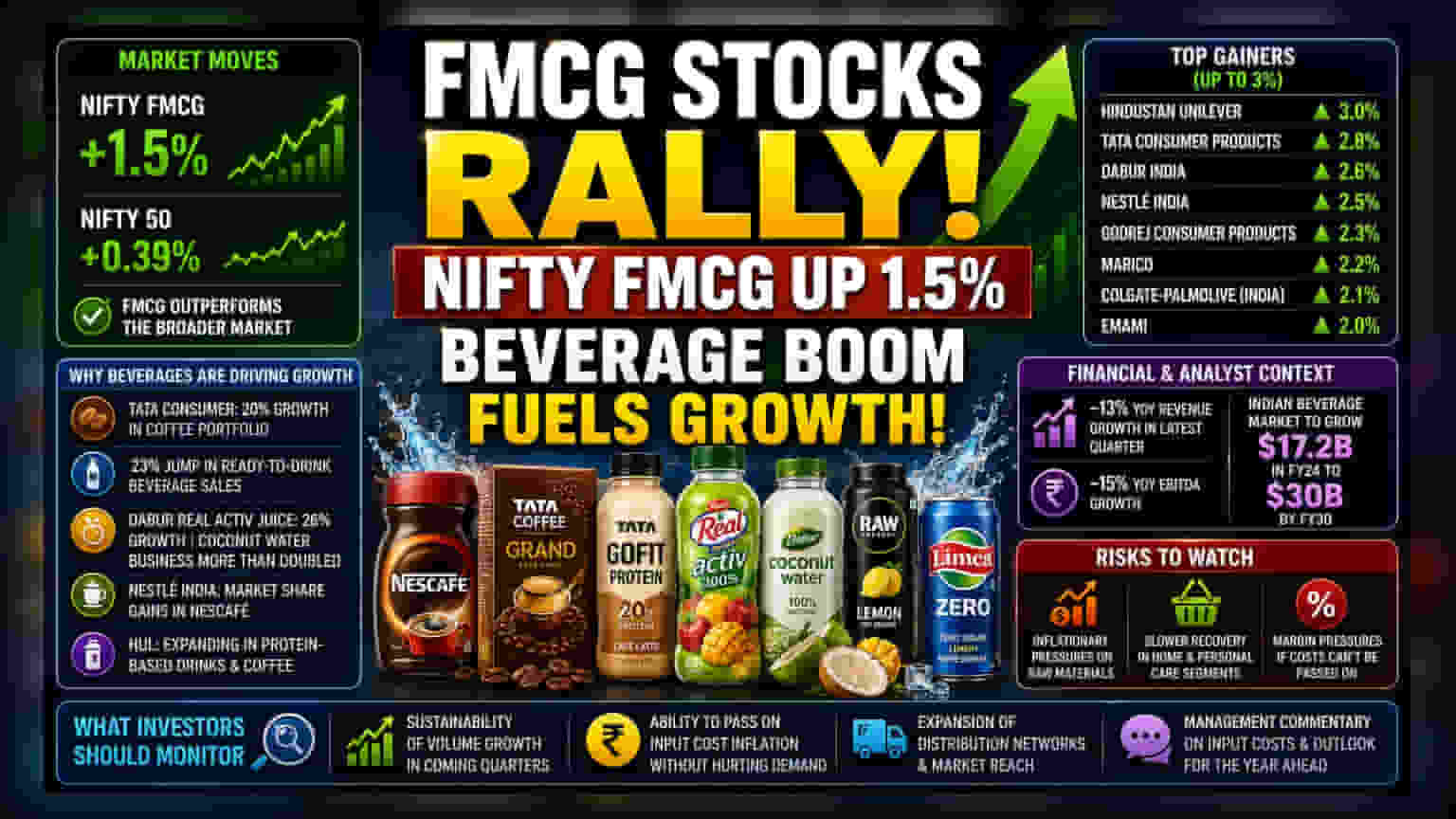


Indian FMCG stocks rose on Wednesday, outperforming the broader market. The rally was led by strong demand in the beverage category, including coffee, protein drinks, and low-sugar options. While recent financial results show healthy revenue growth, investors are closely watching if this beverage-led demand can sustain margins despite rising commodity costs.
What Happened
Fast-moving consumer goods (FMCG) stocks saw significant buying interest on Wednesday. The Nifty FMCG index rose by 1.5%, outperforming the broader Nifty 50, which gained 0.39%. Major companies including Hindustan Unilever, Tata Consumer Products, Dabur India, Nestlé India, Godrej Consumer Products, Marico, Colgate-Palmolive, and Emami all recorded gains of up to 3%. This move follows a period where investors have been looking for clear growth signals in the consumer sector.
Why Beverages Are Driving Growth
The rally is heavily linked to a structural shift in consumer preferences. Younger, health-conscious buyers are increasingly choosing convenience-led products over traditional pantry staples. This trend has created a "beverage boom," with high demand for coffee, ready-to-drink protein beverages, and low-sugar or no-sugar drinks.
Several companies have seen their numbers benefit from this shift. Tata Consumer Products reported 20% growth in its coffee portfolio and a 23% jump in ready-to-drink beverage sales. Dabur India saw its Real Activ 100% juice portfolio grow by 26%, while its coconut water business more than doubled in the recent quarter. Meanwhile, Nestlé India has seen market share gains in Nescafé, and Hindustan Unilever is expanding its footprint in protein-based drinks and coffee. This shift toward higher-value products allows companies to target better profit margins compared to traditional food items.
Financial and Analyst Context
Recent data suggests that the sector has shown resilience. According to brokerage reports, companies in this space delivered roughly 13% year-on-year revenue growth in the latest quarter, which met analyst expectations. Perhaps more importantly, operating profit (EBITDA) growth reached 15% year-on-year, indicating that companies are managing their costs well despite the current environment.
Market experts point out that the Indian beverage market is expected to grow from roughly $17.2 billion in FY24 to $30 billion by FY30. This suggests that the current consumer behavior is not just a passing trend but part of a larger, long-term expansion in the sector.
Risks and Market Challenges
While the beverage segment is showing strong performance, it is not without risks. Analysts have highlighted that the sector continues to face inflationary pressures. If raw material prices for coffee, sugar, or packaging materials turn volatile, it could put pressure on profit margins. Additionally, while the beverage segment is growing, home and personal care segments have generally seen slower recovery. Investors should be aware that the overall health of an FMCG company depends on both these segments, not just the high-growth beverage category.
What Investors Should Monitor
Going forward, the key factor for investors to track will be the sustainability of this volume growth. While companies have successfully increased sales, the market will look for evidence that this can be maintained in the coming quarters. It will also be important to watch whether companies can pass on any potential rise in raw material costs to consumers without hurting demand. Management commentary on input cost inflation and the actual expansion of product distribution networks will be critical data points for the remainder of the fiscal year.