 Whalesbook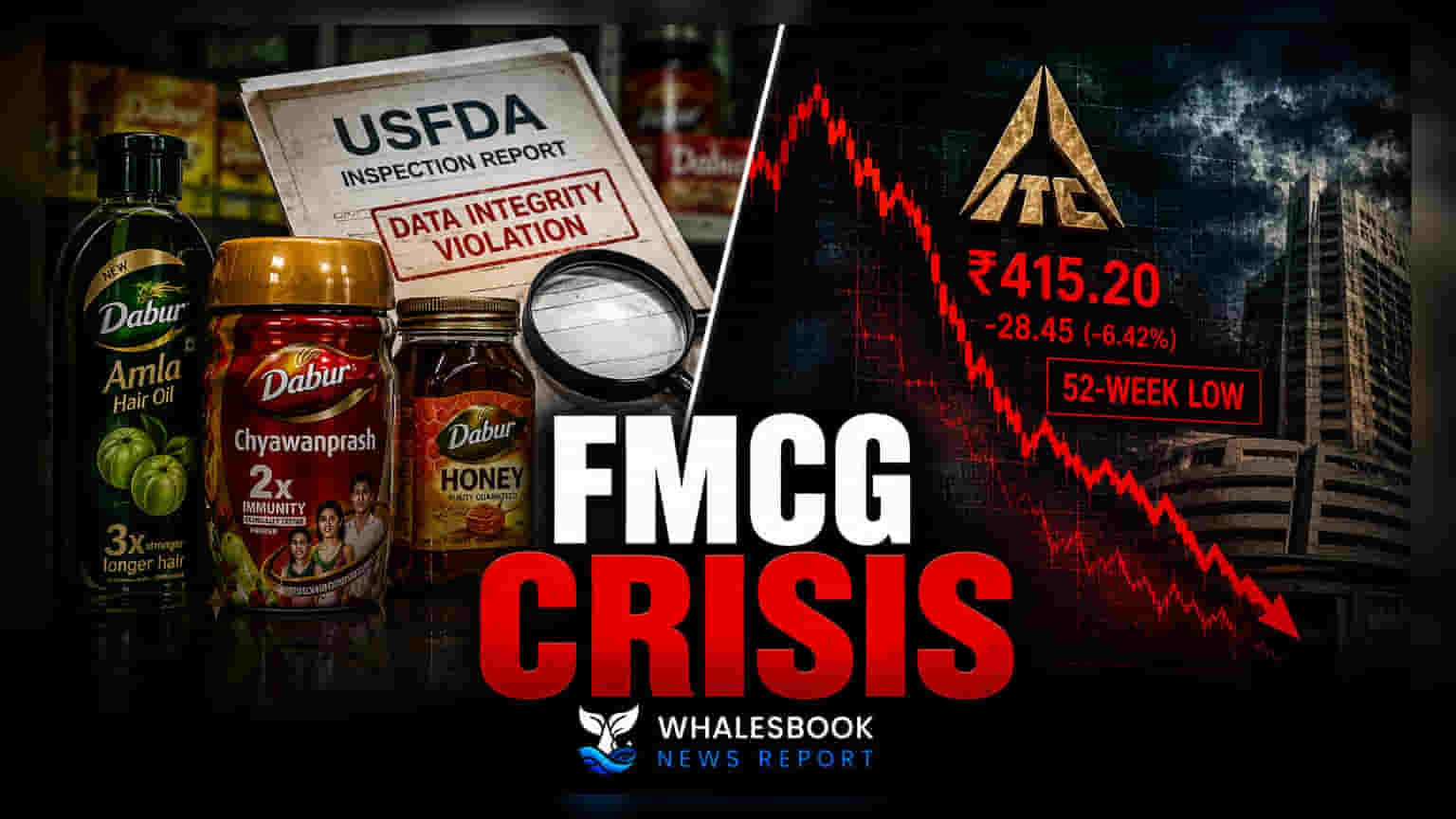


The Regulatory and Tax Hangover
The Indian FMCG sector is facing a severe reality check as dual pressures from heightened regulatory scrutiny and aggressive taxation dampen investor sentiment. The Nifty FMCG index has underperformed the broader market, contracting 5% over the past month. This weakness is not merely a transient fluctuation but a response to structural headwinds affecting the sector's two primary pillars: manufacturing integrity and tax-adjusted profitability.
The Dabur Quality Crisis
Dabur India’s recent market correction stems directly from a damning USFDA Form 483 report regarding its Dadra facility. The regulatory findings are extensive, detailing not only microbiological contamination risks but also severe procedural failures including the alleged falsification of records to mask equipment misuse. The documentation of unhygienic conditions—specifically the presence of pests near sensitive production zones—has severely undermined market confidence in the firm’s quality assurance protocols. For a company that leverages a 140-year legacy of health and wellness, these findings present a significant reputational threat and potential export disruption that may require costly corrective infrastructure investments.
The ITC Tax Impasse
Conversely, ITC’s struggle is a matter of fiscal policy. The recent 40% GST regime combined with revised excise duties has fundamentally altered the economics of its core cigarette division, which historically provides the bulk of its operating profit. Unlike previous tax adjustments that were incrementally absorbed, this shift represents a structural increase that has squeezed margins and forced retail price hikes, stoking fears of long-term volume loss to illicit markets. With the stock lingering near 52-week lows, the market is discounting a difficult transition period as the company attempts to pivot its non-cigarette portfolio amid a broader consumption slowdown.
Risk Factors and Structural Weaknesses
The sector’s immediate future is further clouded by the India Meteorological Department’s (IMD) warning of the weakest monsoon in over a decade. A below-normal rainfall scenario directly threatens rural income levels, which have only recently shown signs of stabilization. Unlike smaller, more nimble players, large-cap FMCG firms are struggling to balance volume growth with the necessity of passing on rising freight and raw material costs. While management teams emphasize volume-led strategies, the persistent threat of food inflation, exacerbated by geopolitical volatility in West Asia, suggests that operating profit margins will remain under intense pressure throughout FY27.