

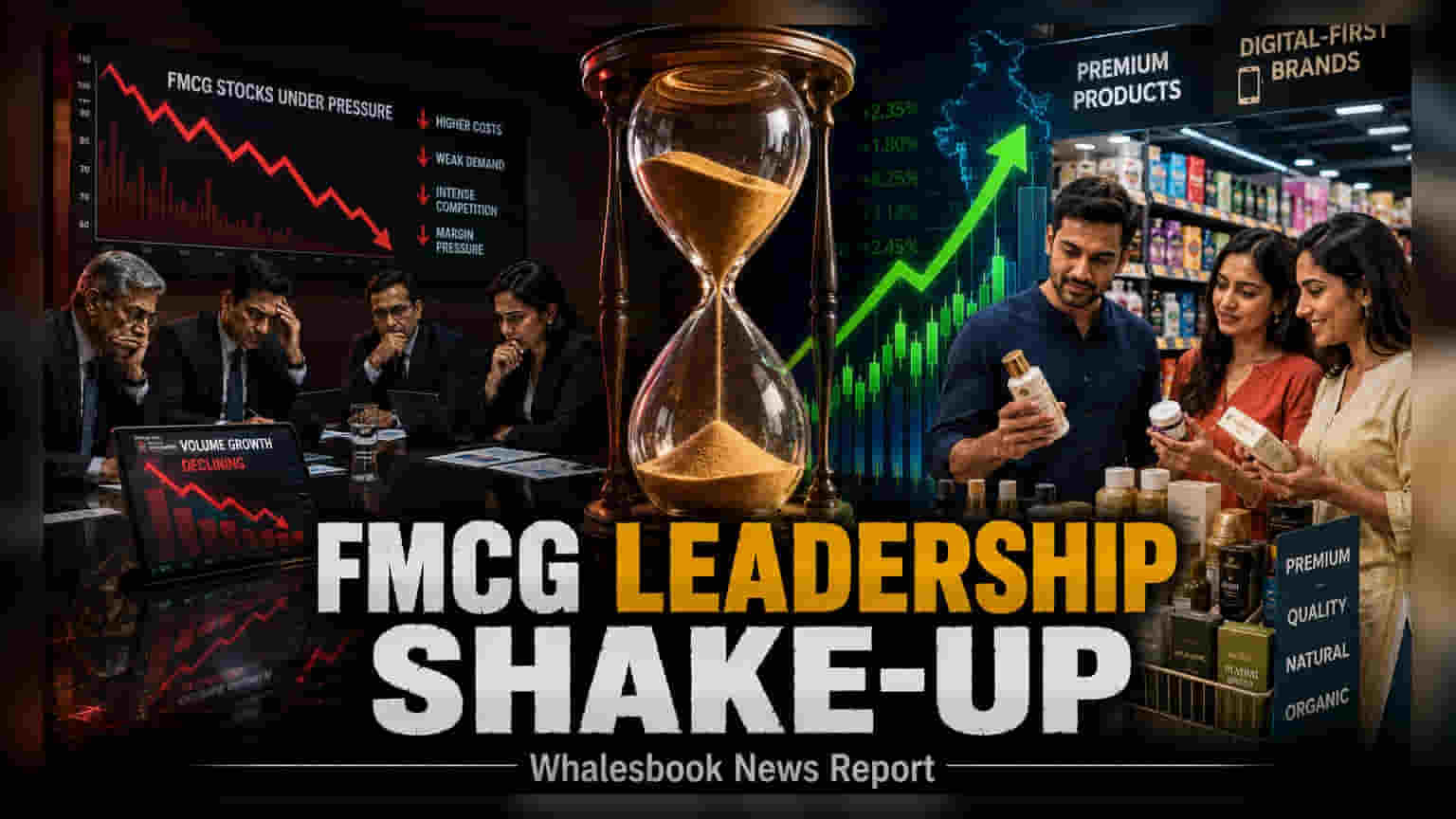
India’s major consumer goods firms are replacing top executives amid uneven demand and rising competition. Godrej Consumer Products Limited (GCPL) recently faced a stock drop after its CEO resigned shortly after reappointment. Investors are now watching how new leaders will navigate the pressure to boost growth and manage shifting consumer habits.
India’s FMCG sector is witnessing an unusual wave of leadership changes as major companies reshuffle their management teams. This trend comes as businesses struggle with inconsistent consumer demand, higher raw material costs, and intense competition from smaller, regional brands. Boards are looking for new leaders who can quickly adapt to changing market conditions and the rapid shift toward premium and digital-first products.
The most prominent recent change occurred at Godrej Consumer Products Limited. The company announced the resignation of Managing Director and CEO Sudhir Sitapati on August 11, 2026, just days after he was reappointed by shareholders. Following the announcement, GCPL shares dropped by approximately 10%. The company has appointed Aasif Malbari, the group Chief Financial Officer, to take over the role.
Other major firms are also adjusting their top teams. Colgate-Palmolive India recently disclosed that its Managing Director and CEO, Prabha Narasimhan, will step down from her position on September 27, 2026. She is moving to a new global marketing leadership role at the company’s Asia-Pacific division. The firm has announced that Manish Anandani will succeed her the following day.
This management turnover is partly driven by the pressure to maintain growth in a tough economic environment. Many FMCG companies are seeing uneven volume growth, meaning they need to work harder to sell more products. Additionally, the rise of quick commerce and digital shopping requires leaders who can manage data and new delivery channels effectively. Companies are moving away from traditional models to focus on premium products where profit margins are generally higher.
Investors often view sudden leadership exits with caution, as they create uncertainty about long-term strategy and execution. When a top executive leaves abruptly, the market often fears potential disruptions in decision-making. The challenge for these new leaders will be to prove they can deliver consistent results while managing cost pressures and fighting off aggressive competitors.
Looking ahead, shareholders will likely monitor the upcoming quarterly results and management commentary from these firms. The key focus will be on whether the new leadership can stabilize operations, improve profit margins, and execute growth plans without further internal disruptions.