 Whalesbook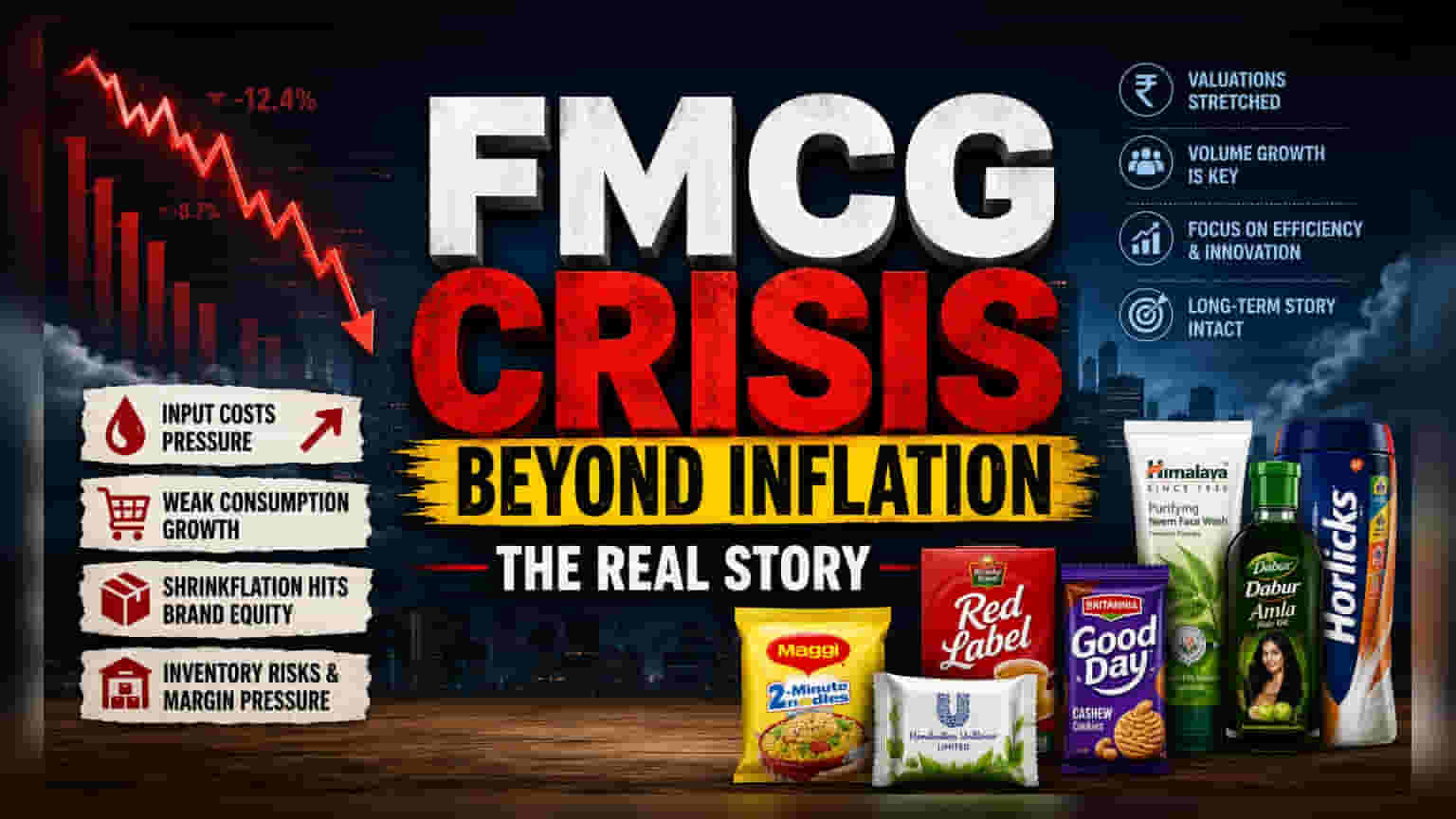


The Valuation Gap
The recent market reaction in the consumer staples segment reflects a growing skepticism among investors regarding the efficacy of traditional inflation-hedging strategies. As of June 2026, major FMCG players are trading at valuation multiples that appear increasingly difficult to justify against a backdrop of stagnant sales growth and persistent margin compression. While HUL trades at a P/E of approximately 32x and Britannia hovers near 48x, the market is signaling that volume-led recovery, rather than price-led revenue growth, is the only metric that will satisfy institutional mandates this fiscal year.
The Structural Catalyst: Input Cost Fatigue
The primary driver of the current sector-wide slump is not merely fluctuating raw material prices, but the compounding impact of geopolitical instability in West Asia on crude derivatives. Because these inputs are essential for packaging and logistics, FMCG firms are caught in a cycle of cost-push inflation. Unlike previous inflationary periods, companies are now constrained by a more sensitive consumer base. Data indicates that urban consumption—once the engine of premium growth—is beginning to plateau, while rural demand remains fragile and highly susceptible to monsoonal uncertainties. The Reserve Bank of India’s upward revision of retail inflation to 5.1% further complicates the outlook, as discretionary household budgets are increasingly diverted toward fuel and energy expenses rather than branded consumer goods.
The Forensic Bear Case: Diminishing Returns on Shrinkflation
From an institutional perspective, the reliance on 'shrinkflation'—the strategic reduction of grammage in low-priced sachets and SKUs—has reached a point of diminishing returns. This practice, while successful at maintaining a psychological entry price point for the consumer, creates a long-term erosion of brand equity. When consumers perceive a decrease in value, the resulting volume attrition becomes harder to reverse than a simple price hike. Furthermore, firms like Dabur and Britannia face specific competitive pressures from digital-first and regional brands that are not burdened by the same legacy cost structures. Management teams at these giants are also under scrutiny for their high inventory turnover days, which suggest that current distribution channels are carrying the weight of slower-moving stock. Should the monsoon fall short of expectations, the risk of inventory pile-ups could force further trade-margin cuts, effectively cannibalizing the very profitability these companies are attempting to protect.
The Future Outlook
Brokerage sentiment remains cautious, with many analysts highlighting that any significant margin expansion is unlikely in the near term. The focus for the next two quarters will remain on volume growth as the primary KPI. While the industry benefits from long-term secular trends in India’s consumption story, the immediate horizon is dominated by a need for operational efficiency and a potential pivot toward more aggressive product mix optimization. Investors are closely monitoring whether these FMCG titans can shift from defensive pricing tactics to value-added innovation before the next cycle of commodity volatility begins.