

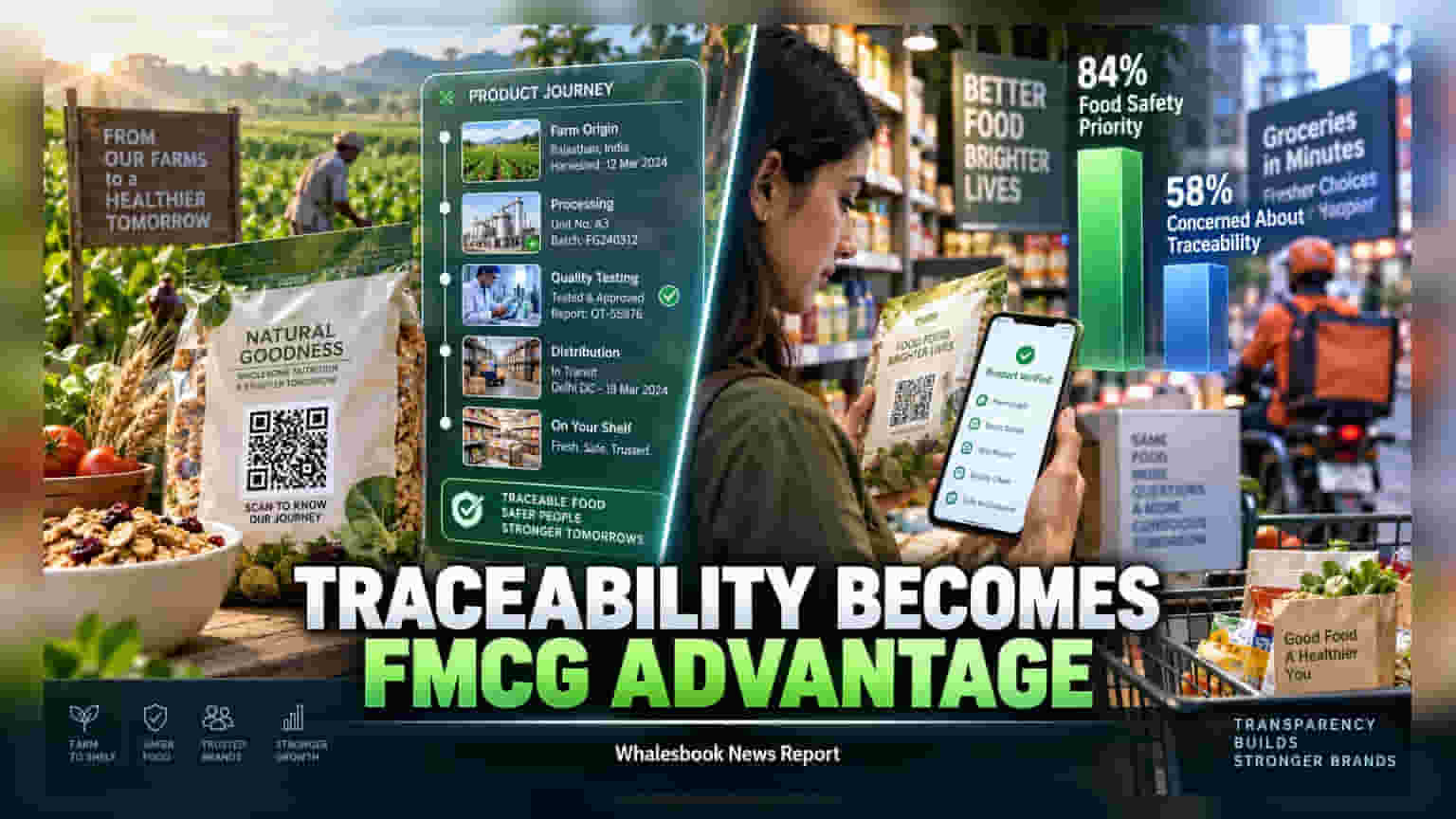
Consumer goods companies are shifting toward transparent, batch-level product tracking to build trust and justify higher prices. While this technology helps in managing quality and appealing to safety-conscious buyers, it also requires significant investment. Investors are monitoring how this digital shift impacts long-term profit margins and competitive advantage against smaller, unorganized players.
Indian consumer goods companies are increasingly using food traceability—the ability to track a product from farm to shelf—as a key tool to attract customers and charge higher prices. This strategy is moving from a back-end supply chain necessity to a front-end marketing feature. As shoppers become more conscious about food safety, brands that offer transparent sourcing information via QR codes on packaging are attempting to capture a larger share of the market.
This shift is driven largely by the rise of quick-commerce, where consumers often make purchasing decisions within seconds, without physically inspecting the product. In this environment, digital trust becomes a vital differentiator. Brands that provide verifiable details, such as harvest dates, batch testing records, and farm origins, are better positioned to justify premium price points for their products. This aligns with the broader industry trend of premiumization, where companies focus on higher-value products to boost their profit margins.
However, implementing these systems is not just a marketing exercise; it requires significant investment in technology and infrastructure. Companies must integrate their procurement, manufacturing, and distribution networks with digital tracking systems. For investors, this spending is a critical monitorable. While companies may view this as a way to build a long-term business advantage, the initial costs associated with digitizing the supply chain can put pressure on operating margins in the short term.
This digital requirement also creates a competitive divide. Large, established FMCG players with deep pockets can afford these sophisticated tracking and data verification systems. In contrast, smaller, unorganized producers often struggle with compliance and lack the capital to implement such transparency tools. As a result, the widespread adoption of traceability standards may make it harder for unorganized players to compete, effectively raising the barrier to entry in certain product categories.
There are also operational and reputational risks involved. Building a traceability system requires accurate data entry at every stage, from raw material procurement to final delivery. If a company promises transparency but fails to maintain the integrity of that data, or faces a quality scandal after highlighting their traceability measures, the reputational damage can be severe. Regulatory compliance is also tightening; the Food Safety and Standards Authority of India (FSSAI) has introduced requirements for displaying product information, and international standards are pushing companies toward more structured digital records.
The key monitorable for investors will not just be the rollout of QR codes, but how these initiatives impact the company's long-term profitability. Investors should track whether this increased spending on technology leads to higher market share and stronger pricing power, or if it simply adds to the operational cost base without providing a clear return on investment.