

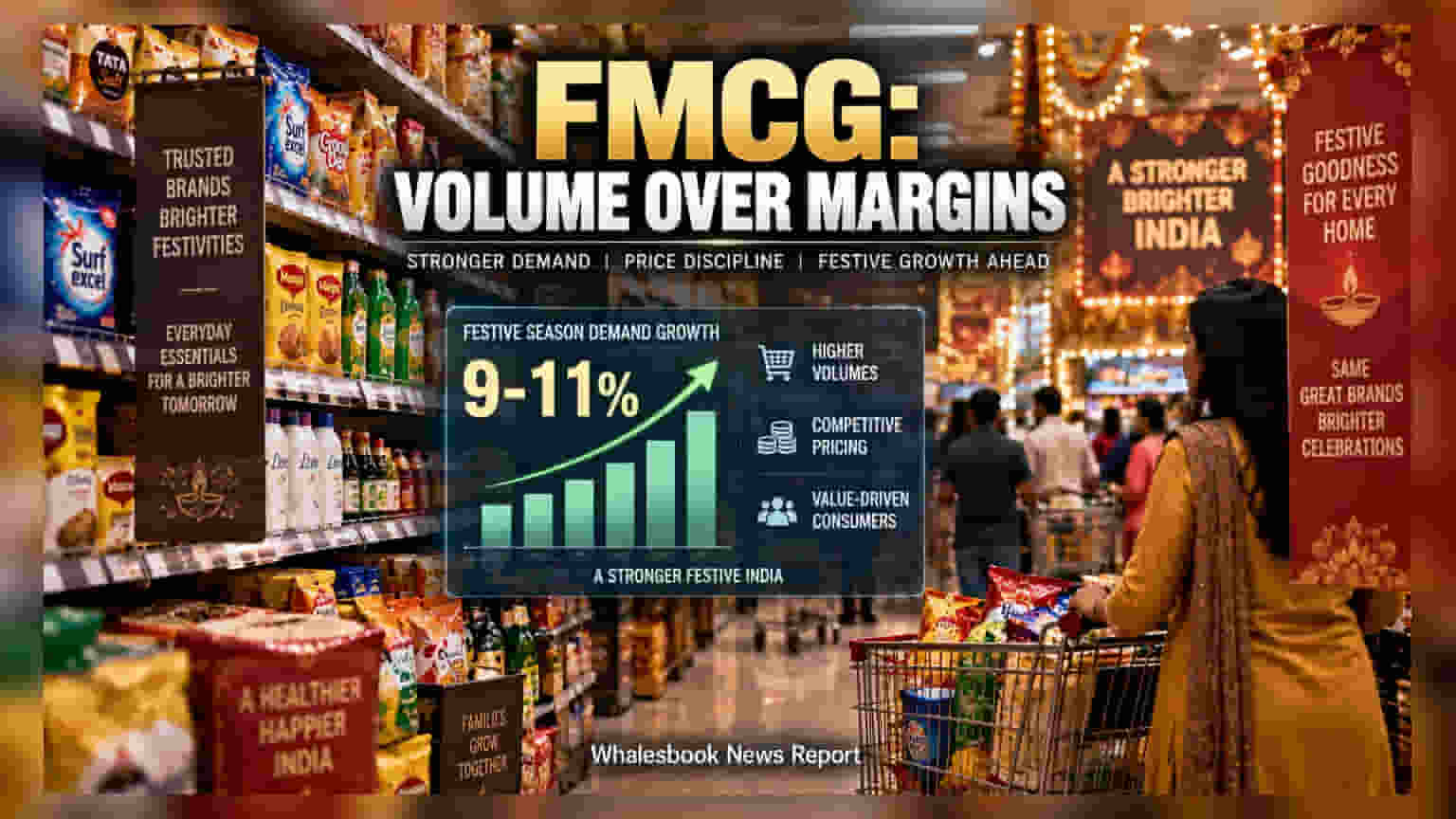
Major FMCG companies are sacrificing profit margins to boost volume growth during the critical August-November festive season, aiming for a 9-11% rise in demand. Despite soaring raw material costs, specifically cocoa, brands are keeping prices steady to attract value-conscious consumers. This strategy prioritizes long-term market share over short-term profitability.
Indian fast-moving consumer goods (FMCG) companies are entering the festive period from August to November with a clear tactical shift. To ensure that volume sales remain robust, major brands are choosing to absorb rising raw material costs rather than passing them on to customers through price hikes. This defensive strategy is designed to keep products affordable for a consumer base that has become increasingly price-sensitive and focused on value.
Industry projections suggest that demand could grow by 9-11% during this peak shopping window. However, this growth depends on companies meeting consumer expectations. Data indicates that shoppers are moving away from impulse spending and are instead choosing larger, more economical pack sizes to get better value. This shift requires companies to maintain competitive pricing, even if it means sacrificing immediate profit margins.
The cost pressure on these companies is significant. Raw material inflation, such as the 48% quarter-on-quarter spike in cocoa prices, has placed considerable strain on balance sheets. By intentionally shielding the retail consumer from these costs, firms are accepting lower operating margins as a calculated risk. The current priority for management teams across the sector is to protect market share and ensure that volume sales do not slip, as losing ground to competitors or cheaper alternatives is harder to reverse than regaining a temporary drop in profit margin.
For investors, this approach creates a short-term trade-off. While volume growth is a healthy sign of brand loyalty and demand, the impact on profitability is direct and visible. Historically, FMCG firms have often used these temporary pricing shields during periods of high commodity inflation to secure their position in the market.
The next crucial update for shareholders will be to see how and when these companies attempt to recover their margins. Once the festive window concludes, companies are expected to re-evaluate their pricing frameworks based on the volatility of commodity prices. Investors should track future quarterly results for indicators of margin improvement, the stabilization of raw material costs, and whether the volume growth achieved during this period translates into sustainable revenue gains in the subsequent quarters.