

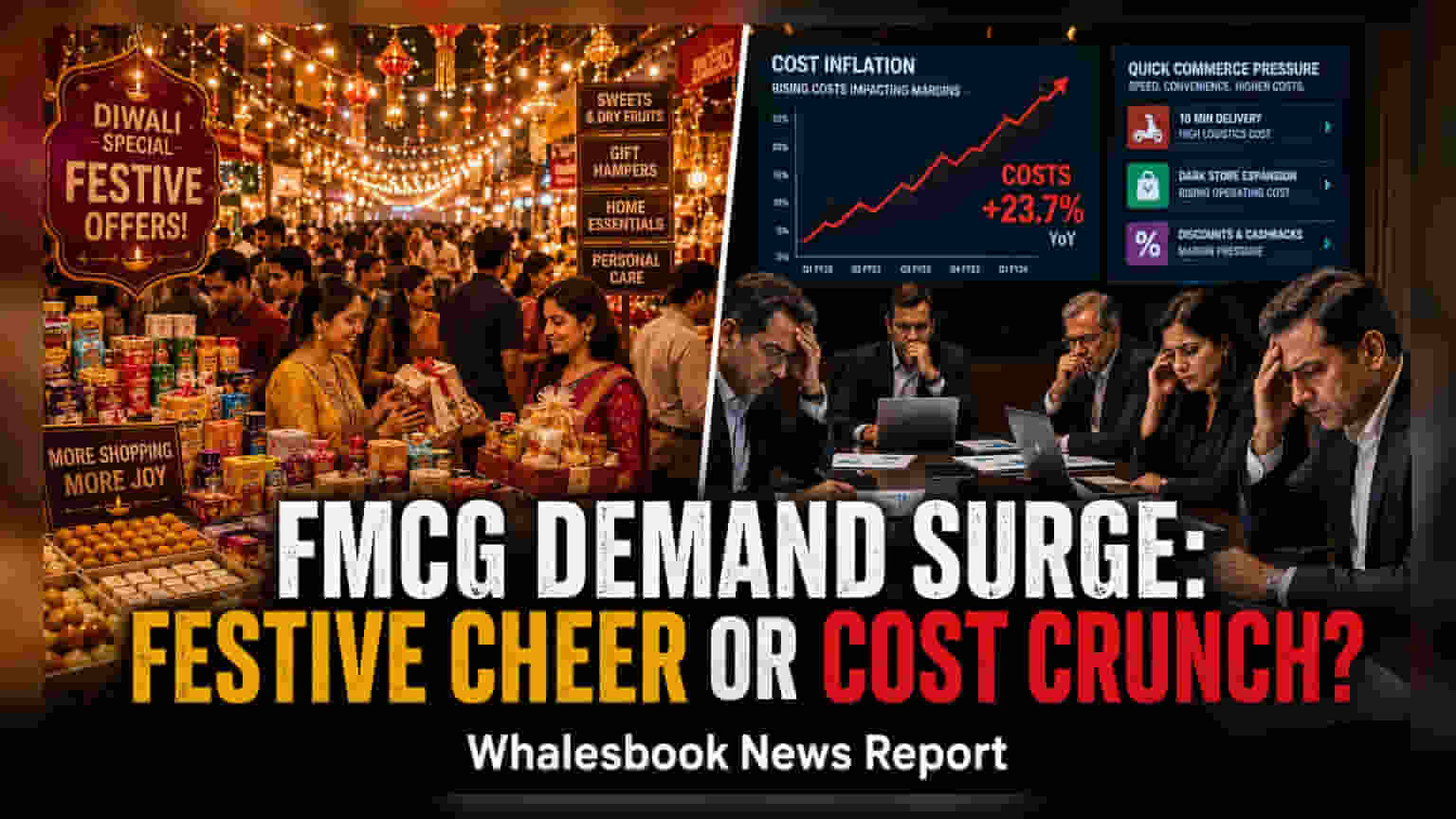
FMCG firms expect a 9-11% demand boost between August and November 2026, supported by high consumer spending. However, companies face profit margin risks due to rising input costs like palm oil and sugar. Meanwhile, the rapid rise of quick-commerce platforms is changing how brands compete, forcing a shift from traditional distribution models to faster, digital-first strategies.
The Indian FMCG sector is gearing up for a crucial festive season, with projections indicating a robust growth range of 9% to 11% between August and November 2026. This optimism is driven by steady consumer demand, as purchasing power remains resilient despite broader economic uncertainties. Industry leaders have already shown signs of this momentum in recent earnings. For instance, Hindustan Unilever recorded its fastest volume growth in 13 quarters in the June period, while Nestle India posted a 25% increase in revenue and a 48% jump in net profit for the first quarter of the 2027 fiscal year.
While this demand growth is positive, it comes with a challenge to profitability. Companies are grappling with elevated prices for key raw materials, including palm oil, sugar, and crude oil-linked packaging. When costs for these ingredients rise, FMCG firms typically face pressure on their operating margins. To manage this, many companies are resorting to calibrated price increases or 'shrinkflation'—the practice of reducing the pack size while maintaining the same price point to avoid startling price-sensitive consumers.
The sector is also undergoing a fundamental shift in how products reach customers. The traditional model, which relied heavily on extensive physical distribution networks and mass advertising, is now competing with the rapid expansion of quick-commerce platforms. Players like Blinkit, Zepto, and Swiggy Instamart are scaling their networks of dark stores across hundreds of cities. This model is not just a delivery channel but a significant disruptor that is changing consumer behavior, favoring instant gratification and hyper-local availability over traditional bulk-buying routines.
This structural change has forced established consumer brands to prioritize agility over just sheer scale. The focus has moved toward data-driven insights and innovation that can match the speed of these new platforms. The investment sentiment also reflects this, with private equity and venture capital deal activity remaining active. Notably, startups in this space are increasingly focusing on sustainable profitability rather than just growth at any cost, as seen by the recent move by some players to defer public listings in favor of pre-IPO funding to strengthen their balance sheets.
Looking ahead, the next few months will be a test of how well companies can balance volume growth with margin protection. Investors will likely monitor how successfully brands manage the impact of commodity inflation and whether they can effectively integrate quick-commerce channels into their existing distribution strategies without eroding their bottom lines. The ability to maintain pricing power while navigating these high input costs will be a key performance indicator for the rest of the year.