

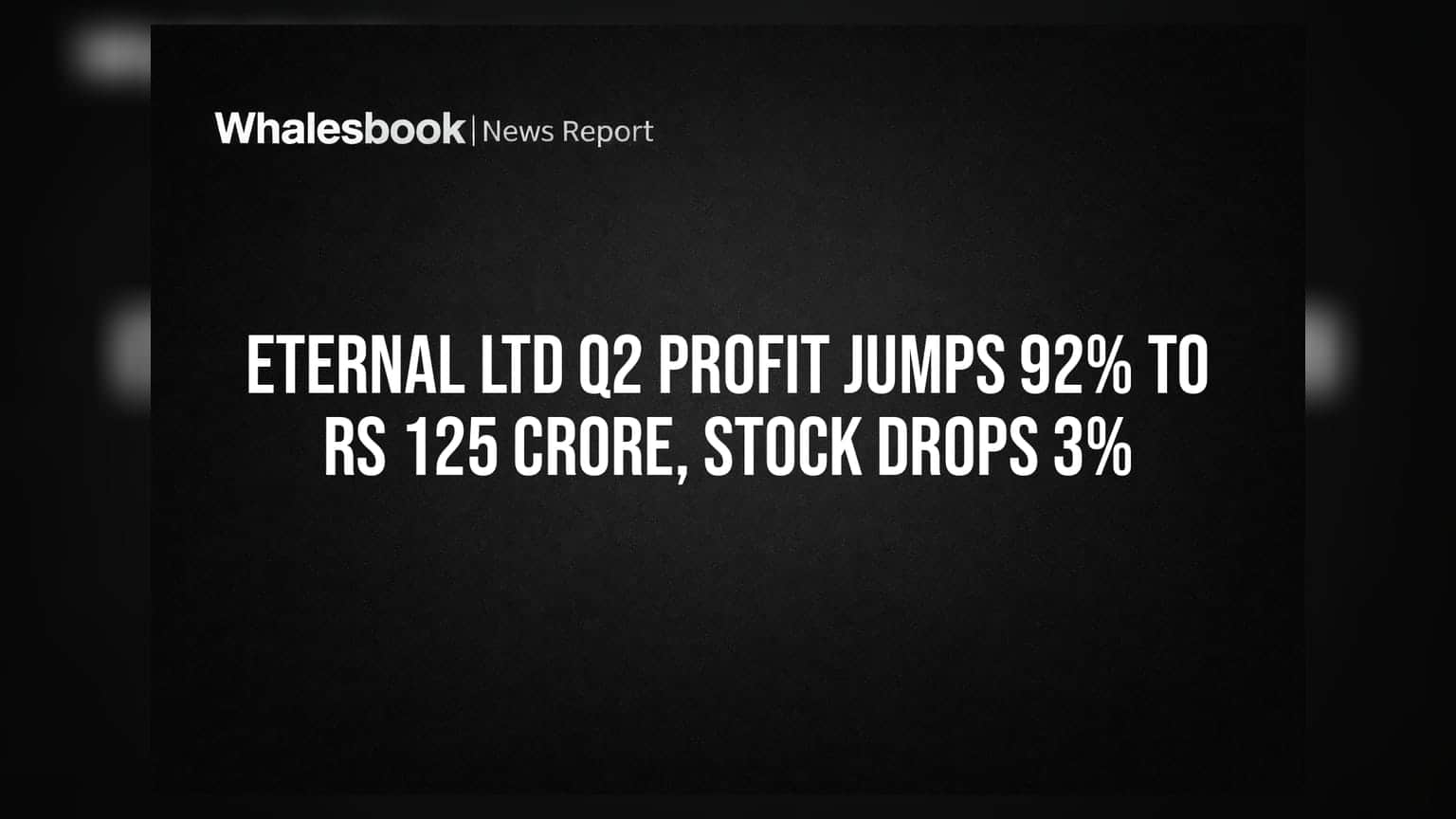
Eternal Ltd posted a 92 percent rise in net profit to Rs 125 crore for the September quarter, supported by a 78 percent revenue increase to Rs 24,138 crore. However, total expenses climbed to Rs 24,166 crore, leading investors to react cautiously. The stock slipped 3.39 percent on Wednesday, reflecting concern over the high cost of the company's aggressive expansion in the quick-commerce market.
Eternal Ltd, the parent company behind food delivery brand Zomato and quick-commerce leader Blinkit, has reported its financial results for the quarter ending September 2026. The company saw its net profit rise to Rs 125 crore, a 92 percent increase compared to the Rs 65 crore profit in the same period last year. This result also improved from the Rs 92 crore reported in the previous quarter.
Despite the jump in profit, the company’s operating costs have escalated rapidly. Revenue from operations reached Rs 24,138 crore, which is a 78 percent increase from the Rs 13,590 crore reported in the corresponding quarter of the previous year. However, total expenses also surged to Rs 24,166 crore, marking a 75 percent increase from the Rs 13,813 crore spent a year earlier. This indicates that the company is spending almost all of its revenue to fund its growth.
Market Reaction and Investor Focus
Following the results, investor sentiment remained guarded. On October 21, 2026, shares of Eternal Ltd declined by 3.39 percent to trade at Rs 309.60 on the Bombay Stock Exchange. The market’s reaction suggests that investors are focusing on the sustainability of the company's high-spending model. While revenue and profit figures show strong growth, the high expense ratio highlights the costs associated with maintaining a dominant position in the competitive quick-commerce sector.
The company’s strategy remains centered on scaling its quick-commerce operations, which requires significant upfront spending on infrastructure, marketing, and delivery networks. For shareholders, the key monitorable will be whether this aggressive capital allocation can lead to sustainable margin expansion in the future, or if the high operational costs will continue to offset top-line growth. Investors may track future updates to see if the company can demonstrate better cost control while maintaining its current growth pace.