

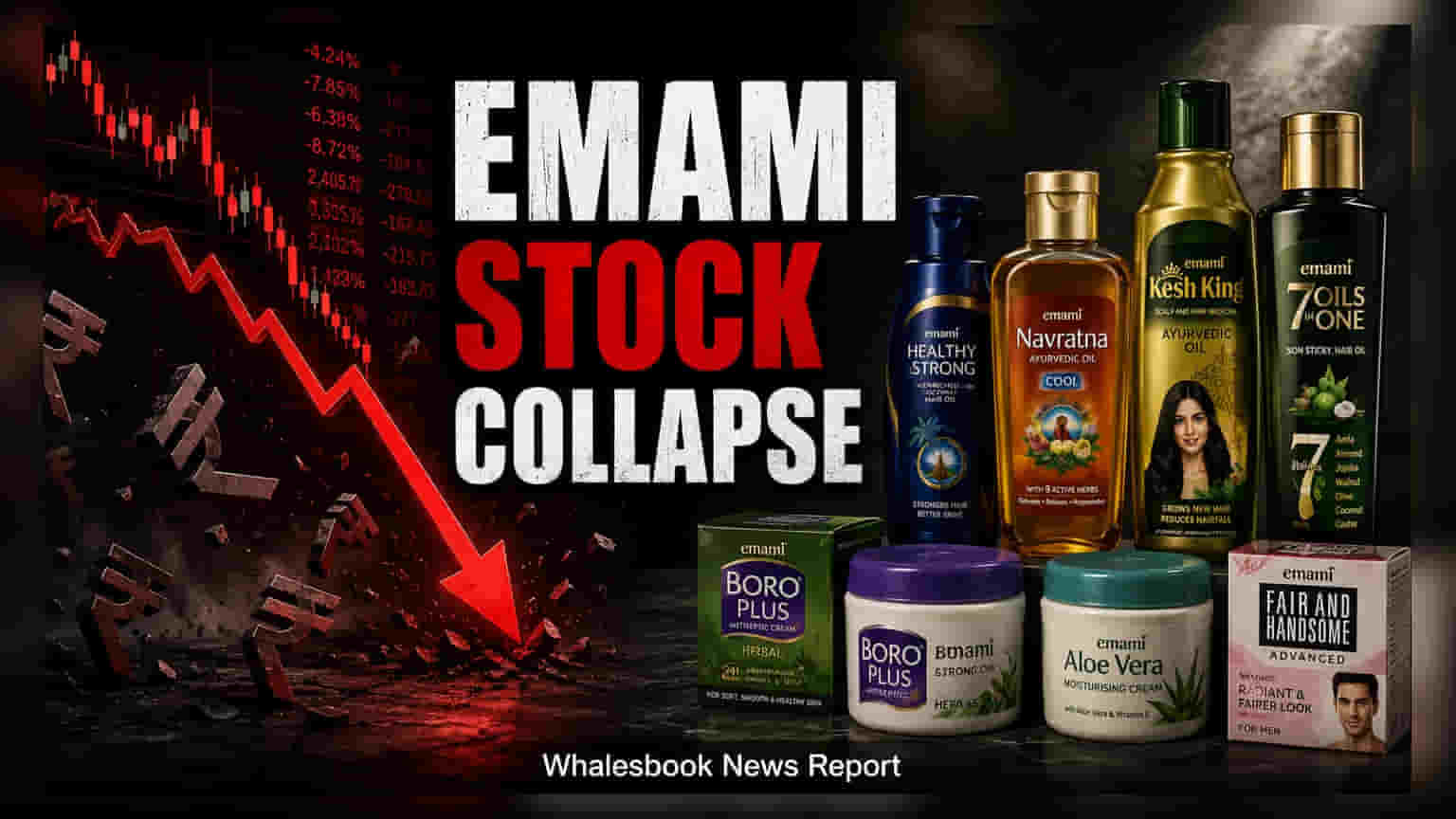
Emami Limited's stock has faced significant pressure, dropping over 30% from its 52-week high, despite reporting steady revenue growth. While the company is expanding through recent acquisitions, high input costs and geopolitical issues in West Asia have reduced net profits. Investors are now watching to see if the company’s bet on premium products and new brands can improve margins and support a potential recovery.
Emami Limited has experienced a challenging year on the stock market, with share prices trading well below the 52-week high of ₹634.2. Currently hovering around the ₹403 level, the stock’s performance reflects a broader struggle to balance revenue growth with profitability in a tough market environment.
In the first quarter of the 2027 fiscal year (Q1 FY27), the company reported a consolidated revenue of ₹1,039 crore, marking a 15% increase compared to the previous year. This growth was largely powered by strong domestic demand, which saw a 20% increase, and solid volume growth of 8%. However, this top-line success was not reflected in the bottom line. The consolidated net profit for the quarter fell by 15.4% to ₹138.94 crore, as the company faced higher input costs, increased tax liabilities, and expenses related to merging its new businesses.
Impact of Acquisitions and Global Headwinds
A major part of Emami's current strategy involves aggressive expansion through acquisitions, specifically the purchase of Axiom Ayurveda and IncNut Digital. While these moves are aimed at capturing a larger share of the market, they have introduced short-term financial pressure. The company noted that integrating these businesses requires significant capital, which has temporarily compressed profit margins. Gross margins for the quarter narrowed by 360 basis points to 65.8% due to rising prices of raw materials and packaging.
Simultaneously, the company’s international business has faced significant hurdles. Revenue from international markets declined by 12% in the first quarter. This is largely attributed to geopolitical instability in West Asia, which has disrupted supply chains and demand. For investors, the normalization of these markets is a crucial factor for a potential turnaround in revenue stability.
Competition and Valuation
Despite the stock's recent price correction, analysts have noted that Emami trades at a valuation discount compared to its larger peers in the Fast-Moving Consumer Goods (FMCG) sector. This discount often reflects market concerns about the volatility of the company's product portfolio, roughly 40% of which is seasonal. The company is now trying to move toward a higher-value product mix and increase its presence in organized trade and quick commerce, which now accounts for a significant portion of its e-commerce sales.
Risks and What Investors Should Track
The road ahead for Emami depends on several moving parts. A key risk remains the inflation of raw material costs, particularly crude oil, which affects packaging and production expenses. While the company has planned price hikes of 2-3%, it must balance this against intense competition in the FMCG sector, which limits its ability to pass on all costs to the consumer.
Investors will likely track the company's ability to maintain domestic volume growth while managing the integration of its recent acquisitions. Furthermore, any stability in the geopolitical situation in West Asia will be a key indicator of whether the international business can recover in the coming quarters. The next few earnings updates will be vital to determine if the strategic investments begin to contribute positively to the company's profit margins.