

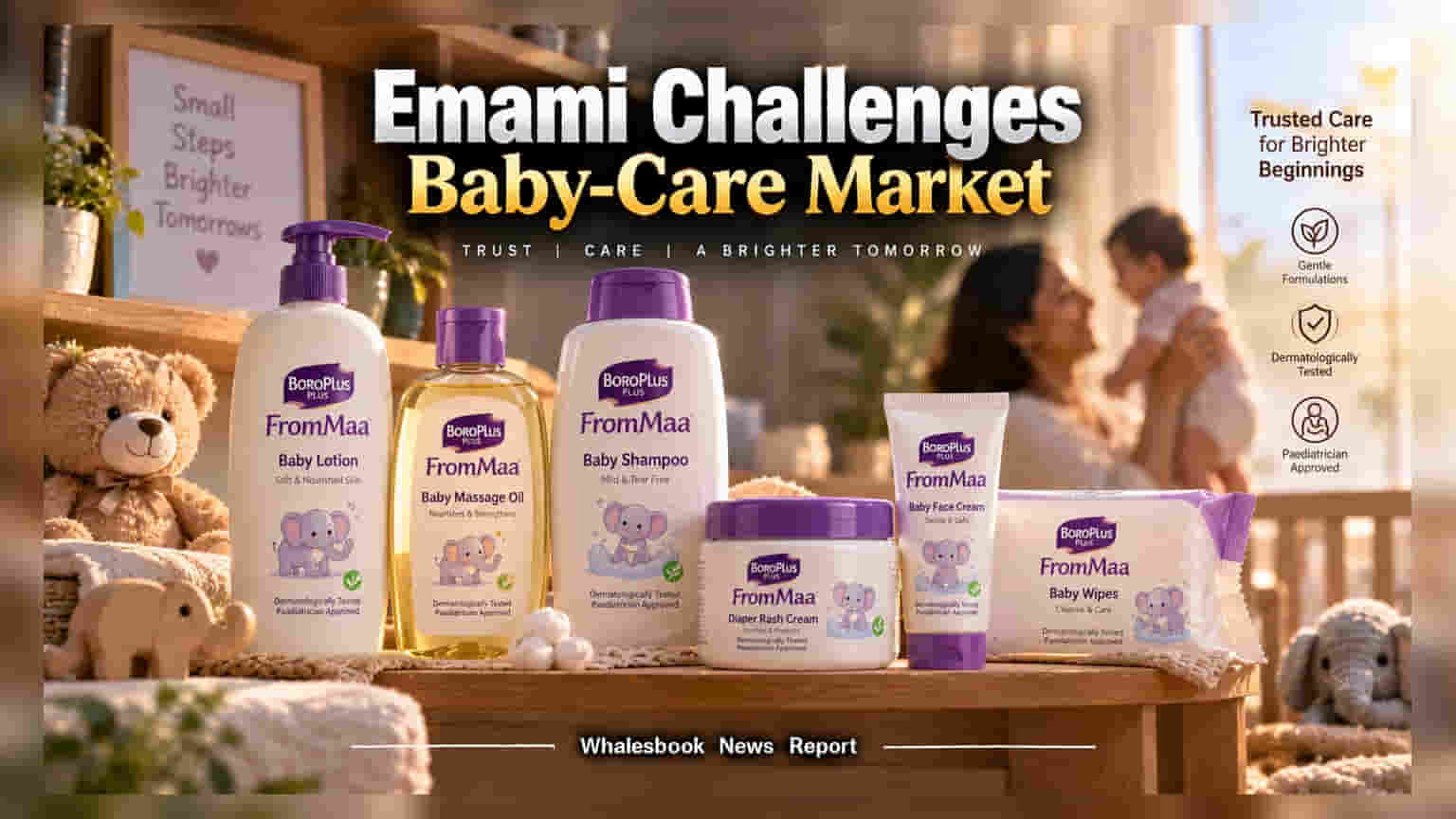
Emami Limited has launched its 'BoroPlus FromMaa' baby care range, targeting the ₹40,000 crore Indian infant care market. This move aims to reduce reliance on the company's core antiseptic business, though high marketing costs and intense competition from established brands remain key risks for investors to watch.
Emami Limited has officially expanded its flagship BoroPlus brand into the competitive baby care segment with the launch of 'FromMaa.' This new range introduces seven dermatologically tested, paediatrician-approved products, including baby lotion, shampoo, massage oil, and diaper rash cream. By leveraging the decades-old trust of the BoroPlus brand, Emami is aiming to capture a share of India's growing baby care market, which is valued at over ₹40,000 crore.
Strategic Shift Amid Competition
The company is attempting to diversify its product portfolio as growth in its core antiseptic and skincare business shows signs of slowing. However, the baby care category is a challenging landscape. Emami will face stiff competition from deep-pocketed incumbents like Johnson & Johnson and Himalaya Wellness, as well as digital-native brands like Honasa Consumer’s Mamaearth, which have successfully pivoted toward natural and premium formulations. Success in this category will rely on the company's ability to displace these established players and build brand loyalty among parents who are increasingly prioritizing premium, ingredient-focused products.
Financial Position and Stock Performance
Emami enters this expansion with a relatively stable balance sheet. As of March 2026, the company reported a low debt-to-equity ratio of 0.04, providing significant financial flexibility to fund its new venture. Despite this solid foundation, the stock has faced downward pressure. On September 8, 2026, Emami shares were trading near ₹366, reflecting a sharp year-to-date decline of approximately 40% amid broader market cooling and investor caution toward FMCG stocks.
Challenges Ahead
While the expansion is a strategic effort to find new growth, it is not without risks. Breaking into the baby care market requires heavy investment in marketing, distribution, and establishing retail presence, which may put pressure on the company’s profit margins in the near term. Additionally, the broader FMCG sector continues to grapple with raw material price volatility, which can squeeze profitability if costs cannot be passed on to consumers. Investors will likely monitor the company’s quarterly updates to see if the new brand can scale effectively and whether these distribution investments yield a positive impact on revenue growth.