 Whalesbook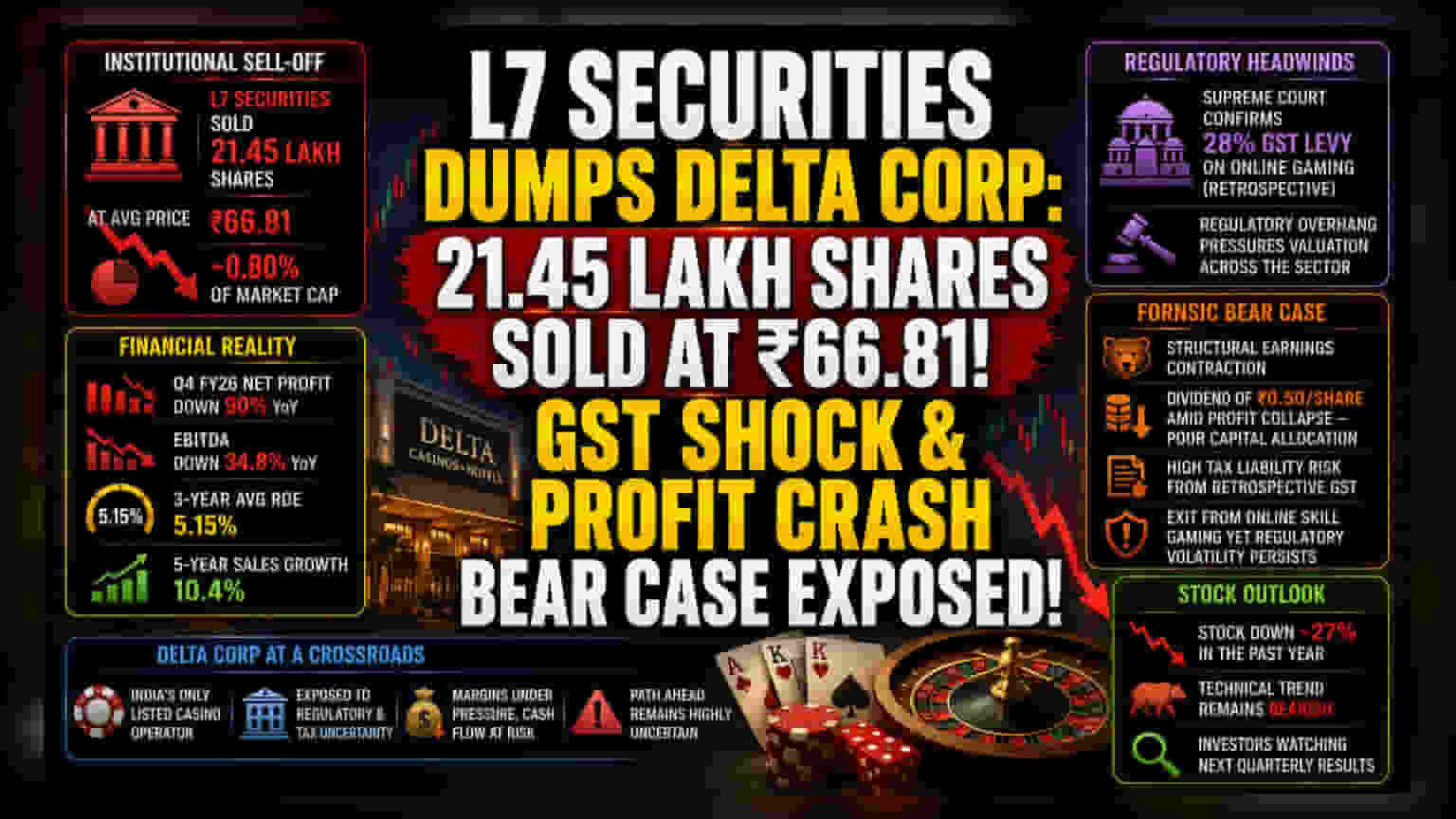


The Institutional Repricing
Recent exchange data confirms that L7 Securities liquidated a significant position in Delta Corp, offloading 21.45 lakh shares at an average of Rs 66.81. This volume represents approximately 0.80% of the company’s market capitalization, signaling a clear reduction in institutional exposure. The transaction comes at a precarious juncture, as the broader gaming sector digests the Supreme Court’s recent confirmation of a 28% GST levy on online gaming activities, including retrospective enforcement. While Delta Corp has pivoted toward physical casino operations, the regulatory environment continues to exert downward pressure on valuation multiples across the entire gaming and hospitality cohort.
Sectoral Divergence and Regulatory Weight
Delta Corp’s struggle to maintain momentum is compounded by its unique position as India’s only listed casino operator. Unlike diversified leisure conglomerates that can absorb regulatory shocks through alternative revenue streams, Delta remains tethered to the high-stakes environment of Goa and Sikkim. Competitors in the broader hospitality space have historically utilized aggressive debt management to navigate tax fluctuations, whereas Delta Corp faces a combination of a three-year average Return on Equity of 5.15% and a sluggish 10.4% five-year sales growth rate. Investors are increasingly wary that the company’s focus on integrated resorts may not suffice to offset the sector-wide tax contagion.
The Forensic Bear Case
From a risk-mitigation perspective, the company’s recent financial disclosures paint a picture of structural contraction. A 90% year-on-year collapse in Q4 FY26 net profit, alongside a 34.8% drop in EBITDA, indicates that operating leverage is working aggressively against the firm during a period of reduced consumer discretionary spending. Furthermore, the decision to declare a dividend of Rs 0.50 per share amidst such an earnings drawdown may be viewed by institutional analysts as a capital allocation error—prioritizing shareholder optics over the liquidity needed to address mounting tax liabilities. Management's historical efforts to divest from online skill gaming have not yet insulated the balance sheet from the prevailing regulatory volatility, raising questions regarding the long-term sustainability of their current business model.
Future Outlook
The market’s reaction to the block deal suggests a lack of appetite for bottom-fishing at current levels. With the stock declining roughly 27% over the past year, the technical trend remains firmly bearish. Unless the company can demonstrate a meaningful pivot toward operational efficiency or navigate the impending GST demands without further capital impairment, the path of least resistance for the share price remains downward. Investors are now closely monitoring whether future quarterly filings will reveal a further erosion of margins or if the firm can successfully ringfence its physical casino assets from the industry-wide retrospective tax burden.