 Whalesbook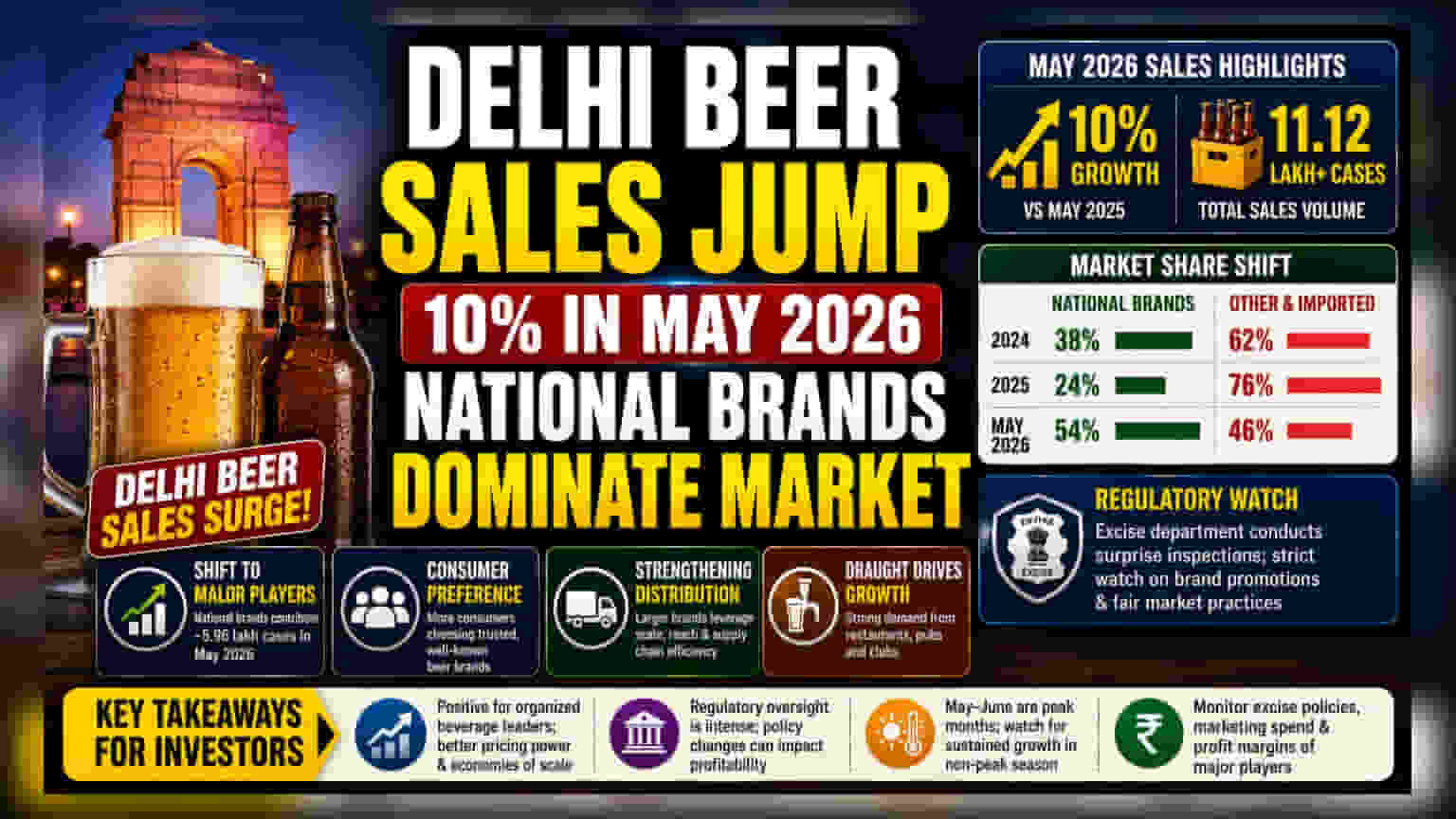


Beer sales in Delhi grew by nearly 10% in May 2026, with national brands capturing 54% of the market share. This significant shift from smaller labels and imports indicates a clear trend toward industry consolidation among large, organized beverage companies. While the jump reflects strong seasonal demand, investors should remain attentive to the regulatory environment in the alcohol sector, which remains a key factor for long-term business performance.
What Happened
Beer consumption in Delhi recorded a notable increase of roughly 10% in May 2026 compared to the same period in the previous year. According to market data, total sales volume reached over 11.12 lakh cases for the month. A significant portion of this growth was captured by established national beer brands, which now account for 54% of the total market share. This is a sharp rise from the 38% share recorded in 2024 and significantly higher than the 24% seen in 2025. Conversely, sales volume for smaller, lesser-known brands and imported options has declined, with their collective market share falling to 46%.
The Shift Toward Major Players
The data highlights a clear consolidation trend within the local market. Consumers appear to be increasingly favoring widely recognized, large-scale beer labels over niche or imported alternatives. This shift has translated into a higher volume of sales for national players, who contributed nearly 5.96 lakh cases to the total monthly figure. In contrast, smaller and imported brands have seen their footprint shrink, suggesting that larger, organized beverage companies are effectively capturing the consumer preference shift.
Why This Matters For Investors
For investors monitoring the Indian beverage sector, this shift toward large, national players is often viewed as a positive development for organized market leaders. When consumers gravitate toward established brands, it typically strengthens the distribution power and pricing capability of the major beverage companies that dominate the national market. Greater market share often allows these firms to optimize their supply chain and leverage economies of scale. However, the alcohol industry in India is subject to intense competition and highly state-specific regulatory policies, which can influence profitability regardless of demand volume.
Regulatory Oversight
The alcohol and beverage industry operates under strict government supervision in India. Recent reports indicate that the excise department in Delhi is actively monitoring brand promotion activities and conducting surprise inspections to ensure compliance with fair market practices. For investors, this serves as a reminder that the sector faces frequent regulatory scrutiny. Changes in excise policies, taxation, or marketing restrictions can impact how companies operate and their ability to reach consumers, making this a critical area to watch.
Seasonality And Market Context
May and June are traditionally peak months for beer consumption in India due to rising temperatures. While the 10% volume growth is a positive signal, it is also influenced by these seasonal factors. Comparing performance across different seasons is essential to separate temporary temperature-driven spikes from actual, sustainable demand growth. The concentration of draught beer sales within the restaurant and club sector also highlights the importance of the out-of-home consumption segment for these companies.
What Investors Should Track
Moving forward, the primary monitorables for investors include the stability of these market share gains and the regulatory environment. Investors may look for updates on excise policy changes that could affect pricing or marketing. Additionally, it will be important to observe whether the current preference for national brands continues into the non-peak months, as this will determine the sustainability of the recent volume growth. Monitoring the profit margins of major beverage players will also be crucial, as companies often increase marketing spending to maintain or defend their shelf presence during high-demand periods.