

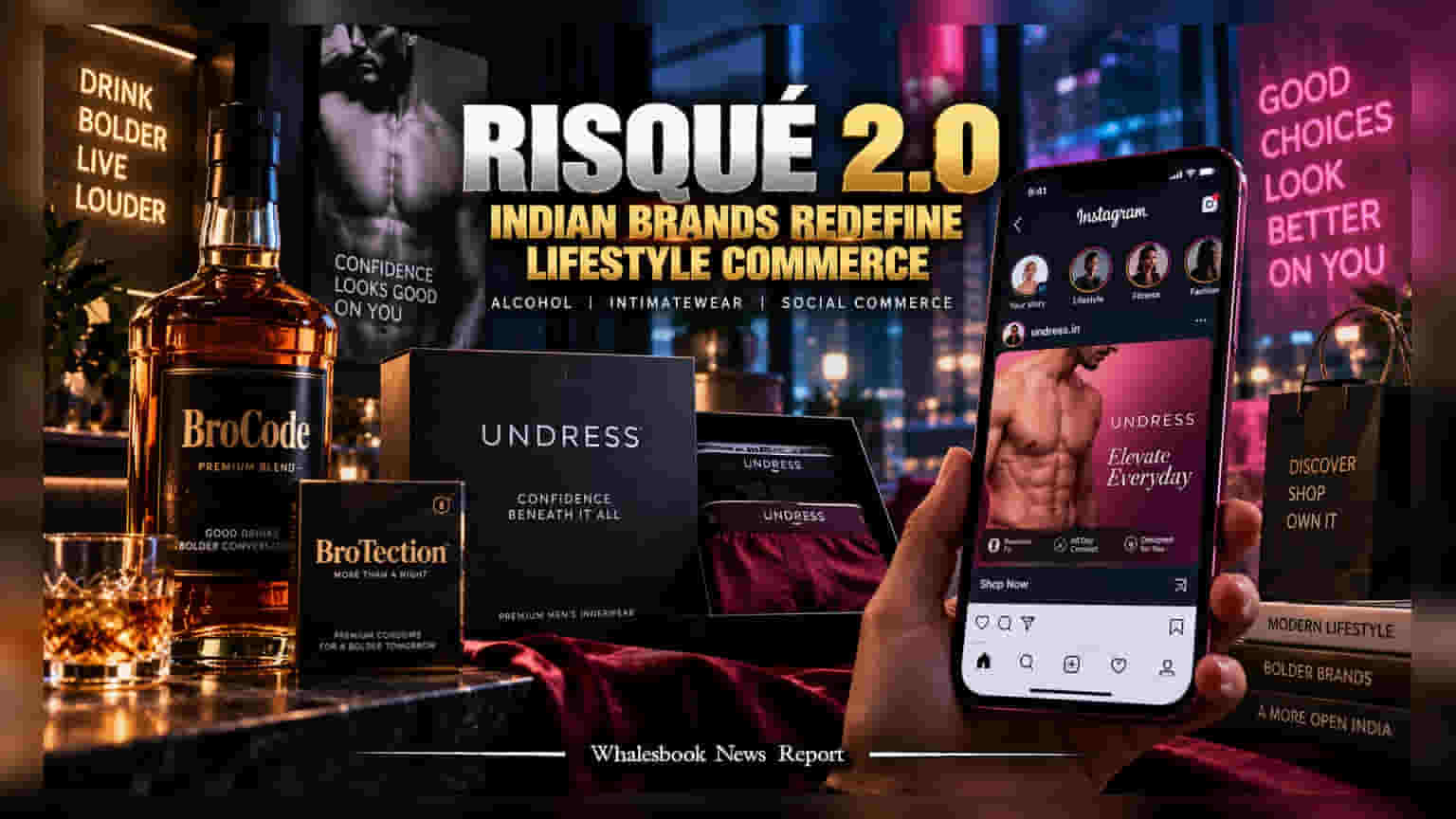
Indian consumer brands like IndoBevs and UNDRESS are shifting from shock-value advertising to embedding provocation directly into product design. Targeting a ₹40,000 crore lifestyle segment, this digital-first approach seeks faster conversions but faces long-term challenges regarding brand sustainability, regulatory scrutiny, and product quality.
Indian consumer brands are adopting a new strategy often described as 'Risqué 2.0,' where provocative branding is no longer limited to advertisements but is woven directly into product architecture and the purchasing experience. Companies operating in the sexual wellness, intimatewear, and ready-to-drink alcohol sectors are using this approach to capture consumer attention in a market estimated to be worth between ₹38,300 crore and ₹44,000 crore.
IndoBevs, known for its alcobev brand BroCode, has expanded into sexual wellness with its 'BroTection' condoms, aiming to create a cross-category lifestyle experience. Similarly, the newly launched digital-first brand UNDRESS is entering the men's premium intimatewear segment. These companies are utilizing premium pricing strategies—with UNDRESS products ranging from ₹799 to ₹1,399—to position themselves as lifestyle necessities rather than basic commodities.
The business model relies heavily on direct-to-consumer (D2C) channels, where social media acts as both the primary discovery engine and the storefront. By using influencer-led campaigns and targeted digital content, these brands can significantly reduce the friction between a consumer viewing a provocative ad and completing a transaction. For many of these newer entrants, social media platforms like Instagram drive a substantial majority of early sales, creating an instant connection with the target demographic.
However, this strategy carries distinct risks for investors and market observers. The primary concern is the sustainability of the 'shock' factor. While provocative branding is effective at cutting through the noise in digital feeds, analysts caution that it has a limited shelf life. If the underlying product quality does not match the bold marketing, consumers are unlikely to return for repeat purchases, leaving the company with a transient gimmick rather than a loyal customer base.
Furthermore, the sector faces significant regulatory pressure. Brands that blur the lines between high-alcohol-content products and wellness or lifestyle categories may attract closer scrutiny from regulators. There is also the constant risk of alienating mainstream consumers in smaller cities, which could limit the total addressable market for these niche players.
Another layer of risk involves the heavy reliance on digital platforms. As customer acquisition costs fluctuate and platform policies evolve, D2C brands that depend on social media for 70–80 percent of their revenue may face pressure on their profit margins. Moving forward, the key monitorable for these companies will be their ability to transition from marketing-led growth to sustained brand loyalty and operational profitability.