

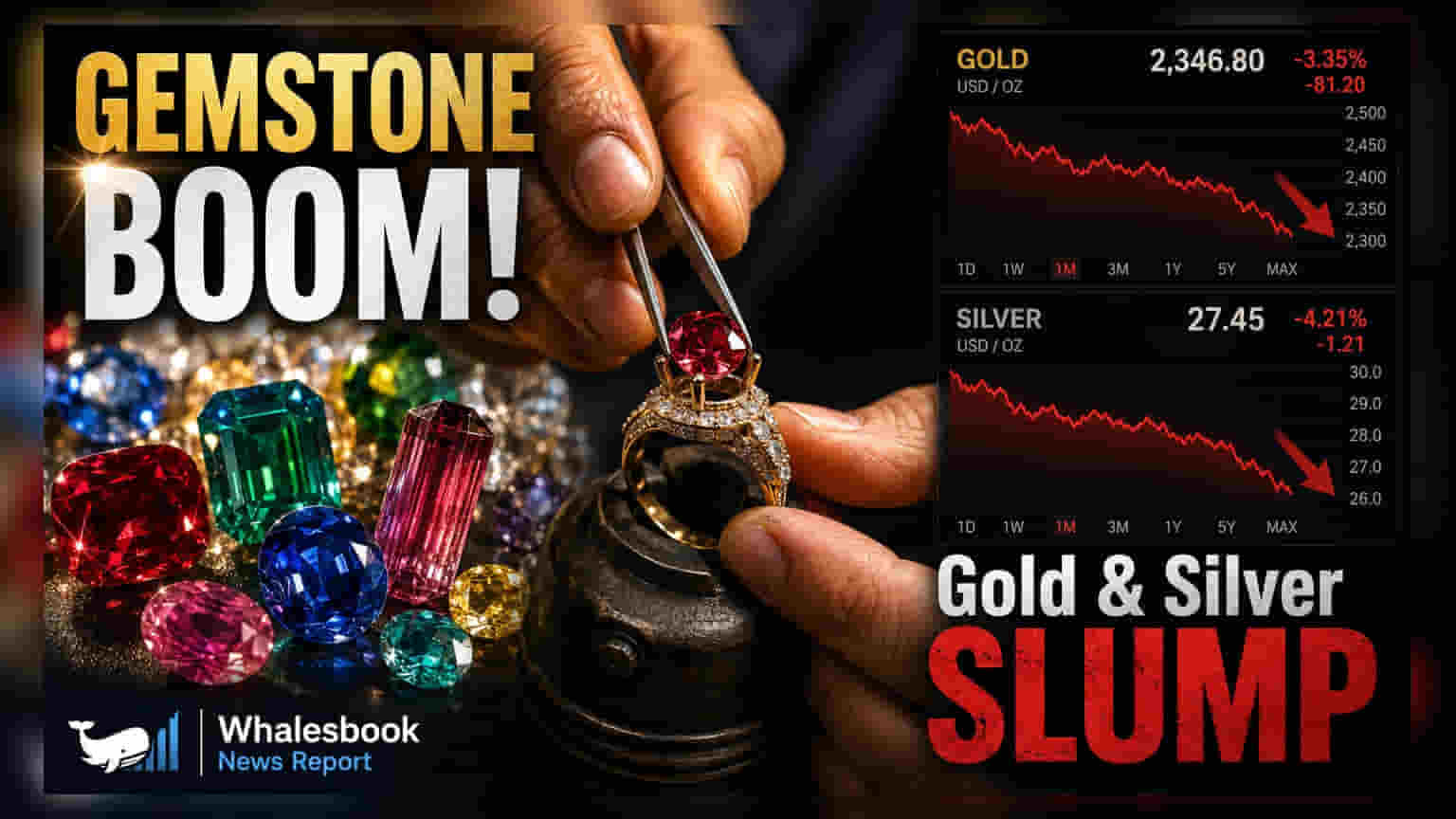
Demand for coloured gemstone jewellery has surged by 30% as consumers shift away from traditional gold and diamonds. Prices for these stones have increased by 20% year-on-year, prompting major retailers to expand their luxury collections ahead of the festive season.
What Happened
Retail demand for coloured gemstone jewellery has jumped by 30% compared to last year, causing prices for these stones to rise by approximately 20%. As affluent buyers and younger generations, including Millennials and Gen Z, increasingly prefer vibrant stones like rubies, emeralds, and sapphires over traditional gold or diamond-only jewellery, retailers are actively increasing their stocks. This shift is particularly visible as jewellers prepare for the upcoming wedding and festival season, with many businesses expanding their inventory of both precious and semi-precious stones to capture this growing consumer interest.
The Shift Toward Aspirational Luxury
The rise in popularity is driven by changing fashion preferences and the influence of global trends on younger buyers. Retailers are now focusing on 18-carat gold jewellery pieces that feature coloured stones, which often carry a lower entry price point compared to high-carat gold or diamond sets. Brands such as Tanishq have introduced dedicated collections like 'Hues' to tap into this market, with a significant portion of designs priced under ₹2.5 lakh to appeal to a broader consumer base. This strategy helps jewellers maintain premium positioning while making luxury products more accessible.
Impact of Commodity Price Changes
The jewellery sector's pivot coincides with recent volatility in traditional precious metals. On the Multi Commodity Exchange of India (MCX), gold futures recently declined by 1.3% to trade at ₹1,38,630 per 10 grams, while silver futures dropped 0.85% to ₹2,20,745 per kg. While the lower cost of gold may benefit the overall jewellery manufacturing process, the higher demand for coloured stones indicates a structural shift in consumer preference rather than just a reaction to metal price movements.
Supply Chain and Manufacturing Context
This demand trend is providing a boost to the gemstone processing industry in Jaipur, which hosts nearly 10,000 cutting and polishing units. Much of the raw material is imported from regions such as Africa, Brazil, and Sri Lanka. For retailers, the challenge lies in managing inventory costs, as prices for popular stones like Paraiba tourmaline, tsavorite, and tanzanite continue to climb. Unlike standard gold or silver, gemstone pricing is often dictated by rarity, quality, and origin, which can create significant variations in margins for jewellery companies.
What Investors Should Track
Investors monitoring listed jewellery retailers and consumer luxury firms should observe how this shift affects gross profit margins. Since gemstone jewellery can offer different margin profiles compared to plain gold jewellery, inventory mix will be a key performance indicator. Additionally, tracking the sustainability of this demand trend through the upcoming festival and wedding seasons will be important, as high inventory buildup carries the risk of capital being tied up if festive sales do not meet company expectations.