

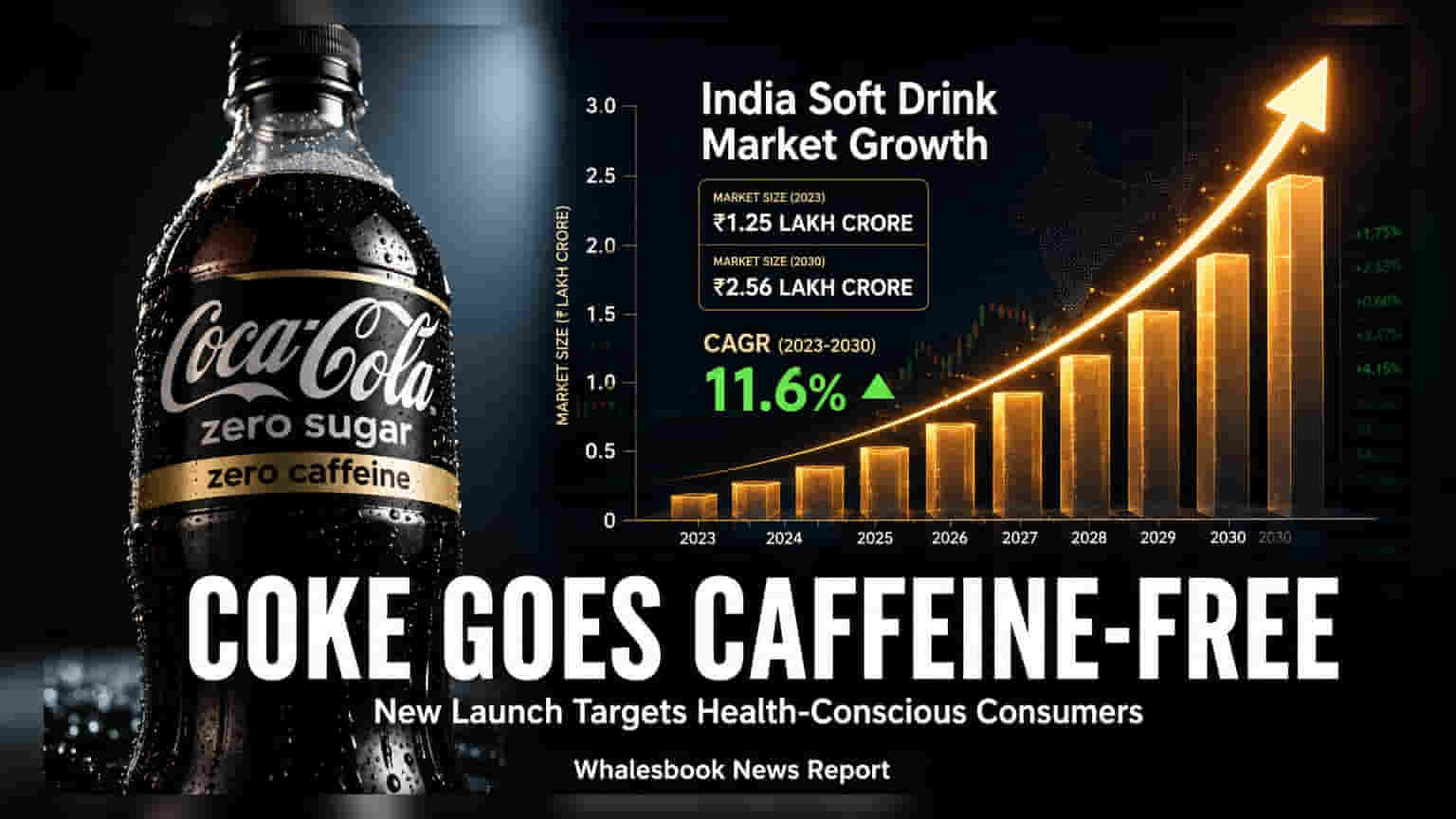
Coca-Cola India is expanding its health-focused portfolio with the launch of Coke Zero-Sugar Zero-Caffeine. The move follows a significant shift in consumer preferences, with low and no-sugar drinks now representing 30-35% of the total soft drink market in India.
Detailed Coverage
Coca-Cola India is planning to introduce its global brand, Coke Zero-Sugar Zero-Caffeine, to the Indian market later this year. This move is part of the company's strategy to address the changing preferences of health-conscious consumers who are increasingly looking for beverage options that exclude both sugar and caffeine.
Expanding the No-Sugar Segment
The market for low and no-sugar beverages has grown rapidly in India, currently accounting for 30-35% of the soft drink market, up from just 5% in 2020. This segment is now growing at twice the speed of traditional sugary cola drinks. By introducing a caffeine-free variant, Coca-Cola is aiming to differentiate itself in an increasingly crowded "diet and light" beverage space.
The broader soft drinks market in India is projected by Euromonitor to grow from approximately US $15.4 billion in 2026 to US $22.4 billion by 2033. This growth is expected to be supported by low per capita consumption rates and continued product innovation from major players.
Competition and Market Context
Competition in the no-sugar category has intensified significantly. PepsiCo’s bottling partner, Varun Beverages Ltd, has already reported that no-sugar and mid-sugar drinks represent nearly 60% of its total volumes. Other companies are also expanding their portfolios to capture this shift. Challenger brands such as Lahori Zeera have introduced sugar-free variants, while Reliance Consumer Products' Campa, ITC, and Zyro have also launched their own zero-sugar cola products.
While the expansion into caffeine-free options is aimed at meeting consumer demand, the success of this product will depend on how well the company maintains its taste profile compared to traditional colas. Investors should note that the beverage sector is highly competitive, and heavy spending on marketing and distribution for new product launches can sometimes put pressure on short-term profit margins.
Additionally, companies in the beverage sector must manage raw material costs and shifting regulatory environments regarding health labeling. The next important step for investors to track will be the actual market rollout and consumer adoption rates of the new caffeine-free product, as well as how this impacts the company's overall market share in the competitive diet-beverage segment.