

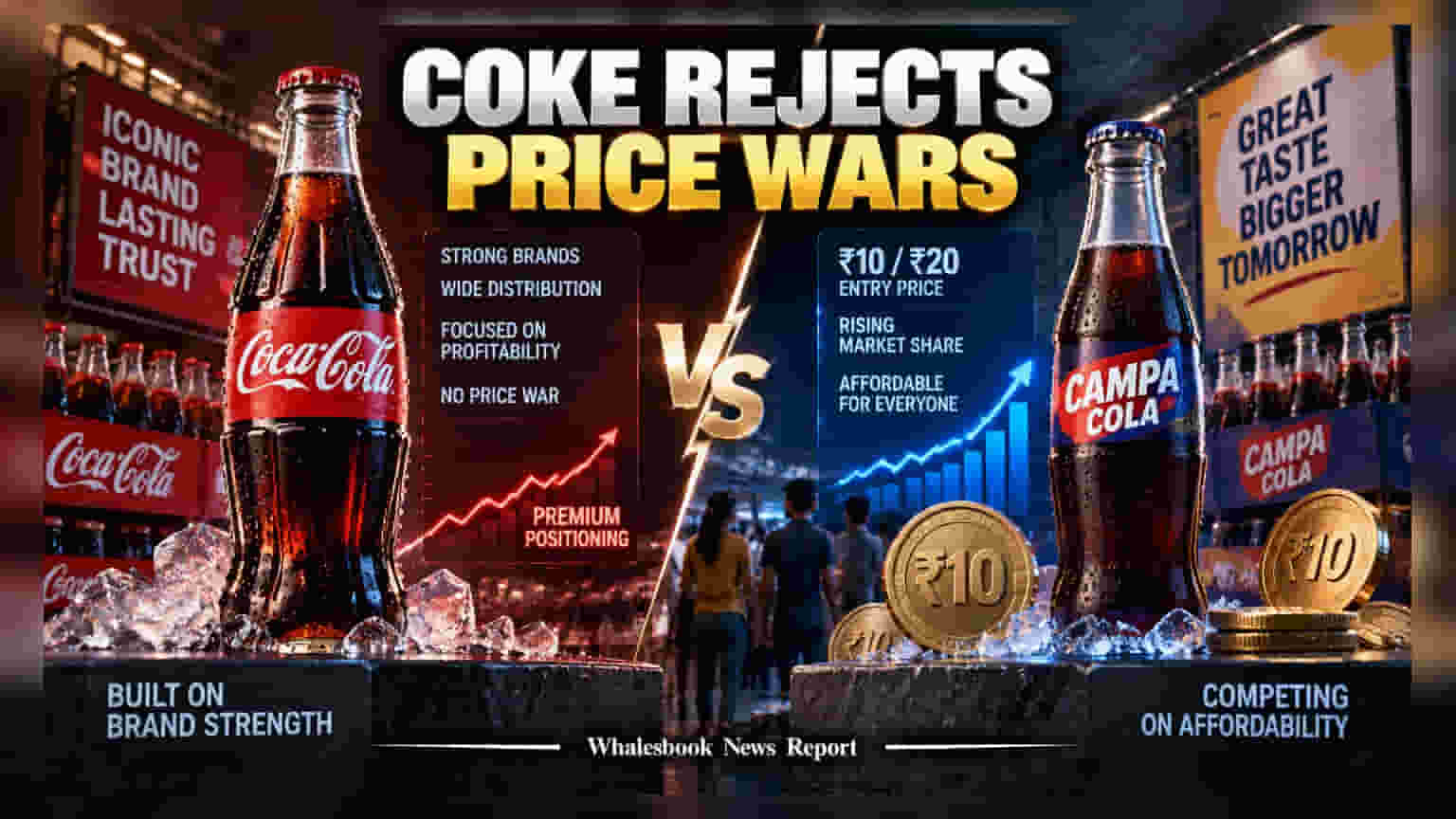
Coca-Cola CEO Henrique Braun plans to maintain price discipline in India despite rising competition from Reliance Industries’ Campa Cola. With newer brands capturing a 6-7% market share, Coca-Cola is focusing on brand loyalty and distribution rather than deep discounting. Investors are watching how this strategy impacts future volume growth.
The Coca-Cola Company has confirmed that it will not enter a price war with aggressive new entrants in the Indian beverage market. Speaking at the Barclays Global Consumer Staples Conference, CEO Henrique Braun dismissed the pricing strategies of rivals as unsustainable or "irrational." Instead of cutting prices to match the ₹10 and ₹20 entry-level products currently flooding the market, the company plans to stick to its long-term strategy of protecting profit margins through brand strength and distribution reach.
The Rise of Campa Cola
Competition has intensified significantly, largely driven by the revival of Campa Cola by Reliance Industries. Industry data shows that newer market entrants, which rely heavily on low-cost pricing, have increased their collective market share to approximately 6-7% in FY26. This is a notable jump from a 2% share held just two years earlier in FY24. Reliance Industries reported that Campa Cola achieved gross sales exceeding ₹4,700 crore in the most recent fiscal year, officially establishing the brand as the fourth-largest carbonated soft drink player in the country.
Coca-Cola's Defensive Strategy
Coca-Cola’s leadership believes that a race to the bottom on pricing could erode value for shareholders. Rather than reacting to each price cut by competitors, the company is prioritizing its existing portfolio. This involves strengthening its bottling network, improving packaging architecture, and maintaining marketing spend to ensure consumers stay loyal to its established brands. The company’s approach is to rely on its "revenue-growth management" capabilities, which allow it to navigate pricing in developing markets without necessarily resorting to across-the-board discounts.
Financial Context and Risks
Globally, Coca-Cola remains on solid financial ground. The company reported a positive second quarter for 2026, with net revenue rising by 7% to reach $13.4 billion, and has maintained a positive growth outlook for the full year. Its stock (NYSE: KO) traded around $87.84 on September 10, 2026, reflecting investor confidence in its global operations.
However, the Indian market presents a specific set of challenges. The primary risk for Coca-Cola is that price-sensitive consumers may increasingly switch to cheaper alternatives, which could lead to a loss of market share if the price gap becomes too wide to ignore. The company is walking a tightrope: it must avoid price wars to protect its profit margins, yet it must also ensure that its volume growth does not stall in a highly competitive, price-conscious environment. Investors should monitor quarterly volume growth and market share data in India to see if this "brand-first" strategy successfully holds off the competitive pressure or if margins eventually come under pressure from the need to increase marketing and infrastructure spending.