 Whalesbook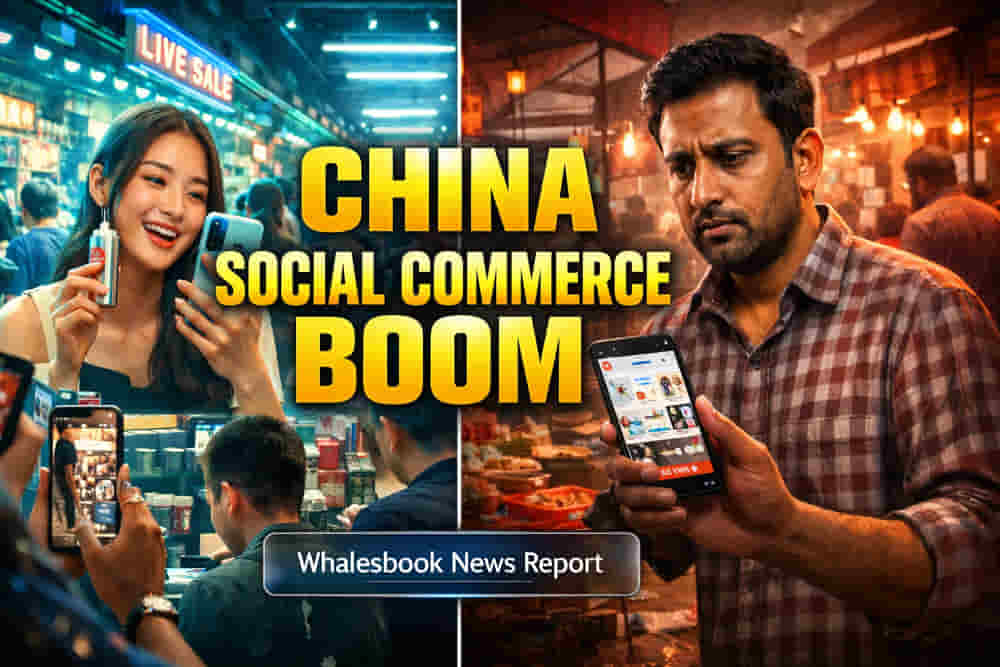
The disparity is stark, with China commanding nearly $900 billion in social commerce revenue, representing 30% of its total e-commerce. This dwarfs India's 1-2% share. Key drivers for China's success include a high-trust society where 65% of people trust others, compared to India's 20%. This trust deficit directly impacts payment models, with India's 65% reliance on cash-on-delivery for e-commerce purchases creating working capital nightmares for social commerce players who often require advance payment.
Infrastructure and Logistics Woes
Poor internet quality, ranking India 131 globally in speeds, and high data costs further hamper the livestreaming and interactive shopping formats that fuel China's social commerce. Logistics also present a significant hurdle; China's parcel density is eight times that of India, simplifying delivery operations. Moreover, India's retail market remains fragmented, with over 70% driven by regional and unbranded products, and average order values considerably lower than in China. This leaves little margin for platforms after accounting for returns and discounts, especially given extreme price sensitivity.
Regulatory Divergence and Future Outlook
Regulatory frameworks also differ drastically. China's Cyberspace Administration enforces strict creator verification for content, ensuring accuracy. In India, disclosure rules are lax, leading to lower consumer trust in influencer-driven recommendations. While companies like Myntra and HUL are experimenting with creator-led sales, and Meesho has amassed millions of users, their path to profitability and scale is significantly steeper than Chinese counterparts like Pinduoduo. Bridging this gap will require at least a decade to build a high-trust ecosystem, frictionless payments, and viable infrastructure.