

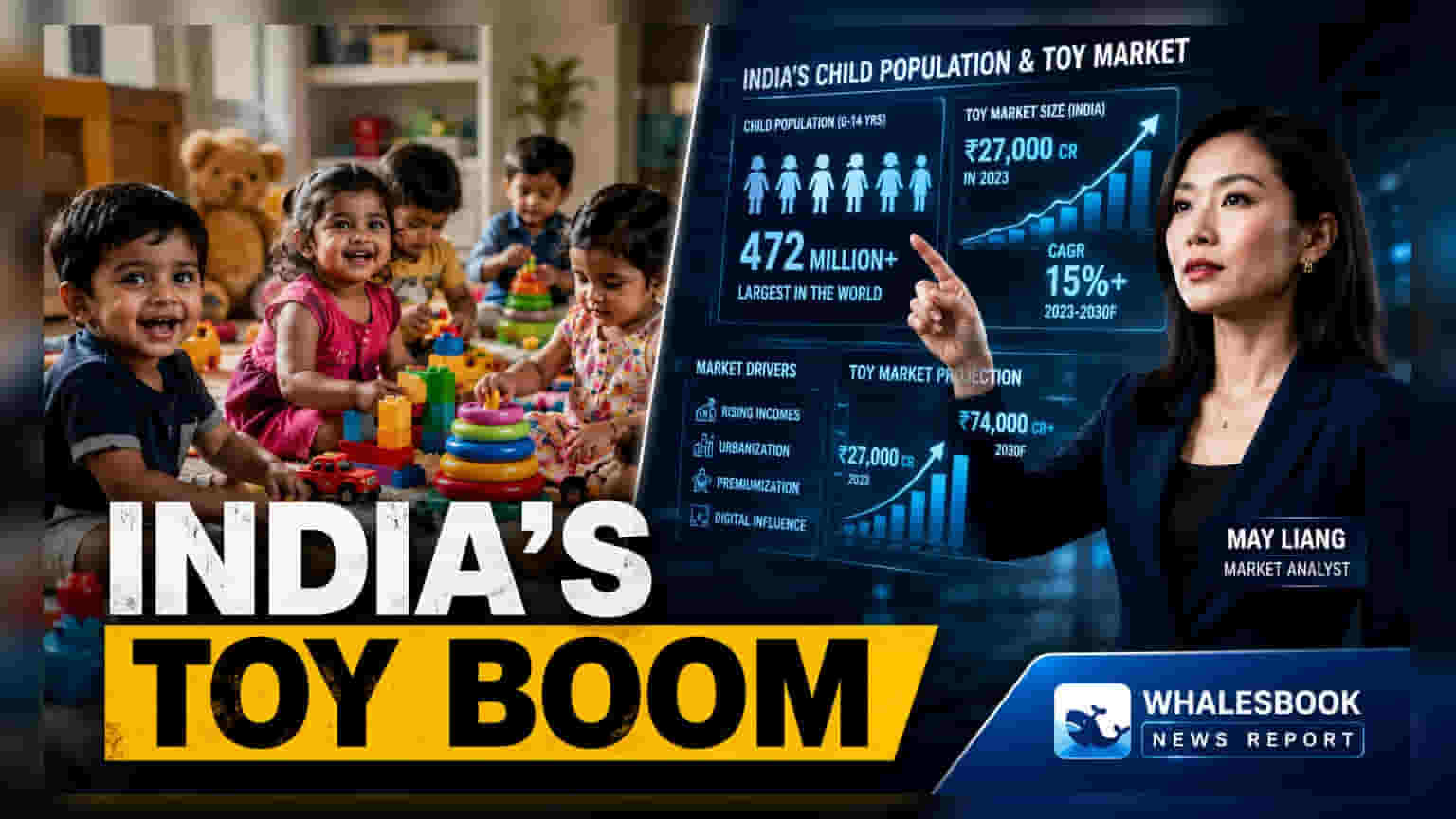
The China Toy & Juvenile Products Association is targeting India’s market, citing the country's high annual birth rate as a major growth driver. Global manufacturers are now looking to increase cooperation with local firms, particularly in the ride-on toys segment.
What Happened
May Liang, Chair of the China Toy & Juvenile Products Association, visited a toy exhibition in New Delhi this week to highlight the potential of the Indian consumer market. Citing an annual birth rate of over 20 million children, the association identified India as a critical area for expansion for global toy companies. During the visit, a delegation from China, Taiwan, and Hong Kong met with the Indian Toy Association to discuss potential manufacturing partnerships and trade collaborations, with a specific focus on the growing ride-on toys category.
Quality Standards and Manufacturing Shift
Beyond market size, the discussion focused on the evolution of Indian toy manufacturing. The association noted that domestic quality standards have improved significantly, partly due to the presence of global brands like Hasbro that have established production footprints in India. This move toward higher manufacturing standards is attracting interest from international players who are seeking to diversify their supply chains beyond traditional manufacturing hubs.
The Business Reality Check
For the Indian toy industry, this interest reflects a transition from a small-scale, unorganized sector to one attracting global attention. Historically, India’s toy sector struggled with lower quality and a lack of large-scale manufacturing capacity. However, recent government initiatives, such as the implementation of mandatory Bureau of Indian Standards (BIS) quality certification for toys, have forced local manufacturers to upgrade their processes. This regulatory pressure has created a more disciplined environment, making the sector more attractive to both domestic investment and foreign partnerships.
Risks and Market Hurdles
While the interest from global associations is a positive signal, investors should note that the Indian toy industry remains fragmented. Many local players are small or medium-sized enterprises that may face challenges in scaling production to meet global standards or price points. Furthermore, competition remains intense. Even with manufacturing improvements, Indian firms must compete with established global players that have significant economies of scale. Additionally, any increased influx of foreign products or components could pressure local margins if domestic manufacturing costs remain higher than those in traditional export-heavy economies.
What Indian Investors Can Track
Investors interested in the consumer goods space may track how local toy companies utilize these potential collaborations. Key monitorables include the ability of Indian manufacturers to secure long-term supply contracts with global brands, the actual uptake of the ride-on toys segment, and whether the industry can maintain export growth while competing with low-cost imports. Additionally, watch for any updates on further government policies regarding toy imports, as these significantly influence the profitability of domestic players.