

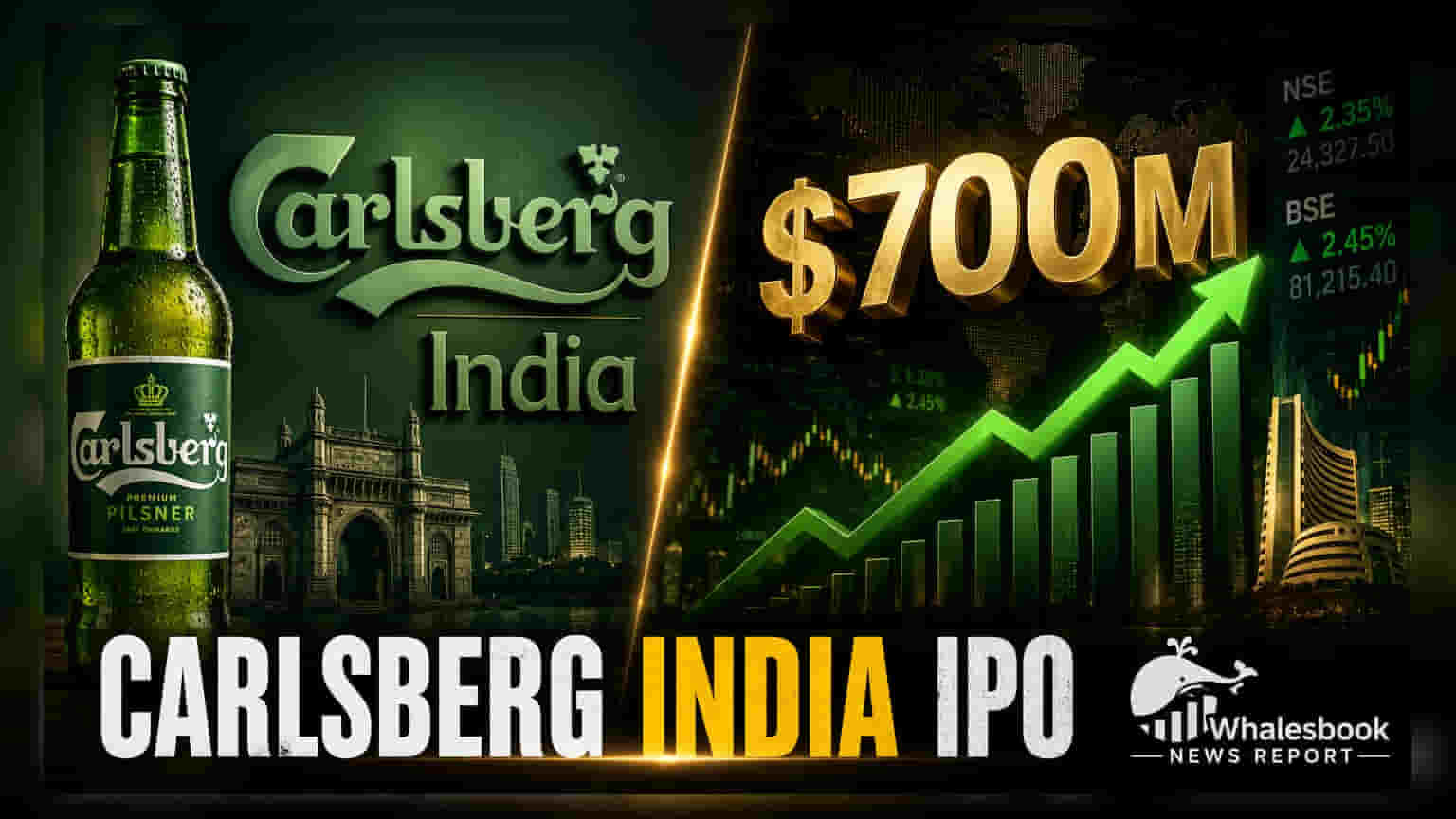
Danish brewer Carlsberg A/S has filed confidential papers for a $700 million IPO of its Indian unit. The deal is expected to be a secondary share sale where the parent company sells a portion of its existing stake. As India’s second-largest brewer, the potential listing comes as the market sees record-high IPO activity, though investors will likely focus on the complex regulatory nature of the Indian alcohol sector.
What Happened
Carlsberg India, the country’s second-largest brewer, has taken the first formal step toward a public listing. The Danish parent company has confidentially submitted draft documents to regulators for an initial public offering (IPO), with the goal of raising up to $700 million.
Unlike many IPOs where a company raises money to build new factories or fund expansion, this transaction is expected to be a secondary share sale. This means the parent company, Carlsberg A/S, intends to sell a portion of its existing shares to public investors rather than issuing new shares for growth capital. The process is in the early stages, and details regarding the valuation and final offer size remain subject to change.
Business Footprint and Market Position
Since entering the Indian market in 2007, the company has built a large network. It currently operates 14 breweries across the country, with eight plants owned directly and six others managed through contract manufacturing agreements. With an estimated 22% market share, the company has established itself as a major competitor in the domestic beer industry. To manage the IPO process, the company has appointed financial advisors, including Kotak Mahindra Capital, JPMorgan Chase, and Citigroup.
The IPO Context
The timing of this filing aligns with a very active period in the Indian capital markets. June saw a record amount of funds being raised through IPOs, signaling strong investor confidence. Carlsberg appears to be aiming to capitalize on this appetite for new listings. However, the success of any IPO depends on factors like market sentiment at the time of the public launch and how investors perceive the long-term growth prospects of the company.
Sector Challenges and Regulatory Risks
The alcohol industry in India is distinct from other consumer sectors due to its regulatory complexity. There is no single national policy; instead, sales, distribution, and taxation are governed by individual state governments. This often leads to frequent policy changes, adjustments in excise duties, and varying rules on advertising, which can directly impact profitability.
Investors will likely watch how the company navigates these state-level regulations. Furthermore, the market is highly competitive, with established players like United Breweries (the maker of Kingfisher) and other global brands like AB InBev holding significant ground. Maintaining market share in such a landscape often requires consistent spending on distribution and brand marketing, which can pressure profit margins.
What To Watch Next
Because the filing is confidential, specific details are not yet public. The key items for investors to track in the coming months will be the official prospectus once it becomes public, the company’s stated growth strategy, its debt levels, and any updates on how it plans to manage raw material and regulatory costs. The actual timing of the IPO will also depend on market conditions and final regulatory approvals.