

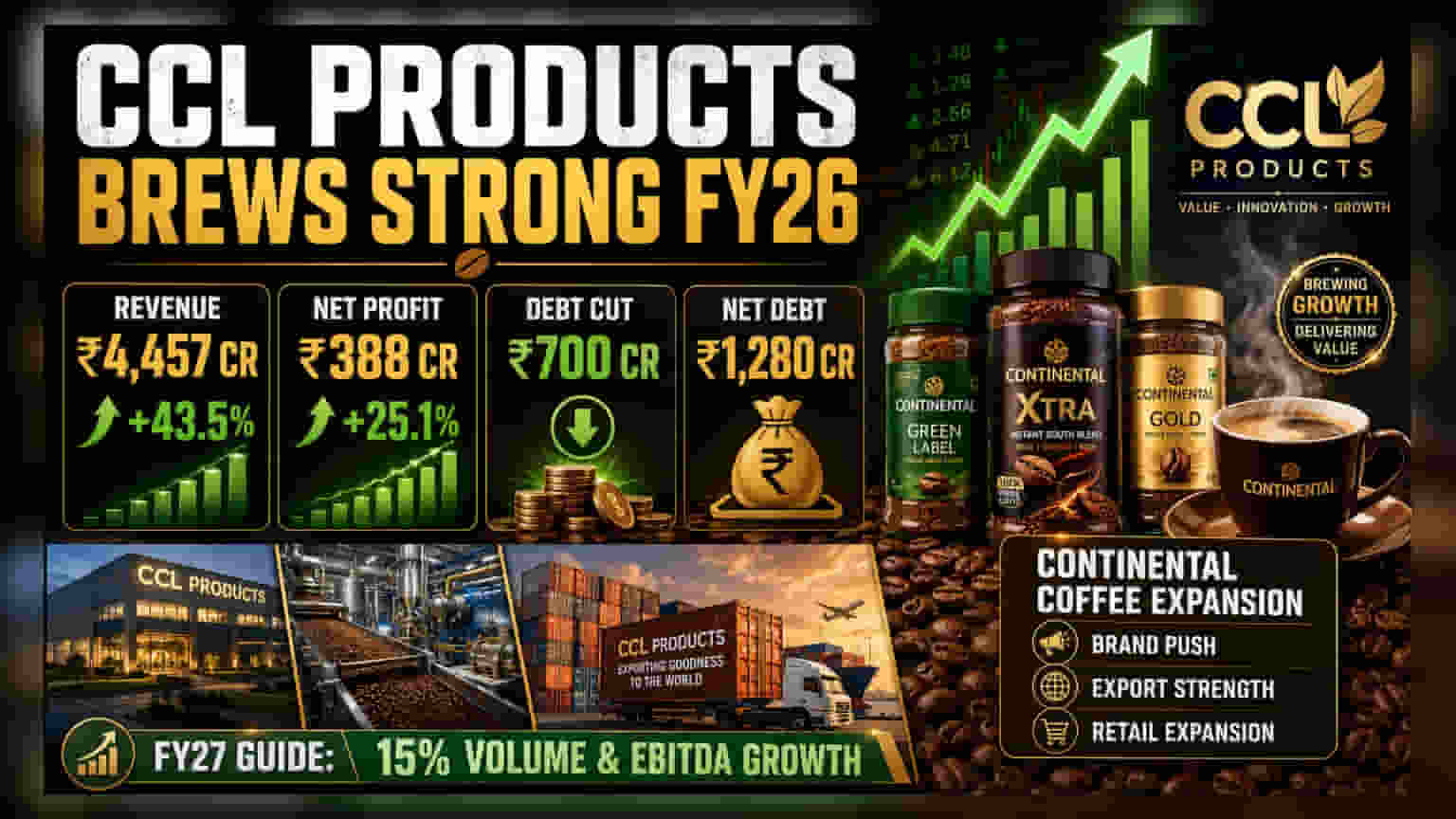
CCL Products reported a 25% increase in net profit for FY26, as revenue climbed to ₹4,457 crore. The company successfully reduced its debt while expanding the market share of its Continental Coffee brand. Investors are now focused on whether it can maintain profit margins and compete effectively against FMCG giants in the growing Indian coffee market.
What Happened
CCL Products (India) Limited closed the fiscal year 2026 with a strong financial performance. The company reported a consolidated revenue of ₹4,457 crore, representing a 43.5% growth over the previous year. Net profit increased by 25.1% to ₹388 crore. A key highlight of the year was the company's focus on deleveraging; CCL Products reduced its debt by approximately ₹700 crore, bringing net debt down to around ₹1,280 crore by the end of March 2026. This performance was driven by a combination of strong export volumes and the rapid expansion of its domestic branded portfolio, Continental Coffee.
Financial Performance and Debt Reduction
The FY26 results reflect the company’s ability to manage operations despite global volatility in coffee prices. While the company saw high revenue growth, maintaining profitability remained a key area of focus given the rising costs of raw coffee beans. By prioritizing cash flow generation, which exceeded ₹780 crore in FY26, the company was able to fund significant debt repayment while also supporting capital spending needs. The reduction in debt is a crucial step for the company, as it improves financial flexibility and lowers interest costs, which directly benefits the bottom line.
The Pivot to Branded Consumer Goods
Historically known as a major private-label manufacturer for global retailers, CCL Products has been shifting its strategy toward building its own consumer brand, Continental Coffee. This is a strategic move to move up the value chain. B2B contract manufacturing, while stable, often operates on thinner, cost-plus margins. In contrast, a successful B2C brand allows for higher margins and direct consumer loyalty. Continental Coffee is now among the top players in the Indian market. The company’s goal of reaching 300,000 retail outlets over the next three years highlights its ambition to secure a larger piece of the domestic market, where competition from established FMCG players is intense.
Competitive Landscape and FMCG Risks
The Indian coffee market is dominated by established giants like Nestlé (Nescafé) and Tata Consumer Products. These incumbents have massive distribution networks and deep advertising budgets. For CCL Products, competing in this space requires more than just a quality product; it requires sustained marketing investment and effective distribution. Another risk the company faces is global commodity price volatility. Coffee bean prices have been subject to significant fluctuations due to weather patterns and supply chain disruptions in major producing countries like Brazil and Vietnam. Any sudden spike in raw material costs, if not passed on to consumers, can put pressure on profit margins.
What Investors Should Track Next
Investors may monitor several key areas as the company moves into FY27. First, the management has guided for 15% volume and EBITDA growth, so performance against this target will be important. Second, the company’s ability to maintain or expand its gross margins despite potential volatility in coffee prices will be a critical indicator of its pricing power. Finally, the progress of the domestic retail expansion—specifically the rollout of the Continental Coffee brand into new regions and the success of premium product launches—will determine whether the company can successfully transition into a major consumer-facing FMCG player.