 Whalesbook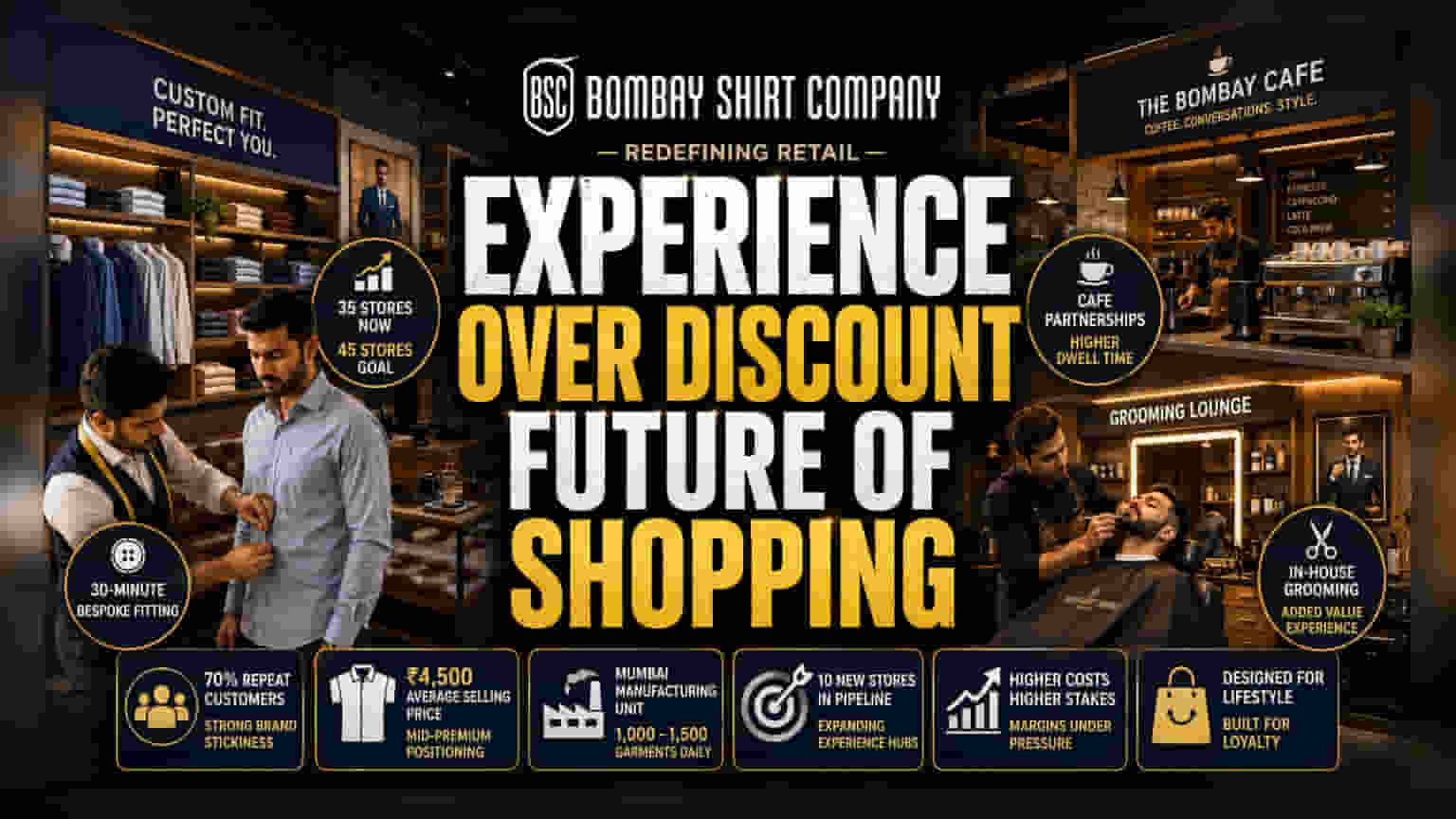


The Shift to High-Dwell Retail
Modern brick-and-mortar retail faces an existential crisis driven by the convenience of digital storefronts and the erosion of physical foot traffic. Bombay Shirt Company is attempting to bypass this trend by transforming its 35-store network into destination-based hubs. Rather than relying on transactional volume, the firm is optimizing for dwell time, utilizing cafe partnerships and in-house grooming to soften the friction of a 30-minute bespoke fitting process.
The Economics of Experiential Commerce
This strategy hinges on the assumption that non-apparel amenities can lower the customer acquisition cost. By integrating grooming services in key markets like Mumbai and Ahmedabad, the company attempts to bridge the gap between incidental visitors and actual purchasers. While the average selling price of ₹4,500 suggests a mid-premium positioning, the operational costs of maintaining these lifestyle hubs are significantly higher than standard retail layouts. The firm’s ability to scale this model, with ten additional locations planned, depends entirely on whether these lifestyle amenities generate sufficient high-margin ancillary revenue or if they merely serve as an expensive overhead burden that distracts from the core apparel business.
The Operational Risk of Asset-Heavy Growth
Investors and observers should note that the firm’s reliance on a centralized Mumbai manufacturing facility creates a bottleneck as it attempts to scale. While the facility currently manages a daily output of 1,000 to 1,500 garments, any disruption in supply chain logistics or labor costs will disproportionately impact profitability, given the high-touch nature of custom manufacturing. Furthermore, the reliance on third-party collaborations for coffee services introduces variable quality control risks. Unlike vertically integrated competitors that can control the entire customer journey, Bombay Shirt Company’s hybrid model risks fragmentation of the brand promise if partner quality fluctuates.
Competitive Positioning and Market Outlook
Unlike traditional off-the-rack retailers, the company occupies a niche between luxury bespoke tailors and mass-market fast fashion. Its 70% repeat customer rate suggests high brand stickiness, yet the brand faces immense pressure from emerging direct-to-consumer labels that offer similar customization without the overhead of physical lifestyle hubs. The success of this expansion will be measured not by the number of stores, but by the ability to maintain premium margins while absorbing the increased real estate and operational intensity of these lifestyle-focused spaces. As the company moves toward its goal of 45 total locations, the primary challenge remains balancing the aspiration of a premium lifestyle brand with the fiscal reality of managing an increasingly complex, asset-heavy retail footprint.