

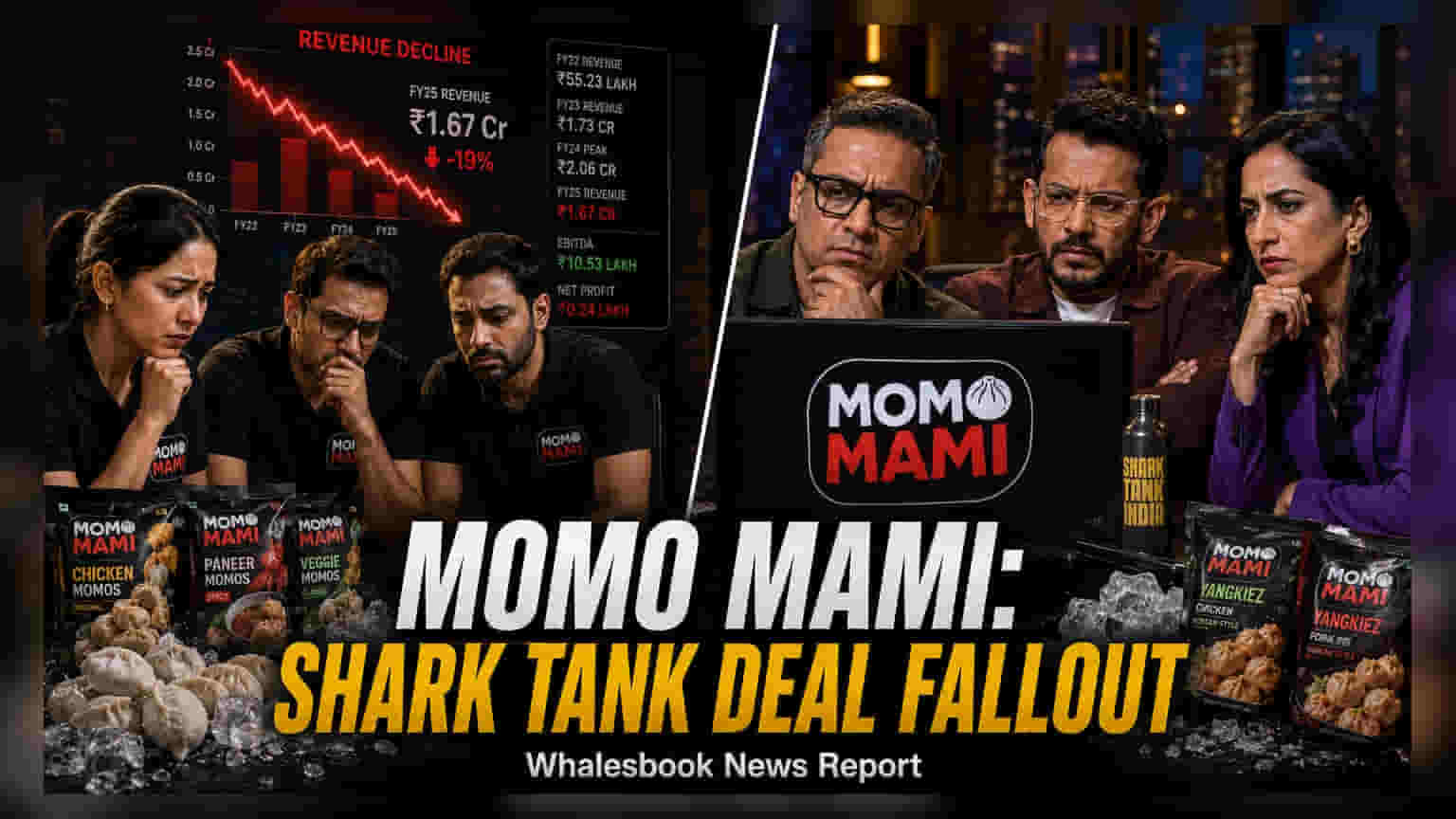
Bluepine Foods, the startup behind the Momo Mami brand, saw revenue drop 19% to Rs 1.67 crore in FY25 after an initial post-Shark Tank growth spurt. While the firm gained fame through the show, it remains a private entity. The company now faces the challenge of sustaining momentum in the highly competitive frozen foods market.
Bluepine Foods, the company behind the popular frozen momo brand 'Momo Mami,' has experienced a volatile business cycle since gaining national attention on the first season of Shark Tank India. The startup, which secured a Rs 75 lakh investment from Sharks Ashneer Grover, Aman Gupta, and Vineeta Singh, serves as a case study in the challenges of scaling a consumer product business beyond initial television publicity.
Founded in 2016 by Aditi Bhutia Madan, Naveen Panwar, and Rohan Singh, the company focused on expanding its presence in the frozen food category, later adding its 'Yangkiez' brand to the portfolio. Following the Shark Tank appearance, the company saw a significant increase in business activity. Revenue grew from Rs 55.23 lakh in FY22 to Rs 1.73 crore in FY23, eventually peaking at Rs 2.06 crore in FY24.
However, the growth momentum slowed in the most recent financial year. In FY25, the company reported a revenue decline of approximately 19%, bringing its total revenue to Rs 1.67 crore. While the company maintained a positive EBITDA of Rs 10.53 lakh, net profit remained very thin at Rs 24,000. This financial shift highlights the difficulty of maintaining growth in the crowded Indian frozen foods market, where new and established players often compete on price and distribution reach.
It is important for investors to note that Bluepine Foods is a private, unlisted company. It is not traded on the National Stock Exchange (NSE) or the Bombay Stock Exchange (BSE). The shares are not available for public purchase on the open market, meaning retail investors cannot buy or sell the stock. The company's majority equity remains with its founders.
For those following the startup's progress, the key monitorables will be how the management handles the current revenue volatility and whether it can improve its profit margins. The frozen snacks sector is highly competitive, and sustaining long-term demand requires consistent product quality and efficient distribution, which are significant operational hurdles for any early-stage food company. The company's future performance will depend on its ability to regain growth momentum while managing its slim profit margins and navigating the pressures of the broader food-tech industry.