

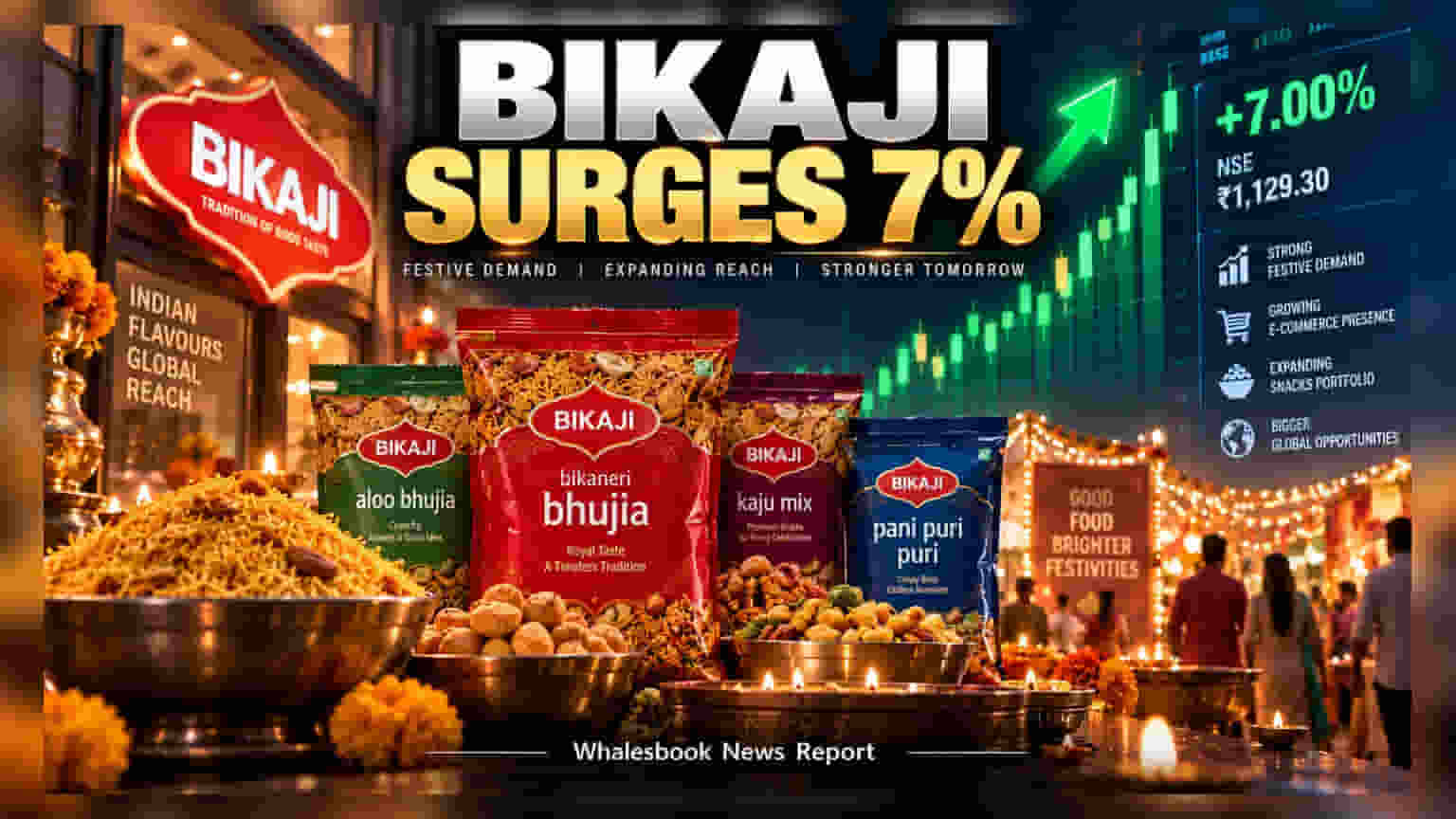
Shares of Bikaji Foods climbed 7% on Wednesday, snapping a two-day slide after management affirmed its FY27 revenue growth targets. While the outlook remains strong, investors are weighing the impact of rising raw material costs and high freight expenses, which continue to squeeze profit margins.
Bikaji Foods International shares regained momentum on Wednesday, closing 7% higher on the National Stock Exchange. The stock saw this recovery following a two-day decline, driven by management's updated financial outlook. During a recent update, the company confirmed that it continues to target mid-teens revenue growth for the fiscal year 2027, focusing on sustained festive demand and a wider e-commerce reach.
However, this growth outlook comes with clear operational challenges that investors are carefully tracking. The company faces a difficult environment where raw material prices for key inputs, such as edible oils and packaging materials tied to crude oil, are rising by 6-7% year-on-year. While Bikaji has increased product prices, it has only been able to pass on about 4.5-5% of these costs to customers. This gap between rising input costs and selling prices is leading to an expected contraction in operating profit margins by 100-150 basis points, which is a reduction of 1.0% to 1.5% in profit margins.
Logistics and export costs are also creating pressure. Global trade disruptions have led to a nearly fourfold jump in freight expenses, further hurting the profitability of the company’s export division. These external factors highlight the difficulty FMCG companies face in protecting profitability while trying to maintain market share in a competitive snack food market.
To drive future growth, the company is shifting its focus toward Western-style snacks, such as potato chips and extruded products. Management believes this category is growing faster than their traditional ethnic snack portfolio and aims to make it 11-12% of total revenue within the next two years.
Looking ahead, investors may track whether the company can successfully execute this transition into the Western snacks segment. A critical monitorable will be the company's ability to balance volume-led growth with improved cost management, particularly if raw material inflation continues to impact operating margins. The long-term performance will likely depend on whether this shift to new product categories can compensate for the current pressure on core product profitability.