

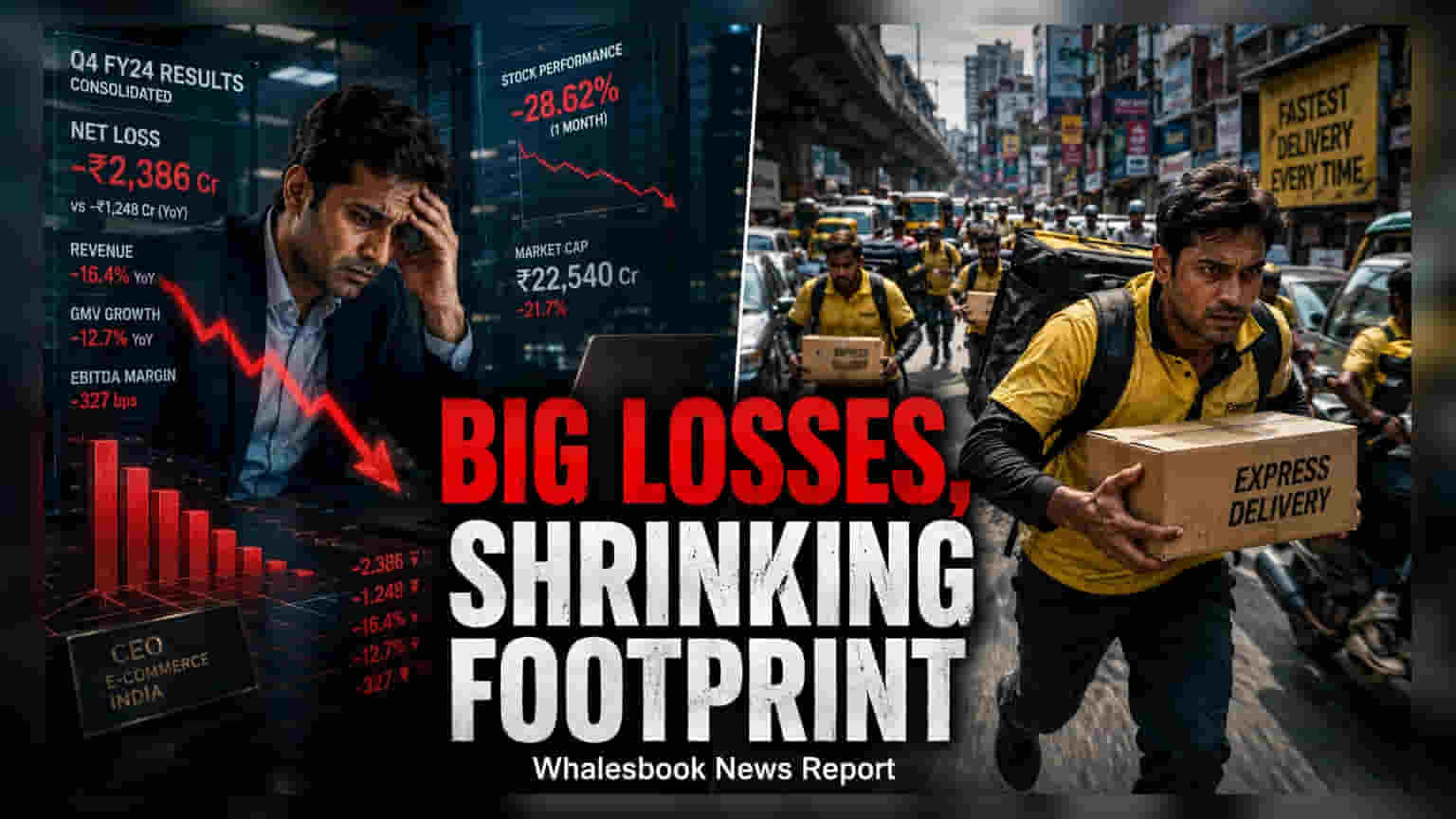
BigBasket operator Innovative Retail Concepts reported a 66% jump in losses to ₹3,073 crore for FY26 as revenue growth slowed to 7.7%. The company is cutting its operational footprint by nearly half to focus only on profitable cities amid intense competition from quick commerce rivals like Blinkit and Zepto.
Innovative Retail Concepts, the company managing BigBasket’s consumer business, reported a difficult financial year for the period ending March 2026. The firm’s losses expanded significantly to ₹3,073 crore, up 66% from the ₹1,850 crore loss in the previous fiscal year. During the same period, revenue growth remained muted, rising only 7.7% to ₹8,223 crore, compared to ₹7,634 crore in FY25.
Strategic Scaling and Operational Changes
Facing mounting pressure to improve its financial health, the company has begun a major strategic shift. BigBasket is reducing its geographic footprint, narrowing its focus from 76 cities down to approximately 40 where it has demonstrated the ability to operate profitably. This move represents a departure from aggressive expansion and aims to protect margins in a sector defined by high customer acquisition costs and heavy spending on dark store infrastructure.
This transition comes under the leadership of new Chief Executive Amit Nanda, a former Amazon executive who recently took over from founder Hari Menon. The change in management reflects a broader push to prioritize sustainable financial performance over rapid expansion, a necessity given the fierce competition in the instant-delivery space.
Competitive Pressures in Quick Commerce
BigBasket, which is part of the Tata Digital ecosystem, faces intense challenges from well-funded rivals. Companies like Blinkit, Zepto, and Swiggy Instamart, along with newer services like Flipkart Minutes and Amazon Now, have been aggressively building networks of dark stores—small warehouses located close to customers—to facilitate rapid delivery. Data indicates that BigBasket operates over 700 dark stores, while major competitors like Blinkit and Zepto have scaled their networks to over 2,400 and 1,100 locations respectively. This disparity in dark store density makes it difficult for BigBasket to match the delivery speeds and customer reach of its primary rivals.
Meanwhile, the company’s B2B arm, Supermarket Grocery Supplies, showed more stable performance, with revenue growing 3.2% to ₹2,298 crore and losses holding steady at ₹102 crore. Investors will be watching whether the reduction in operational cities can effectively lower the company's burn rate and help stabilize its margins in the coming quarters. The next critical update for stakeholders will be the impact of this restructuring on the company’s bottom line and its ability to compete against the rapidly expanding networks of its peers.