 Whalesbook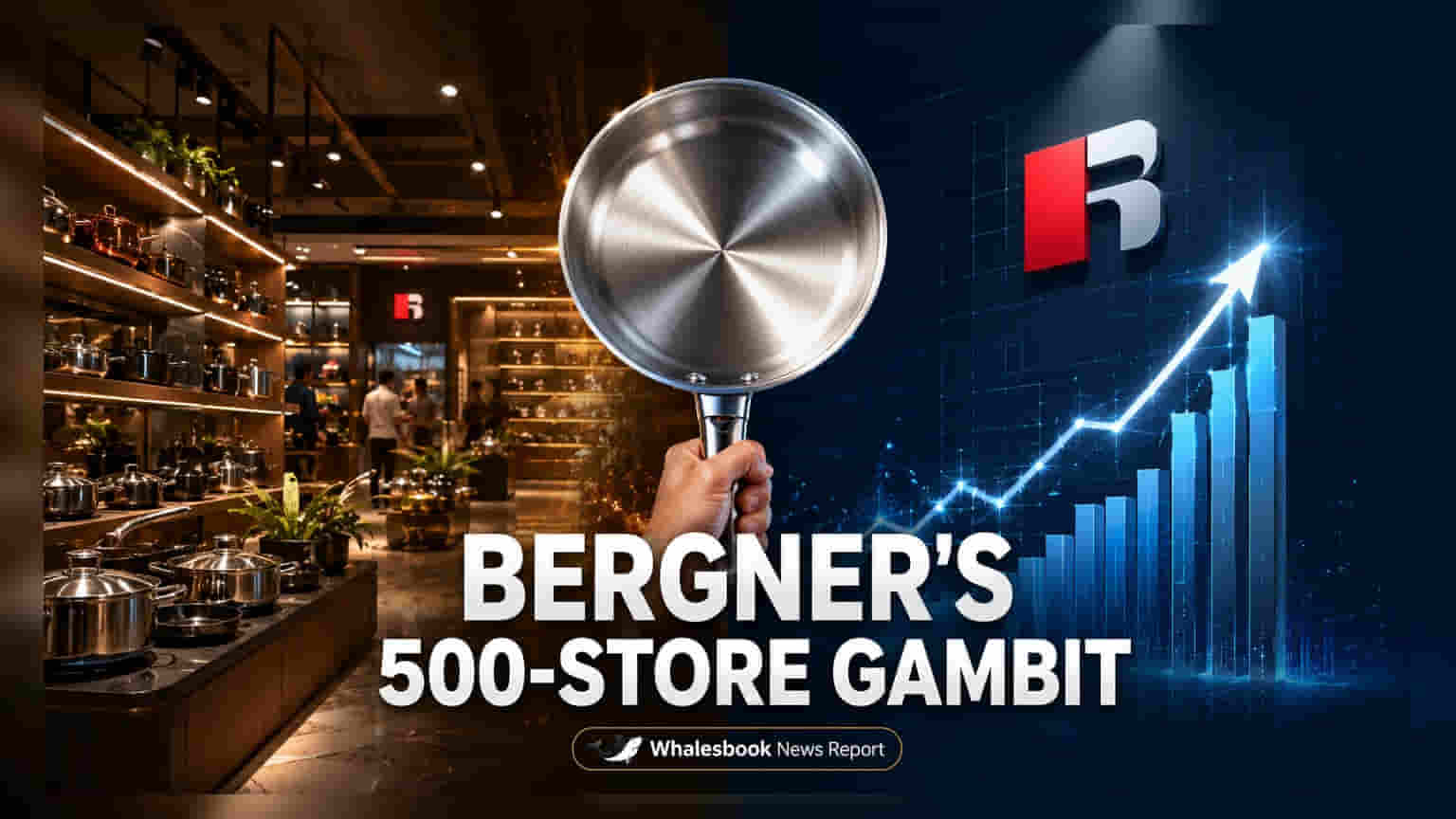


The Capital Expenditure Dilemma
The move to scale Bergner Galleries represents a transition from a niche import-reliant model to a broad-based retail presence. While an asset-light manufacturing approach—leveraging contract manufacturers while retaining proprietary tooling—protects the balance sheet from heavy industrial overhead, the planned retail expansion requires significant working capital. Engaging with private equity partners to fund these 500 touchpoints suggests that organic cash flows, despite a 40% three-year compound annual growth rate, remain insufficient to support the aggressive pace of geographic saturation desired by the board.
Competitive Benchmarking and Market Dynamics
India’s cookware segment is currently bifurcating. On one side, legacy players like TTK Prestige and Stovekraft maintain massive distribution networks in middle-market segments. Bergner is attempting to leapfrog these players by creating a premium 'Gallery' experience, which mimics the strategy of high-end home appliances rather than traditional kitchenware. However, the 'Aluminium Hatao, Tri-Ply Lao' campaign faces stiff resistance from price-sensitive consumers in Tier-II and Tier-III markets, where price-to-performance ratios often favor entrenched, lower-cost competitors. Unlike brands that control their own production lines, Bergner’s reliance on third-party manufacturers introduces quality control risks that could impact brand equity if the supply chain fails to keep pace with rapid store openings.
The Forensic Bear Case
The rapid push into Tier-II and Tier-III cities, while theoretically lucrative, carries structural risks. Historically, premium cookware brands often struggle with inventory turnover in secondary markets when consumers opt for value-engineered alternatives. Furthermore, the reliance on celebrity endorsements, such as the partnership with Vikas Khanna, creates a high marketing expense ratio that must be sustained even if consumer discretionary spending dips. Any failure to reach the targeted ₹400 crore revenue milestone by FY27 could leave the company over-leveraged in retail real estate and marketing commitments, particularly if interest rates or consumer sentiment fluctuate unexpectedly.
Future Outlook and Sector Integration
Expansion into auxiliary categories like small domestic appliances and vacuum flasks is a classic move to increase share of wallet per customer. Success here depends on whether the brand can transition from a 'cookware' specialist to a 'lifestyle' entity. With 85% of production now localized, the company has insulated itself from significant import duties, yet it remains vulnerable to raw material volatility, specifically the pricing of stainless steel and industrial enamels. Management’s ability to navigate these input costs while securing external funding will define the next eighteen months of operations.